The Social Contract
Last updated

Ambre Troizat · CC BY-SA 4.0
Jean-Jacques Rousseau’s The Social Contract asks whether a political community can hold legitimate authority—one that respects individual freedom—while dealing with the problems of commercial society he had earlier explored. The book argued against the divine right of monarchs to make laws. Instead, Rousseau claimed that only the general will of the people has the right to legislate, because only then can people be said to obey themselves and remain free. This general will, though debated by interpreters, appears to involve a legislature made up of all adult members of the community, limited to passing general laws for the common good.
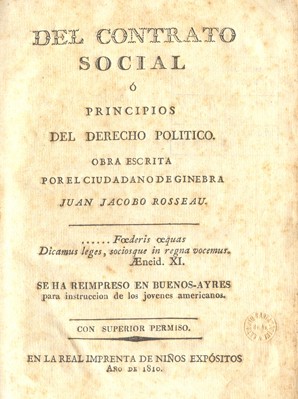
The work opens with a line from Virgil’s Aeneid: “Let us set equal terms for the truce.” Its aim is to see if legitimate political authority can exist, since people’s interactions in his time seemed worse than the isolated state of nature. Rousseau concludes that force does not create right—might does not make right—and people are only obliged to obey legitimate powers. A state has no right to enslave a conquered people.

Legitimate authority must be consented to, requiring a social contract. But unlike earlier thinkers (Grotius, Hobbes, Pufendorf), Rousseau held that freedom is inalienable, so people cannot hand over their rights to someone else. Transferring rights would mean renouncing freedom and turning natural equality into subjection. The only valid contract is one where the people themselves rule.

He calls the united will of the people the general will, which must only make laws that apply equally to all. Collective self-rule increases freedom if those who obey the laws also make them. Rousseau, who opposed extreme wealth inequality, argued that equality is essential for liberty and that legislation should preserve it.
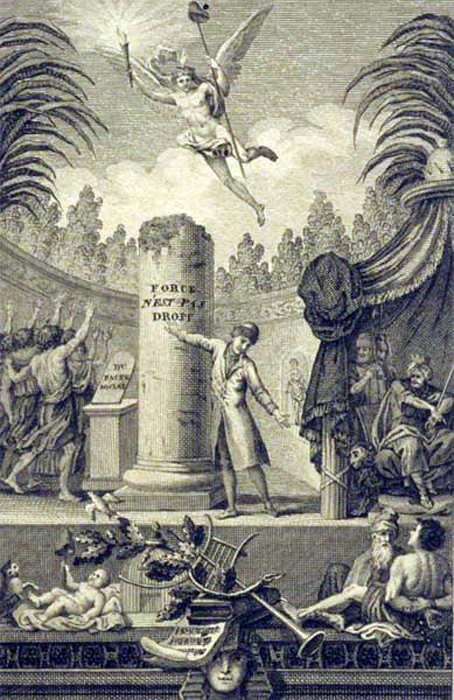
Rousseau separates sovereign power from government (the executive). The sovereign cannot handle particular matters like applying laws, as that would undermine its generality and legitimacy. So government must be a separate institution. If it oversteps the boundaries set by the people, the people should abolish it and start over.
The size of a territory often determines the type of government. A government’s strength is fixed, so larger territories require more power over the populace. Monarchy can wield the most power, democracy the least.
Larger bureaucracies need more power for discipline, so states are usually aristocracies or monarchies. Rousseau’s terms differ from common usage: “democracy” means the executive is held by half or more of the population, “aristocracy” by between two people and half, and “monarchy” by one person. How executives come to power is irrelevant—hereditary rule is not required.
Regardless of the executive type, a state is only legitimate if the people hold legislative power. Rousseau does not mean representative democracy; he insists that the people themselves, not representatives, have supreme power, and everyone’s participation in legislation checks abuse. Small city-states, like his native Geneva, best allow freedom. For such states, an elected aristocracy is preferable; for very large states, a benevolent monarch may work, but even monarchy must be subordinate to the sovereign rule of law.
The book helped inspire political reforms and revolutions in Europe, especially in France.
Lore & Background
The Social Contract, published in 1762 by the Genevan philosopher Jean-Jacques Rousseau, is a work of political philosophy that seeks to establish a legitimate political authority compatible with individual freedom. Its epigraph, drawn from Virgil’s Aeneid, reads “foederis aequas / dicamus leges” (“Let us set equal terms for the truce”). Rousseau opens the book by arguing that force does not create right, and that people are obliged to obey only legitimate powers, rejecting the notion that might makes right.
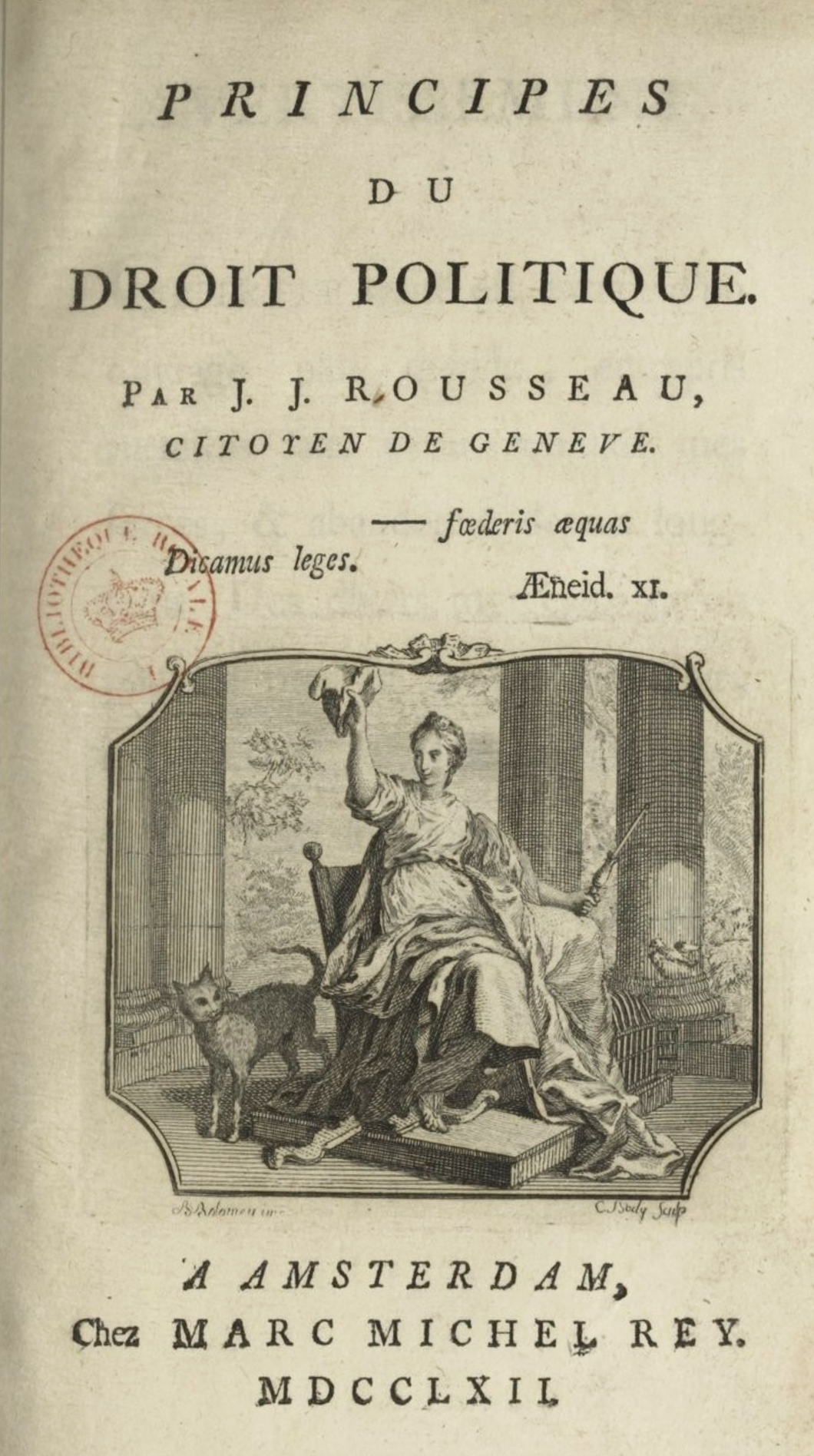
He contends that monarchs are not divinely empowered to legislate; instead, only the general will of the people holds the right to legislate, as this allows individuals to obey only themselves and thus remain free. The general will, to be legitimate, must legislate laws that apply equally to all, and Rousseau emphasizes that equality is essential for liberty. He distinguishes the sovereign power (the people legislating) from the government (the executive), arguing that the sovereign cannot handle particular matters without undermining its generality.
Rousseau claims that the size of a territory influences the nature of its government: larger states require stronger governments, with monarchy wielding the most power and democracy the least. He defines democracy as an executive held by half or more of the population, aristocracy as executive power held by a number between two and half the population, and monarchy as executive power held by one individual. For Rousseau, small city-states like his native Geneva are best suited for freedom, with an elected aristocracy preferable for such states, though even a monarch must remain subordinate to the sovereign people.
More in Philosophy & Theory
Sources
Compiled from Wikipedia and the sources listed below. Text from Wikipedia is available under CC BY-SA 4.0; this entry is adapted from it.
- Wikipedia: The Social Contract (CC BY-SA 4.0).
Spotted an error? Know more?
Reader corrections go straight into our review queue. Suggest an edit · How this site is sourced