Dianna Cowern
American physicist and YouTube science communicator.
Dianna Cowern is an American science communicator and physicist who created the YouTube channel Physics Girl in 2011. She gained prominence for explaining everyday physical phenomena in an informal, fast-paced style, and her series was produced by PBS Digital Studios from 2015 to 2020. Cowern developed long COVID in July 2022, which left her housebound and unable to produce videos until 2026.
Quick Facts
- Born
- 4 May 1989
- Education
- Massachusetts Institute of Technology (SB)
- Occupation
- Science communicator
- Youtube display name
- Physics Girl
- Youtube years active
- 2011–present
- Youtube genre
- Science education
- Youtube subscribers
- 3.48 million
- Youtube views
- 525 million
Facts from the source article.
Early life and education
Dianna Cowern grew up on the Hawaiian island of Kauai, where her father worked as a tree farmer and her mother operated a bed and breakfast. She attended Island School, a small private K-12 institution with just eighty students in her high school class, and has said that two physics teachers there first got her excited about the subject. Inspired by Neil deGrasse Tyson, she developed an interest in sharing science with the public. As a junior, she earned recognition as a Commended Student in the 2007 National Merit Scholarship Program. She went on to study physics at MIT, earning a bachelor's degree in 2011 while researching dark matter under Jocelyn Monroe. After graduating, she became a research fellow at the Harvard-Smithsonian Center for Astrophysics, studying low-metallicity stars with Anna Frebel, and later relocated to San Diego.
Career
Cowern launched her YouTube channel in October 2011. Her first video, a joke for friends about what to do with a physics degree, got far more attention than she expected. She rebranded the channel as Physics Girl and focused on explaining physics. At the time, she was developing iPad apps for General Electric. Later, she taught at the Fleet Science Center and worked as an outreach coordinator for UC San Diego's Center for Astrophysics and Space Sciences. In 2014, she won the Flame Challenge's top video prize, judged by fifth graders on the topic of color. Her channel took off, with viral clips and collaborations including one with Veritasium. A December 2014 video showing fluid dynamics in a swimming pool became her first to hit five million views. After news of her Flame Challenge win, PBS Digital Studios reached out. They started producing Physics Girl in 2015, when the channel had about 35 videos and 125,000 subscribers, making it her full-time job. By 2017, PBS was producing 32 episodes a year. She hosted the Google Science Fair in 2019. The partnership with PBS ended in September 2020. In 2021, a Toyota-sponsored series featured a hydrogen fuel cell car. By 2022, she ranked among the most-subscribed science communicators on YouTube.
Channel style
Physics Girl focuses on physical phenomena in everyday life, with an eccentric, informal style. Topics range from curveballs and creating a cloud with one's mouth to higher-level physics concepts, and the channel includes an AP Physics exam review series. Cowern's videos are edited with frequent jump cuts; she told Nature in 2018 that videos took up to a week to make and that she used a fast pace because viewers "can click away at any moment." She has stated her goals are to interest children in physics and to show underrepresented groups such as women in science.
Personal life
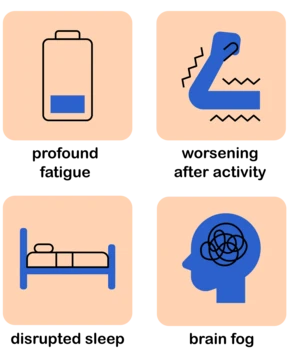
In May 2022, Dianna Cowern shared that she had married Kyle Kitzmiller. The following July, she came down with long COVID, and by March 2023 her symptoms—resembling myalgic encephalomyelitis or chronic fatigue syndrome—had gotten so severe that she needed hospitalization. She lost the ability to move and stayed home, where her husband became her full-time caretaker; her sister set up a donation fund to help. In a January 2025 video, Cowern reported she could stand briefly on her own. By May 2025 she was walking independently, but from July through September her condition worsened again, leaving her bedridden. As of January 2026, she had recovered enough to start making science videos again. She released her first one in three years that March, but suffered a post-exertional malaise crash two days after filming and has mostly remained in poor health since.
More in People with Myalgic Encephalomyelitis/chronic Fatigue Syndrome
Spotted an error? Know more?
Reader corrections go straight into our review queue. Suggest an edit · How this site is sourced