Siah Khan
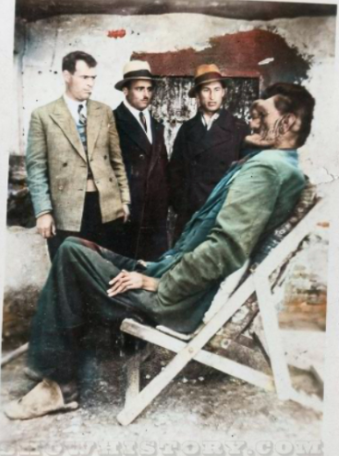
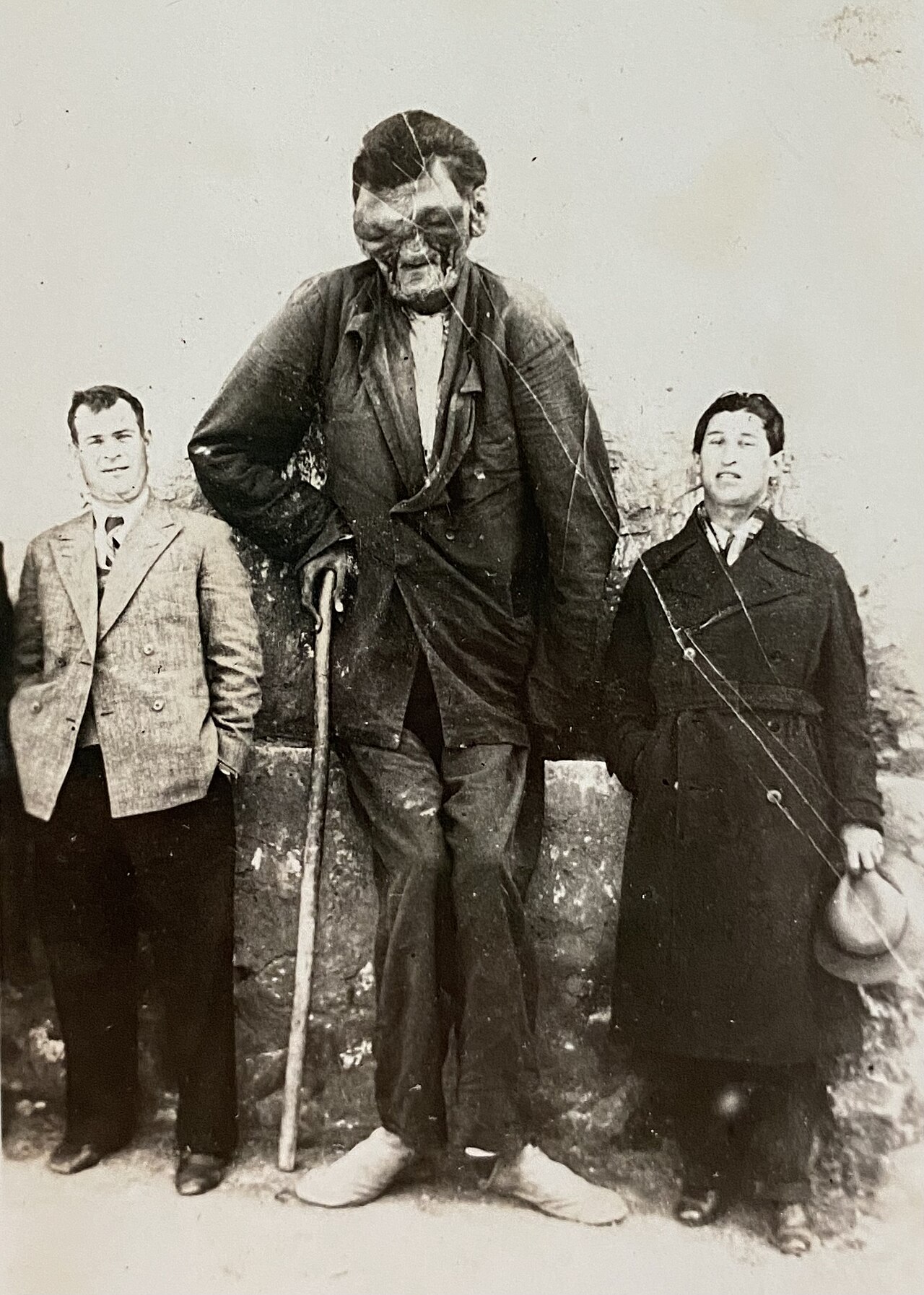
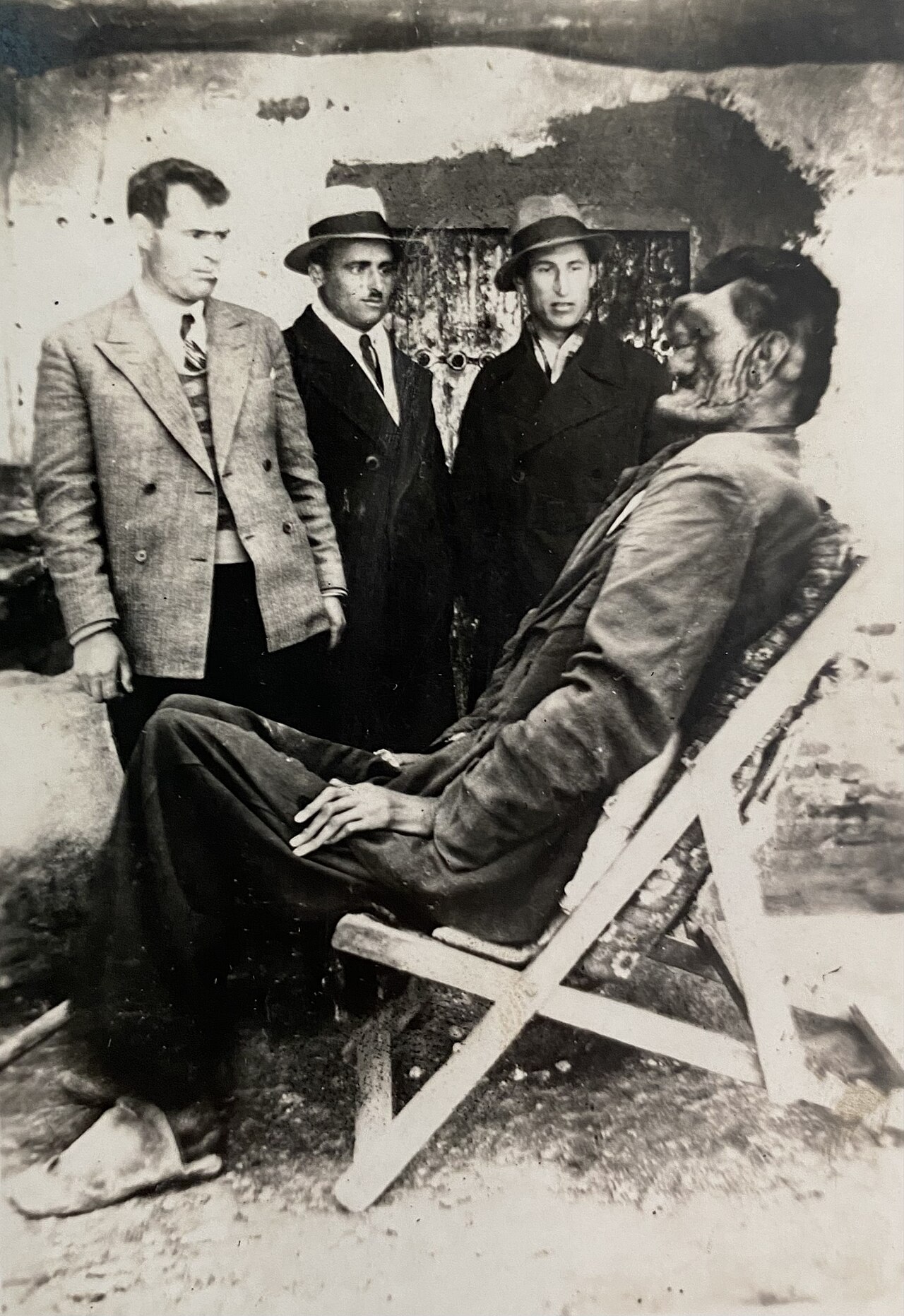
Iranian man with Proteus syndrome, exhibited for his extreme height.

Levi Blevins · CC0
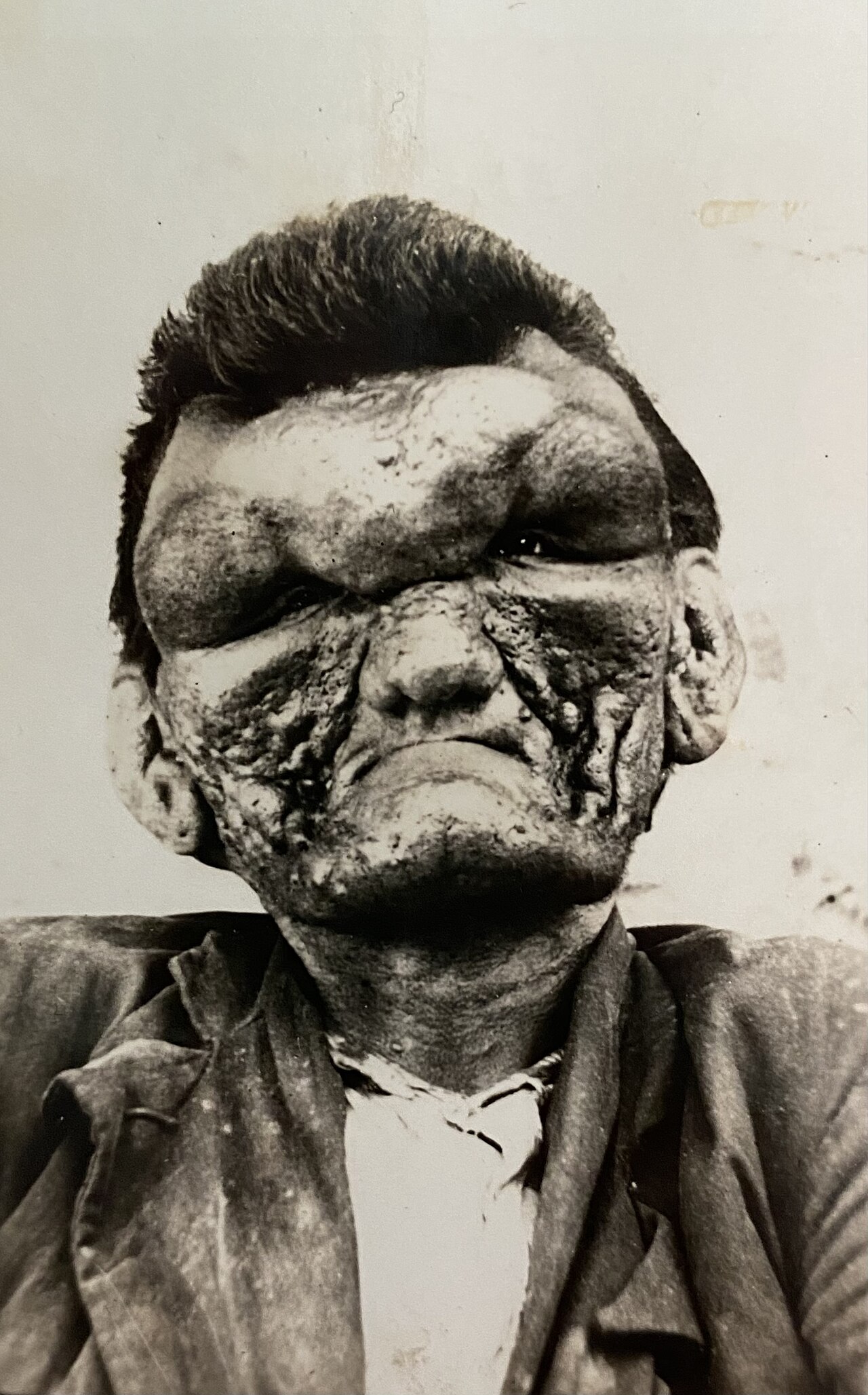
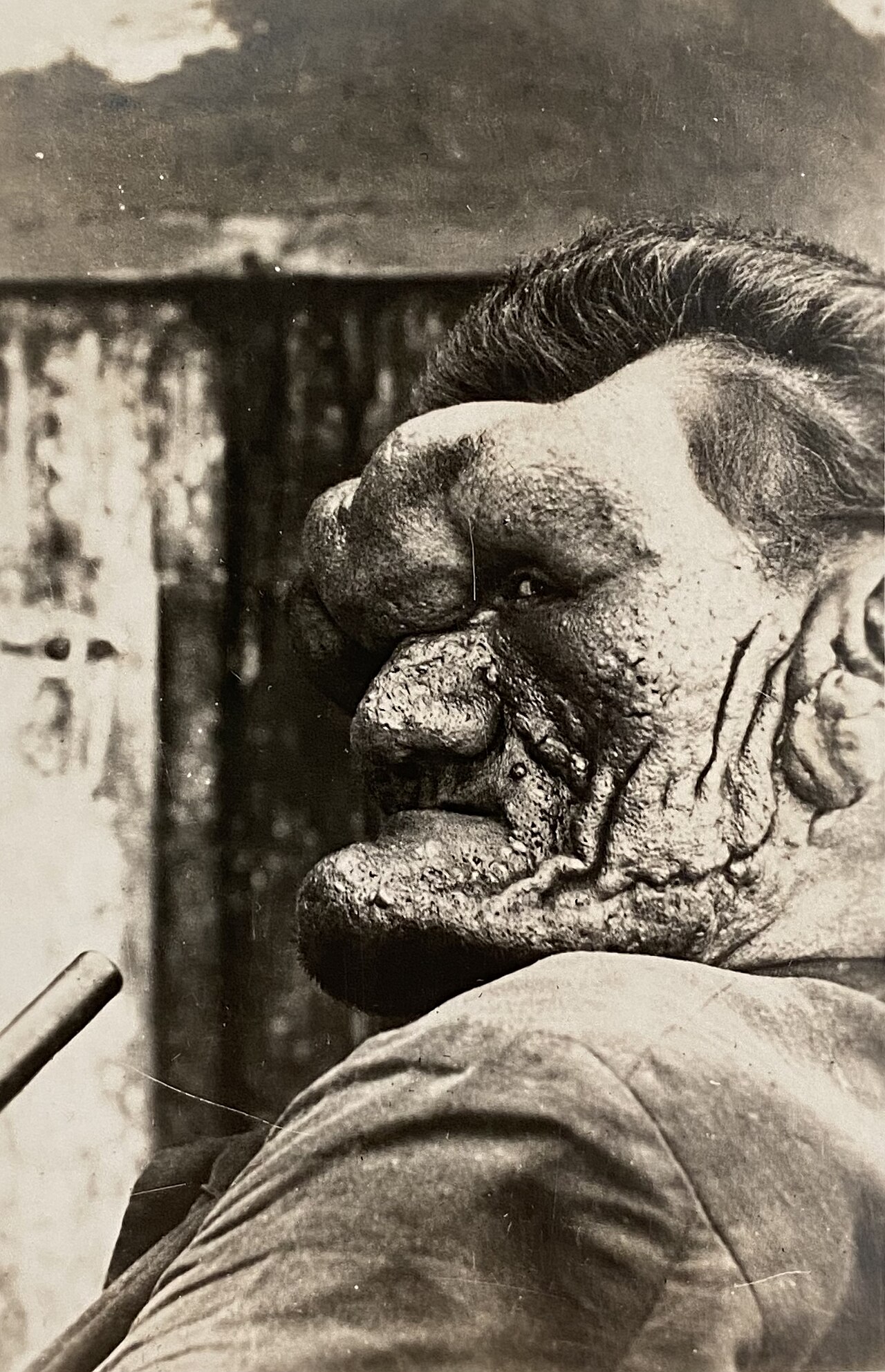
Siah Khan (Persian: سیاه خان), also known as Siavash Bushehri or Siavash Khan, was an Iranian man from Shiraz who lived from 1913 to around 1938. He is notable for his extreme height and physical abnormalities caused by Proteus syndrome, and for being exhibited publicly during his lifetime. His skeletal remains are displayed at Shiraz's Medical School.
Quick Facts
- Birth Name
- Siavash Bushehri
- Birth Date
- 1913
- Birth Place
- Lapui, Zarqan, Qajar Iran
- Death Place
- Shiraz, Imperial State of Iran
- Known For
- 6th verified tallest person, tallest man from Iran
- Height M
- 2.5908
Facts from the source article.
Lore & Background
Siah Khan was born in 1913 in Lapui, a village in the Zarqan district near Shiraz. He grew normally until age six, then grew rapidly. His family migrated to Shiraz and earned money by displaying him in the streets. In late September 1920, a person named Khoshorkhan rented him for 6,000 Tomans to be exhibited in Tehran. Dr. Ghorban, founder of the Shiraz Medical School, found him in 1931 and provided financial and medical support. Siah Khan was hospitalized for the rest of his life and died of pneumonia and sepsis in 1938.
Reader's Guide
Siah Khan's significance lies in his documented case of Proteus syndrome and extreme height, which made him a subject of medical study and public spectacle. His claimed heights of 10 ft 6 in and 11 ft 10 in were never verified; doctors measured him at 7 ft 2.5 in in 1933, and he later claimed 8 ft 6 in. His head was so heavy he could not stand, and his arms were so long he had to wrap one around his head to eat. His skeletal remains remain on public display at Shiraz's Medical School, serving as a lasting artifact of his condition and era.
Did You Know?
- Siah Khan often claimed to be 10 ft 6 in or 11 ft 10 in tall, but was measured at 7 ft 2.5 in in 1933.
- His skull weighed 5.7 kg, and he could not stand due to his head being too heavy.
- His arms were 117 cm long, and he had to wrap one around his head to put food in his mouth.
- His skeletal remains are on public display in a glass case at Shiraz's Medical School.
Early Life & the Economics of Spectacle
Siavash Bushehri came into the world in 1913 in the small village of Lapui, situated in the Zarqan district not far from Shiraz. For his first six years, his development appeared unremarkable. After that, his body began an extraordinary and rapid expansion that set him apart from everyone around him. Rather than seeking medical help, his family made a pragmatic and troubling decision: they relocated to the city of Shiraz and turned his unusual size into a source of income by parading him through the streets for onlookers to gawk at. This arrangement of public display continued until late September 1920, when a man named Khoshorkhan rented him for a period at a rate of 6,000 Tomans to exhibit him in Tehran. The episode reveals how, in that era, a disabled child's body could be treated as a commodity, traded and shown off for profit while his own well-being went largely unaddressed.
Medical Intervention & Final Years
For over a decade after his early years of street exhibition, Siah Khan's circumstances remained precarious until 1931, when Dr. Ghorban, the founding figure of the Shiraz Medical School, took notice of him. Dr. Ghorban stepped in to offer both financial assistance and proper medical attention, a lifeline that fundamentally altered the trajectory of Siah Khan's remaining years. Upon being brought to the hospital, he was admitted and remained under institutional care for the rest of his life. His condition, later identified as Proteus syndrome alongside physical and mental disabilities, made independent living impossible. In 1938, his body finally succumbed to a combination of pneumonia and sepsis. He was approximately twenty-five years old. The fact that a man of such extraordinary physical presence was ultimately confined to a hospital bed, dependent on others for every basic need, underscores the tragic gap between his public notoriety and the private reality of his suffering.
Physical Dimensions & the Struggle of Daily Life
The true scale of Siah Khan's body defied easy comprehension. He frequently asserted heights of 10 feet 6 inches or even 11 feet 10 inches, claims that, if accurate, would have placed him far beyond Robert Wadlow as the tallest human in recorded history. In 1933, however, his physicians at the Shiraz hospital measured him at 7 feet 2 and a half inches, with later reports suggesting he may have continued growing toward 8 feet 6. Beyond overall height, the proportions were staggering: his arms stretched to 3 feet 10 inches, his legs reached 4 feet 1 and a quarter inches, and his skull alone weighed 5.7 kilograms. The sheer weight of his head made standing impossible. In one of the most striking accounts of his daily existence, his arms were so extraordinarily long that he had to coil one around his own head simply to bring food to his mouth.
Legacy, Remains & the Question of Memory
Long after his death in 1938, Siah Khan continues to occupy a peculiar place in public consciousness. His skeletal remains are housed in a glass display case at the Shiraz Medical School, where they remain accessible to visitors and students. This arrangement transforms what was once a living, suffering individual into a permanent exhibit, a curiosity to be observed. His name appears on lists cataloguing the tallest people in history, though the discrepancy between his self-reported heights and his medically verified measurements ensures he will always occupy an ambiguous position in that record. He is remembered by multiple names—Siavash Bushehri, Siah Khan, Siavash Khan—each reflecting a different layer of identity: the given name, the descriptive nickname meaning 'Black Khan,' and a variant. His story endures as a reminder of how disability, poverty, and spectacle intersected in early twentieth-century Iran, and how a single human life can become simultaneously a medical case, a street attraction, and a museum piece.
Gallery
Frequently Asked Questions
Who is Siah Khan?
Siah Khan, also referred to as Siavash Bushehri or Siavash Khan, was an Iranian man born in 1913 in a small village near Shiraz. He is remembered for his extraordinary height and skeletal deformities, which were the product of Proteus syndrome.
What condition caused Siah Khan's physical differences?
His extreme stature and irregular bone growth were the result of Proteus syndrome, a rare genetic disorder that leads to disproportionate tissue development. It is important to distinguish this from acromegaly, a hormonal condition that is sometimes mistakenly attributed to his case.
What was Siah Khan's role in public life?
During his lifetime he was paraded before audiences as a medical curiosity, his unusual size and appearance serving as a spectacle for onlookers. He is not recorded as having held any professional or political position beyond that exhibition role.
Why is Siah Khan remembered today?
He is one of the most extreme documented cases of Proteus syndrome from the early twentieth century in the Iranian context. His story also raises ongoing ethical questions about the public exhibition of individuals with physical differences, making him a point of discussion beyond pure medical history.
More in People with acromegaly 1-24
Spotted an error? Know more?
Reader corrections go straight into our review queue. Suggest an edit · How this site is sourced