Mary Ann Bevan
English nurse turned sideshow performer after acromegaly.

Unknown author · Public domain
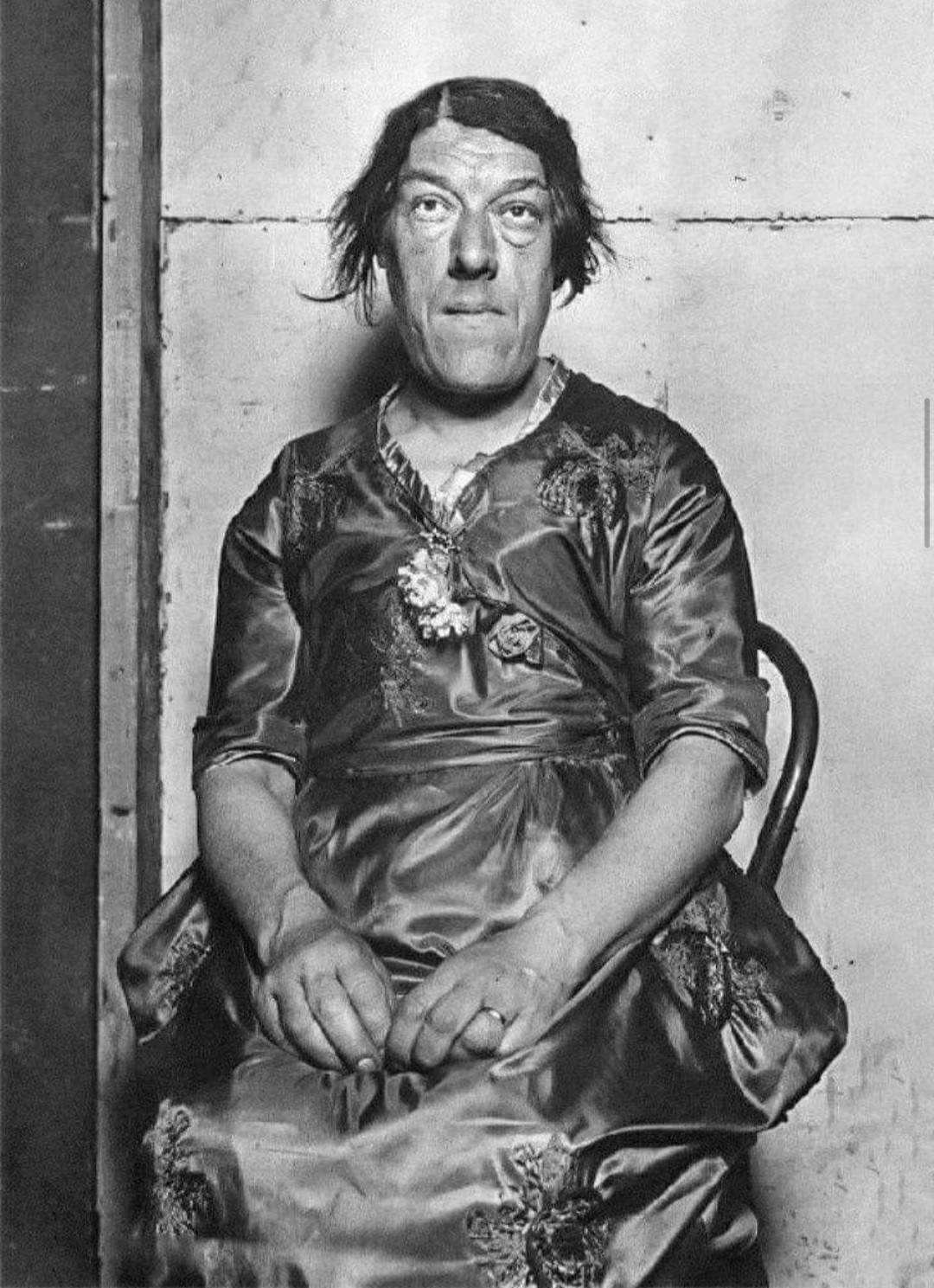
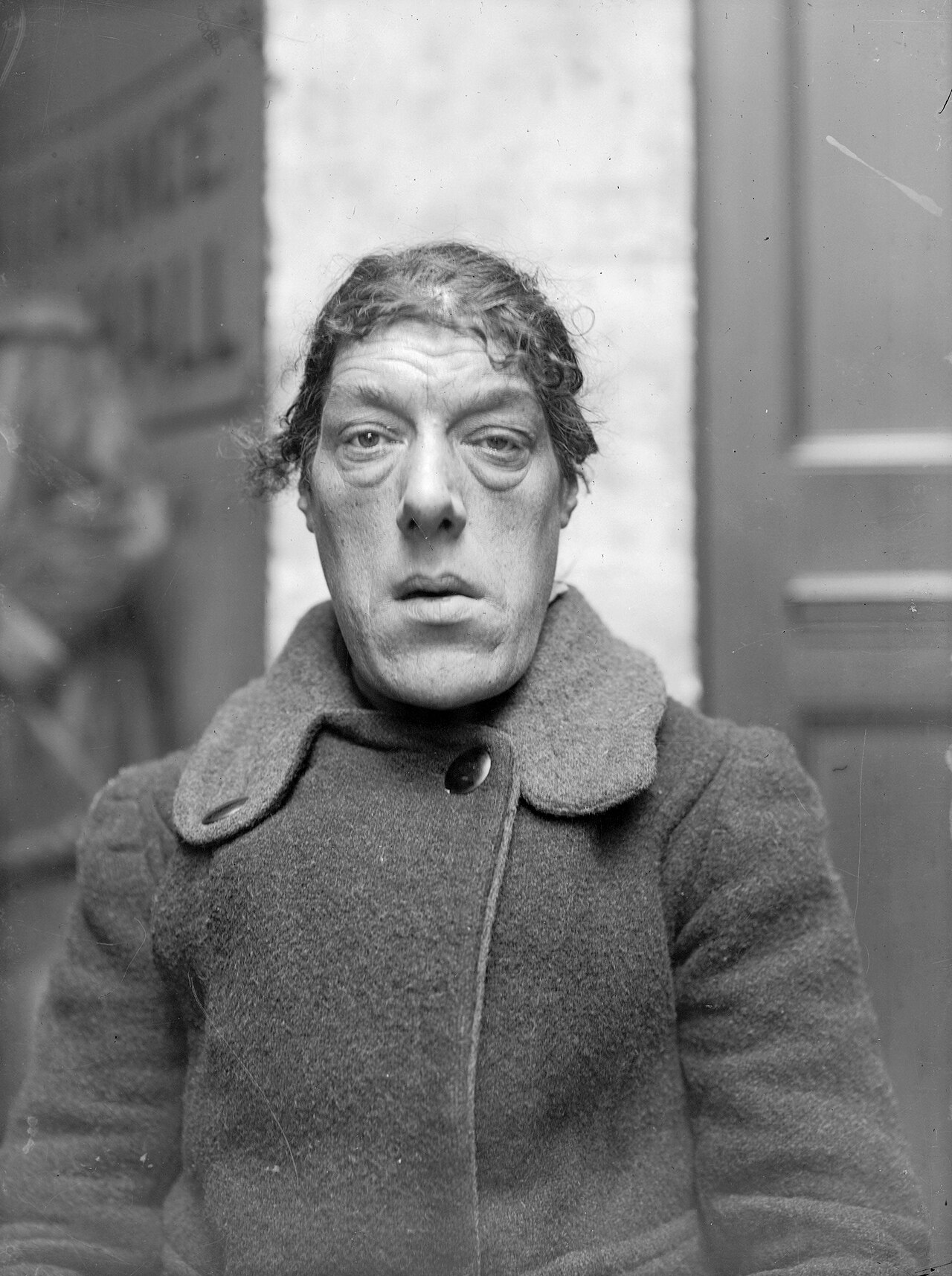
Mary Ann Bevan (née Webster; 20 December 1874 – 26 December 1933) was an English nurse who later performed in American sideshows. In the 1920s and 1930s, she gained international fame after being billed as "the ugliest woman in the world," a result of acromegaly.
Born in Plaistow, East London, to a working-class family, she was the youngest of eight children. At 22, she began working as a nurse. She married Thomas Bevan in 1902, and the couple had four children. Around 1906, she started experiencing symptoms of acromegaly, including abnormal growth, facial changes, severe headaches, and worsening eyesight. When her husband died suddenly in 1914, she was left alone to support their children. Unable to manage on her nursing salary, she entered and won an "Ugliest Woman" contest, which launched her sideshow career and allowed her to provide for her family.
In 1920, at about age 45, showman Samuel W. Gumpertz hired her to perform at Dreamland, a Coney Island amusement park. She spent most of the rest of her life there. A 1926 article in the British newspaper *Leeds Mercury* described her as pleasant, someone who disliked pity and was enjoyable to talk with, and noted she wore size 12 shoes. Later, she also worked for the Ringling Brothers Circus, serving both as a sideshow performer and as a nurse. She remained on the American circus and sideshow circuit until her death.
Bevan died on 26 December 1933, six days after her 59th birthday. As she had requested, she was buried in Brockley and Ladywell Cemeteries in London.
In the early 2000s, Hallmark Cards used her image on a birthday card in the UK that referenced the television show *Blind Date*. After Dutch physician Wouter de Herder complained that the card was disrespectful to a woman disfigured by disease, Hallmark agreed and stopped distributing it.
Quick Facts
- Birth Name
- Mary Ann Webster
- Birth Date
- 1874-12-20
- Birth Place
- Plaistow, Newham, London, England
- Death Date
- 1933-12-26
- Spouse
- Thomas Bevan (1902–1914)
- Children
- 4
- Occupation
- Sideshow performer ∙ nurse
- Employer
- Employed by Samuel W. Gumpertz to perform at Coney Island Dreamland / Ringling Brothers Circus and was employed as a nurse.
Facts from the source article.
Lore & Background
Mary Ann Webster was born on 20 December 1874 in Plaistow, East London, the eighth of eight children in a working-class family. At age 22 she became a nurse. In 1902 she married Thomas Bevan, and the couple had four children. Around 1906, about four years after her marriage, she began developing symptoms of acromegaly, including abnormal growth, changes to facial features, severe headaches, and worsening eyesight. Her husband died suddenly in 1914, leaving her to support their four children alone. Unable to do so on her nursing income, she entered and won an 'Ugliest Woman' contest, which launched her career as a sideshow performer.
Reader's Guide
Mary Ann Bevan's significance lies in her transformation from a working-class nurse to an internationally known sideshow performer, driven by the need to support her children after her husband's death and the onset of acromegaly. Her story illustrates the limited economic options available to women in early 20th-century Britain, especially those with visible disabilities. By entering an 'Ugliest Woman' contest and later performing at Dreamland at Coney Island and with the Ringling Brothers Circus, she turned a stigmatizing condition into a means of survival. Her legacy also includes a cautionary tale about the exploitation of physical difference: in the early 2000s, Hallmark Cards used her image on a birthday card, which was withdrawn after a complaint that it was disrespectful to a woman deformed by disease. Bevan's life raises questions about agency, dignity, and the ethics of displaying human oddity for profit.
Did You Know?
- Mary Ann Bevan worked as a nurse before and during her sideshow career.
- She entered and won an 'Ugliest Woman' contest after her husband's death in 1914.
- She was recruited by American showman Samuel W. Gumpertz in 1920 to perform at Dreamland at Coney Island.
- A Hallmark birthday card using her image was withdrawn in the early 2000s after a complaint.
A Working-Class Life Upended by Illness
Mary Ann Webster entered the world on 20 December 1874 in Plaistow, a working-class district in East London, as the youngest of eight siblings. Her path led her into nursing at the age of twenty-two, a profession that would anchor her identity for years. In 1902, at twenty-seven, she wed Thomas Bevan, and the couple went on to raise four children together. Yet around 1906, when she was roughly thirty-two, a progressive condition began to reshape her body and daily existence. Acromegaly brought with it abnormal growth of her features, persistent and severe headaches, and a slow deterioration of her sight. The illness compounded her hardship when Thomas died suddenly in 1914, leaving her as the sole provider for her four young children. Her nursing wages proved insufficient to sustain the family, and in a desperate bid for income, she entered a public "Ugliest Woman" contest. She won it, and that victory became the doorway to an entirely new and extraordinary chapter in her life.
Crossing the Atlantic for a Living
In 1920, at approximately forty-five years of age, Mary Ann Bevan made the decisive leap from London to New York City. American showman Samuel W. Gumpertz recruited her to headline the sideshow at Dreamland, the bustling amusement park on Coney Island. The engagement was not a brief novelty; she remained a fixture at Dreamland for the better part of the rest of her life, turning a contest victory into a sustained career that kept food on the table for her children. The move represented a profound personal sacrifice—leaving the only country she had known, her nursing roots, and the familiar rhythms of East London for the loud, commercial world of American fairground entertainment. Yet the facts of her situation left little room for sentiment: a single mother of four, living with a disfiguring disease, needed a reliable income, and the sideshow circuit offered precisely that. Her decision was less a choice of vocation than an act of maternal necessity, and she carried it with the same quiet determination she had shown throughout her nursing career.
A Performer Who Refused to Be Pitied
By the mid-1920s, Bevan had become a recognizable figure on the American entertainment circuit, yet the press coverage that reached back to Britain painted a portrait far richer than the headline "ugliest woman in the world" suggested. In 1926, the Leeds Mercury described her as a genuinely pleasant companion, someone who found conversation a pleasure and who actively resented being treated as an object of pity. The same report noted the practical detail that she wore size twelve shoes—a small, humanizing fact amid the spectacle. As her career progressed, she moved from Dreamland to the Ringling Brothers Circus, where she held a dual role that underscored her refusal to be defined by a single label: she performed in the sideshow while simultaneously working as a nurse. This dual identity persisted until her death in 1933, meaning that even in the final years of her life she was both a spectacle for crowds and a caregiver for those in need, two roles that coexisted without either diminishing the other.
A Final Wish and an Unlikely Controversy
Mary Ann Bevan died on 26 December 1933, just six days after turning fifty-nine, after more than a decade of life spent on the American sideshow and circus circuit. Honoring a wish she had made in advance, her body was brought back to England and laid to rest in the Brockley and Ladywell Cemeteries in London, a quiet return to the city where her story had begun. Decades later, however, her memory became entangled in an unexpected cultural dispute. In the early 2000s, Hallmark Cards produced a birthday card for the British market that featured her likeness alongside a reference to the television dating programme Blind Date. Dutch physician Wouter de Herder lodged a formal complaint, arguing that it was deeply disrespectful to reduce a woman whose appearance had been altered by a painful disease to a punchline. Hallmark concurred that the card was inappropriate and halted its distribution, an episode that, for better or worse, kept Bevan's name in public conversation long after her passing.
Gallery
Frequently Asked Questions
Who is Mary Ann Bevan?
Mary Ann Bevan was an English nurse from East London who, after developing acromegaly in the early 1900s, went on to perform in American sideshows and gain wide public recognition. She is best remembered as the woman billed as 'the ugliest woman in the world' during the 1920s and 1930s.
What condition did Mary Ann Bevan have?
Around 1906 she began showing signs of acromegaly, which brought abnormal tissue growth, noticeable facial changes, and debilitating headaches. The progressive nature of the condition is what ultimately shaped her public image and sideshow career.
What was Mary Ann Bevan's life before her condition?
She was born on 20 December 1874 in Plaistow, East London, as the youngest of eight children in a working-class household. At 22 she entered nursing, and in 1902 she married Thomas Bevan, and the couple raised four children together.
How did Mary Ann Bevan become famous?
After her acromegaly advanced, she was exhibited in American sideshows throughout the 1920s and 1930s under the headline 'the ugliest woman in the world.' That billing gave her a level of international notoriety far beyond her earlier nursing career.
When did Mary Ann Bevan die?
Mary Ann Bevan passed away on 26 December 1933, just six days after turning 59.
More in People with acromegaly 1-24
Spotted an error? Know more?
Reader corrections go straight into our review queue. Suggest an edit · How this site is sourced