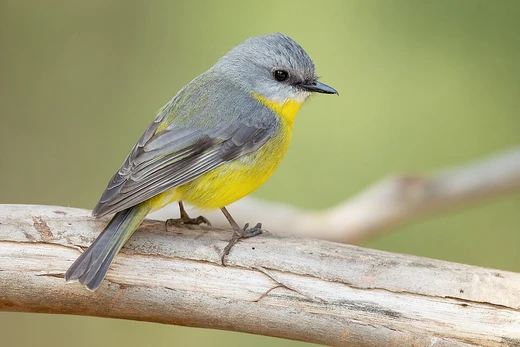
Irenidae
Small passerine birds of southern Asia and the Philippines.
Last updated
They are the sole members of the genus Irena and are related to the ioras and leafbirds. Males are dark blue while females are duller green, and they feed mainly on fruit such as figs.
Scientific classification
- KingdomAnimalia
- PhylumChordata
- ClassAves
- OrderPasseriformes
- FamilyIrenidae
- GenusIrena
Named by Horsfield, 1821
Sources: Wikipedia taxobox: Fairy-bluebird (CC BY-SA 4.0)
Quick Facts
- Type species
- Coracias puella
- Subdivision
- Irena puella
- Irena tweeddalii
- Irena cyanogastra
Facts from the source article.
Taxonomy
Early taxonomists placed fairy-bluebirds in the genus Coracias due to their iridescent blue backs, but Thomas Horsfield and Coenraad Temminck proposed a relationship with drongos in the 1820s. The group was also linked to bulbuls and orioles. DNA-DNA hybridization studies by Sibley and Alhquist identified leafbirds as their closest relatives, and a 2019 molecular study confirmed that Irenidae is sister to Chloropseidae (leafbirds). Although leafbirds are sometimes included in Irenidae, the divergence time suggests they are better treated as separate families.
Morphology
Fairy-bluebirds are robust birds similar in shape and size to Old World orioles, with males larger than females. They have a powerful, deep, notched bill used for crushing, with the Philippine species having the largest bill.
Their small feet indicate less climbing and more time on the wing. The deep blue upperparts come from specialized naked feather-tip barbs. The Asian fairy-bluebird shows strong sexual dimorphism, while the Philippine species has females nearly as bright as males.
Distribution and habitat
The three fairy-bluebird species all rely on fruit-bearing forests, living high in the canopy of both evergreen and semi-evergreen woodlands. The Asian fairy-bluebird’s patchy range stretches from India to Java and Vietnam, covering much of Southeast Asia, Borneo, Sumatra, and the Andaman Islands, though it is uncommon in Sri Lanka. The Philippine fairy-bluebird is found on Luzon, Polillo, Leyte, Samar, Mindanao, Dinagat, and Basilan. The Palawan fairy-bluebird lives only on Palawan.
Behaviour
Fairy-bluebirds forage in pairs or small groups, rarely alone, and fruit—especially figs of the genus Ficus—forms the bulk of their diet. They crush larger fruits to make them manageable and obtain most food in the canopy. Berries and nectar are also eaten, though nectar has only been reported in India.
Nestlings are fed mainly insects. In the Philippines, birds have been observed following macaque troops, possibly to catch flushed insects. Males perform elaborate vocal courtship displays, and females respond by building nests from twigs, moss, and grasses; both parents cooperate in rearing chicks.
More in Passeri
Sources
Compiled from Wikipedia and the sources listed below. Text from Wikipedia is available under CC BY-SA 4.0; this entry is adapted from it.
- Wikipedia: Fairy-bluebird (CC BY-SA 4.0).
- Word definitions: the , each quoted from its Wikipedia article.
Spotted an error? Know more?
Reader corrections go straight into our review queue. Suggest an edit · How this site is sourced