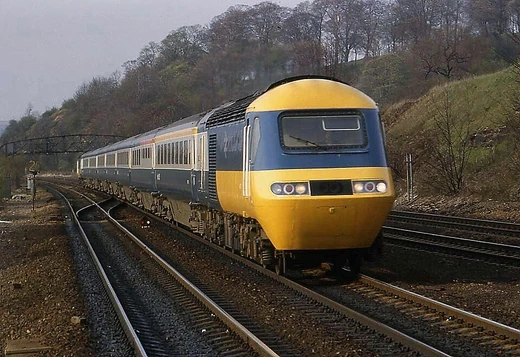
British Rail Class 390
Tilting electric multiple unit for the West Coast Main Line.
Last updated
The British Rail Class 390 Pendolino is an electric high-speed passenger train operated by Avanti West Coast on the West Coast Main Line. Built by Alstom using Fiat Ferroviaria's tilting train technology, the fleet is leased from Angel Trains. Its design speed of 140 mph is restricted to 125 mph in service due to signalling limitations.
Background
In 1997, Virgin Rail Group took over the InterCity West Coast franchise and committed to replacing existing locomotives and coaching stock with new tilting trains. After negotiations, an order was placed with Alstom and Fiat Ferroviaria for the Pendolino, designated Class 390. The tilt system was designed to maintain passenger comfort on curves by reducing sideways forces. The train's concept design came from Priestman Goode, JHL, and Start Design, shaping its aerodynamic nose and interior.
Tilting trains on the West Coast Main Line had been considered earlier: British Rail pursued the Advanced Passenger Train (APT) in the 1980s and 1990s, and later the InterCity 250 project, both cancelled. The original order was for 54 nine-car units costing £500 million. A pre-series test train was planned for July 2000, with the first unit entering service in March 2001 and full delivery by May 2002.
Design
The Pendolino is a high-speed electric multiple unit using Fiat Ferroviaria's tilting technology. Its design was described as more reminiscent of an aircraft than a train. A nine-car unit weighs about 471 tonnes.
The structure uses extruded aluminium panels, giving a smoother exterior than steel. The bodyshell is tapered, narrower at the top than at wheel height, to avoid striking structures when tilting. The nose is made of composite materials, moulded like racing car shells, providing aerodynamic contouring and strength. Initially intended to taper 7 m forward, the nose was reduced to 3.5 m, with a roof fairing extending 3 m rearward.
The forward section underwent aerodynamic testing. The active tilt system allows each carriage to tilt up to eight degrees. Combined with track cant of up to six degrees, the train can take curves at 20 per cent greater speed than without tilt.
Operations
Service introduction was delayed due to poor project management and the collapse of Railtrack. The Pendolino entered passenger service on 23 July 2002 between London and Manchester Piccadilly for the 2002 Commonwealth Games. Regular service between London Euston and Manchester Piccadilly began on 27 January 2003. By 2004, the fleet expanded to services north of Preston, allowing withdrawal of Class 90 locomotives.
That year, units were cleared for the North Wales Coast Line, hauled by Virgin's Class 57 diesel locomotives due to lack of electrification. The entire fleet is maintained at Alstom's Manchester Traincare Centre at Longsight, with lighter maintenance at Wembley, Oxley, Edge Hill, and Polmadie. In October 2004, a train overshot a platform at a station due to a software glitch in the wheel-slip protection system; units were limited to 110 mph until modifications were made.
Fleet developments
Following increased passenger numbers after WCML modernisation, the Department for Transport ordered additional units, including one to replace a unit damaged at Grayrigg. Four new 11-car units were built, and 31 existing units were lengthened to 11 cars. Stations and depots were modified to accommodate the longer trains. The additional vehicles were built at Alstom's Savigliano factory in Italy, as Washwood Heath had closed.
The first new 11-car unit was accepted on 12 July 2011 and entered service on 5 April 2012. The lengthening project was completed in December 2012. As part of a franchise extension, Virgin Trains converted one first-class carriage to standard class on 21 nine-car units, completed by September 2015. Alliance Rail Holdings proposed purchasing four Class 390s but dropped the plan in June 2017 due to crashworthiness standards.
Did You Know?
- In September 2006, a Pendolino completed the fastest southbound run on the West Coast Main Line from Glasgow Central to London Euston in 3 hours 55 minutes.
- In June 2021, a northbound Pendolino set a time of 3 hours 53 minutes and 1 second, narrowly missing the APT's northbound record.
- During testing in 2003, unit 390002 reached a class record speed of 145.7 mph between Rugby, Nuneaton and Lichfield Trent Valley.
More in Passenger Trains Running at Least at 200 Km/h in Commercial Operations
Sources
Compiled from Wikipedia and the sources listed below. Text from Wikipedia is available under CC BY-SA 4.0; this entry is adapted from it.
- Wikipedia: British Rail Class 390 (CC BY-SA 4.0).
Spotted an error? Know more?
Reader corrections go straight into our review queue. Suggest an edit · How this site is sourced