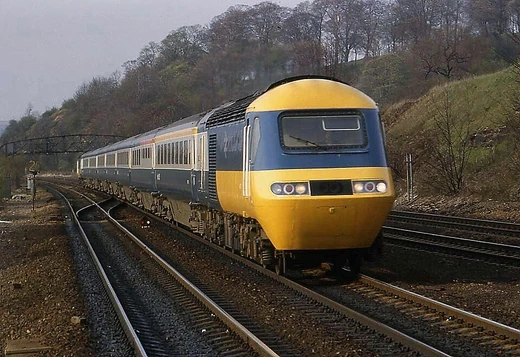
British Rail Class 802
Bi-mode train based on Hitachi A-train design.
Last updated
The British Rail Class 802 is a high-speed bi-mode multiple-unit passenger train built by Hitachi Rail. It is operated by Great Western Railway, TransPennine Express, and Hull Trains, with each operator branding its units differently: Intercity Express Trains, Nova 1s, and Paragons respectively. The Class 802 is based on the Hitachi A-train design and is near-identical to the earlier Class 800, but with higher-powered diesel engines and larger fuel tanks for longer unelectrified routes.
History
In mid-2015, Great Western Railway announced it would procure 173 new rail vehicles from Hitachi Rail, with options for an additional 150. This was part of the Department for Transport's Intercity Express Programme, which sought both wholly electric and bi-mode trains to replace the existing High Speed Trains after electrification of the Great Western Main Line, which would only reach Cardiff Central. The 173 additional vehicles were intended for bi-mode trains similar to the Class 800s, to serve Devon and Cornwall, and would form 22 five-car and 7 nine-car units.
The option for 150 more vehicles would create another 30 five-car units. Initially planned for construction at Hitachi's Kasado factory in Japan, production moved to the Pistoia plant in Italy after Hitachi purchased AnsaldoBreda; the first unit was completed there in February 2018. The trains were scheduled to enter service with GWR from 2018, aiming to reduce journey times by up to five, six, and fourteen minutes on various routes.
Operations
The Class 802s are broadly similar to the Class 800 bi-mode trains and are operated as electric trains where possible, using identical diesel generator units but with higher operating power of 700 kW per engine and larger fuel tanks. These features help the Class 802s handle steeper gradients and extended diesel running on non-electrified stretches. In 2017, GWR took delivery of 22 five-car and 14 nine-car sets, an increase from the initial 29 sets ordered in 2015.
Main-line testing began in Somerset in August 2017, and the trains were due to be introduced on 16 July 2018. A demonstration run from Penzance to Exeter St Davids occurred on 17 August 2018, and the first two units entered traffic the next day. By May 2019, all 36 sets were in service, completing the replacement of InterCity 125 sets alongside Class 800 units. In December 2020, Hitachi and Eversholt Rail Group announced a plan to replace one under-floor diesel engine on each of the 22 five-car 802/0 sets with a battery, creating a tri-mode unit expected to reduce pollution and noise and achieve fuel savings of up to 20%.
In April 2022, new sidings in Penzance were announced to better accommodate nine-car Class 802 sets. Throughout 2021, cracks due to stress corrosion and fatigue disrupted many GWR intercity services. In April 2023, all 36 units were assigned to maintenance at the Laira Traction and Rolling Stock Maintenance Depot in Plymouth.
Incidents
On 16 October 2018, during testing of a Class 802 before handover to GWR, severe damage was caused to 500 m of overhead power lines in the Hanwell area, leading to service cancellations and delays that night and the following two days. On 22 March 2022, unit 802207 derailed during a scheduled depot move at Heaton Depot, causing the lead carriage to tip over. The unit was repaired by early 2024 but did not immediately re-enter service, as it was being used in a trial fitting a battery module in place of one diesel engine.
More in Passenger Trains Running at Least at 200 Km/h in Commercial Operations
Sources
Compiled from Wikipedia and the sources listed below. Text from Wikipedia is available under CC BY-SA 4.0; this entry is adapted from it.
- Wikipedia: British Rail Class 802 (CC BY-SA 4.0).
Spotted an error? Know more?
Reader corrections go straight into our review queue. Suggest an edit · How this site is sourced