Bouri Formation
Sedimentary sequence with hominin fossils and early stone tools.
Last updated

via Wikipedia: Bouri Formation · see source
The Bouri Formation is a sequence of sedimentary deposits in the Middle Awash Valley, Ethiopia, that has yielded hominin fossils, stone tools, and butchered animal bones. It is part of the Afar Depression, a region known for rich paleoanthropological sites such as Gona and Hadar. The formation contains evidence of early hominin activities spanning several million years.
Quick Facts
- Location
- Middle Awash Valley, Ethiopia, East Africa
- Geological context
- Part of the Afar Depression (Afar Triangle)
- Geological members
- Hatayae (Hata)
- Dakanihylo (Daka)
- Herto
- Oldest member date
- 2.5 million years ago (Hatayae)
- Youngest member date
- 160 to 154 thousand years ago (Upper Herto)
- Key hominin fossils
- Australopithecus garhi
- Homo erectus
- Homo sapiens idaltu
Facts from the source article.
Geology
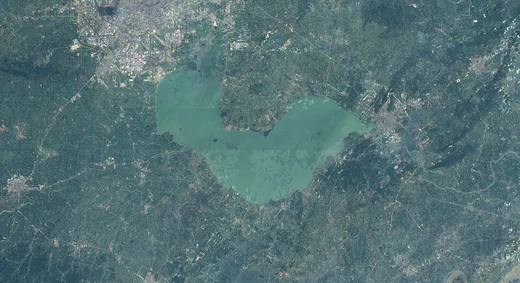
The Bouri Formation is located on the Bouri peninsula, a fault-raised horst about 4 km wide and 10 km long, oriented NNW-SSE in the Quaternary rift zone of the southern Afar Depression. The horst diverts the Awash River, partially damming it to form Lake Yardi.
The formation is roughly 80 m thick and consists of three members: the Hatayae (Hata), dated to 2.5 million years ago; the Dakanihylo (Daka), dated to 1 million years ago; and the Herto, with a lower layer at 260 thousand years ago and upper layers between 160 and 154 thousand years ago. Active tectonics in the Afar Depression created varied habitats over the Plio-Pleistocene, and subsequent uplift and erosion exposed these deposits. Volcanic tuff layers allow accurate argon–argon dating.
Hatayae
The Hatayae member is 40 m thick at its base and consists of variegated silt clay, paleosols, zeolitic and bentonitic tuffs, pedogenic carbonates, sandstone with bivalve and gastropod shells, and mudstone. It was deposited in a floodplain with river delta channels and a shallow fluctuating lake around 2.5 million years ago. Fossils of Australopithecus garhi have been found here, including the most complete specimen BOU-VP-12/130. Stone tools are rare, likely due to a lack of raw materials on lake margins, but isolated cores and flakes of Mode I technology occur.
Bones of large mammals such as alcelaphinae and Hipparion show cut marks and percussion marks from butchery, including removal of tongues and processing for marrow. These are considered the earliest documented cut marks and percussion marks made by hominins. The evidence indicates that meat and marrow processing of large carcasses was a major function of the earliest known tools.
Dakanihylo
The Dakanihylo (Daka) member is 22 to 45 m thick, composed of cross-bedded pumice sandstone, and is located in the southern half of the Bouri horst, dated to 1 million years ago. Fossils indicate open grassland and water-margin habitats, including 377 bovid species, Kobus antelope, and abundant Hippopotamus. Early Acheulean stone tools such as hand axes and cleavers have been found, along with butchery marks on equid, bovid, and hippo bones. Homo erectus fossils include the Daka skull (BOU-VP-2/66), with an endocranial capacity of 995 cm³.
Herto
The Herto member consists of a 15–20 m thick main sequence in the southwestern part of the Bouri peninsula. Late Acheulean tools are associated with unclassified hominin remains; humans lived near a freshwater lake and killed large mammals like hippopotamids. The Upper Herto member, dated between 160 and 154 thousand years ago, consists of yellow sandstone from fluvial and lake-margin deposits, with volcanic sandstone and gravel above an erosion surface.
Two volcanic ash layers allow accurate argon–argon dating. Early Middle Stone Age tools and Homo sapiens idaltu remains have been found; most tools are scrapers, cleavers, and lithic cores, with rare hand axes, picks, and blades. Many tools are made with the Levallois technique, comparable to those at Garba III at Melka Kunture. A large number of Hippopotamus bones occur, including abundant remains of newborn to few-week-old calves scattered with butchered adults.
Did You Know?
- The Daka skull (BOU-VP-2/66) has an endocranial capacity of 995 cm³ and is used in debates about whether African and Asian Homo erectus were different species.
- On 15 of 24 human fragments from the Upper Herto layer, cut marks from soft tissue removal were found, with one skull showing defleshing after the mandible was removed.
More in Paleoanthropological Sites
Sources
Compiled from Wikipedia and the sources listed below. Text from Wikipedia is available under CC BY-SA 4.0; this entry is adapted from it.
- Wikipedia: Bouri Formation (CC BY-SA 4.0).
- Word definitions: the , each quoted from its Wikipedia article.
Spotted an error? Know more?
Reader corrections go straight into our review queue. Suggest an edit · How this site is sourced