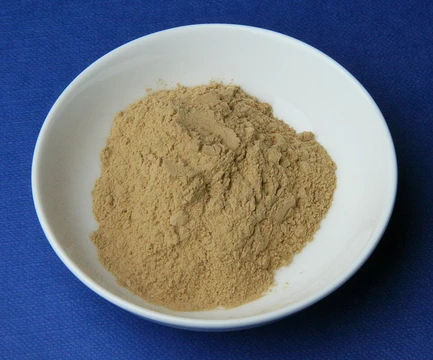
Bentonite
A swelling clay used in drilling, binding, and purification.
Bentonite is an absorbent swelling clay composed mostly of montmorillonite, a type of smectite mineral. It forms primarily from the weathering of volcanic ash in seawater or through hydrothermal alteration of volcanic glass. Its notable swelling capacity, which can increase volume up to eightfold, makes it valuable as an adsorbent, binder, and sealant.
Quick Facts
- Swelling capacity
- up to a factor of eight
- First finding location
- Cretaceous Benton Shale near Rock River, Wyoming
- Named after
- Fort Benton, Montana
- Namers
- Fielding Bradford Meek and F. V. Hayden of the U.S. Geological Survey
Facts from the source article.
Types
In geology, bentonite is a claystone rock composed mostly of montmorillonite, a clay mineral from the smectite group, formed by devitrification of volcanic ash or tuff, typically in a marine environment. The resulting rock is very soft and porous, may contain residual crystals of resistant minerals, and feels soapy or greasy. In commercial and industrial contexts, the term bentonite is used more broadly for any swelling clay composed mostly of smectite clay minerals, including montmorillonite. This dual usage can cause confusion. Montmorillonite is an aluminium phyllosilicate with a low-charge TOT crystal structure: each layer consists of two tetrahedral sheets (T) bonded to either side of an octahedral sheet (O). The TOT layer carries a weak negative charge, neutralized by calcium or sodium cations that bind adjacent layers about 1 nanometer apart. Because only a fraction of possible cation sites are occupied, water molecules can infiltrate between sheets, causing the swelling characteristic of montmorillonite and other smectite clays.
Applications
Bentonite's main uses include drilling mud, binder, purifier, absorbent, and carrier for fertilizers or pesticides. Around 1990, nearly half of US production went to drilling mud. In drilling, it lubricates and cools the drill bit, removes cuttings, stabilizes borehole walls, and helps prevent blowouts by maintaining hydrostatic pressure. It also aids mud cake formation to curtail fluid invasion and is used in tunnel boring machines. Bentonite's rheological properties—forming viscous, shear-thinning, and usually thixotropic suspensions—are key; at about 60 grams per liter (~6 wt.%), suspensions become gels with a yield strength. In foundries, sodium bentonite binds dry molds for large castings, while calcium bentonite is used for wet (green) molds for smaller castings. It also binds iron ore pellets in steelmaking and, in small percentages, increases plasticity in clay bodies and reduces settling in glazes. When mixed with sand and water, bentonite creates green sand for sand casting molds. Its self-stickiness allows high-pressure molding into hard, refractory shapes such as model rocket nozzles.
History and natural occurrence
In 2018, China led global bentonite production with nearly 25% of the total, followed by the United States and India. That year, worldwide output reached 24.4 million metric tons of bentonite and 3.4 million metric tons of fuller's earth. Most premium natural sodium bentonite comes from the western U.S., between South Dakota's Black Hills and Wyoming's Bighorn Basin, and from Turkey's Tokat Resadiye area. Mixed sodium/calcium bentonite is sourced from Greece, Pakistan, Australia, India, Russia, and Ukraine. Within the U.S., calcium bentonite is mainly mined in Mississippi and Alabama, with other key deposits in New Zealand, Germany, Greece, Turkey, India, and China.
More in Medicinal Clay
Spotted an error? Know more?
Reader corrections go straight into our review queue. Suggest an edit · How this site is sourced