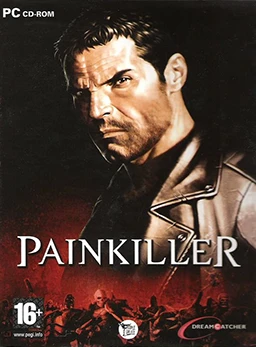
Deathmatch
No story, no mercy—just the Painkiller and an endless tide of demons in the arena.
Deathmatch is the 2006 standalone spin-off in the Painkiller franchise, developed by Gearbox Software and published by Activision. Rather than a traditional narrative campaign, it reframes the series' core premise—unleashing the Painkiller's arsenal against the legions of Vatun—as a fast, arena-driven combat experience. Its single-player offering is structured around survival and wave-based encounters in the demonic realm, while the bulk of the game's identity lives in its multiplayer modes.
Within the broader Painkiller mythos, Deathmatch occupies the role of a proving ground: the unnamed Painkiller, still bound to the guns that channel hellfire, is thrust into open arenas where the demon hordes of Vatun attack in relentless waves. There is no extended plot arc or branching narrative; the 'story' is the relentless escalation of combat itself, framed by the same lore of a warrior cursed to fight the demonic horde.
Quick Facts
- Title
- Painkiller: Deathmatch
- Developer
- Gearbox Software
- Publisher
- Activision
- Release year
- 2006
- Genre
- First-person shooter (multiplayer-focused)
- Setting
- Vatun (the demonic realm of the Painkiller universe)
- Protagonist
- The Painkiller (unnamed)
Lore & Background
In the Painkiller universe, the warrior known only as the Painkiller is bound to a set of supernatural firearms that draw their power from the very hell they are meant to destroy. Vatun, the demonic realm, is a landscape of obsidian spires, rivers of magma, and skies choked with ash, where legions of demons—ranging from scuttling lesser fiends to towering armored behemoths—swarm in ceaseless numbers. The Painkiller's existence is defined by this war: a perpetual, grinding conflict in which the guns are both salvation and curse.
Deathmatch distills that war into its purest form. Stripped of the linear progression and set-piece sequences of the mainline titles, the game places the Painkiller in enclosed arenas where the only objective is survival. The demon hordes do not pause for exposition; they pour through gates, scale walls, and erupt from the ground in waves that grow denser and more varied with each round. The lore implication is that the Painkiller has been pulled into a trial by combat—a gauntlet within Vatun where the only path through is a path over the bodies of the fallen.
The weapons remain the franchise's signature: the Hellbender, the Hellfire, the Hellstorm, and other infernal firearms that fire projectiles of condensed hellfire. In Deathmatch, these tools are not just narrative artifacts but the central language of the game, each with a distinct feel, range, and area-of-effect that rewards close-quarters aggression and disciplined spacing alike.
Reader's Guide
Deathmatch does not follow a beat-by-beat narrative structure. Its 'campaign' is a sequence of escalating arena encounters. You enter a closed map, the gates open, and waves of demons attack in increasing numbers and variety. The design logic is pure: each arena is a self-contained kill-box where cover, chokepoints, and open sightlines dictate your movement. There are no cutscenes, no NPC allies, no story beats to trigger. The pacing is entirely player-driven—you choose when to push forward, when to fall back, when to switch from the Hellbender's close-range devastation to the Hellfire's mid-range spray.
The mythology functions as framing rather than plot. The Painkiller is a fixed point: a cursed warrior whose guns are extensions of his own hellfire. The demons are not characters with motivations; they are the environment made hostile. The stakes are not 'save the world' but 'survive the next wave.' This is intentional. The broader Painkiller world—Vatun, the war between the mortal realm and the demonic, the Painkiller's endless vigil—provides the emotional weight, while the arena strips away everything else and asks one question: can you keep standing?
For readers coming from the mainline Painkiller titles, Deathmatch is best understood as a distillation: the same guns, the same demons, the same hellish aesthetic, but with the narrative scaffolding removed so that the combat is the entire experience.
Did You Know?
- Painkiller: Deathmatch (2006) was developed by Gearbox Software, the same studio behind the original 2004 Painkiller, making it a direct continuation of their work on the franchise.
- The weapons in the Painkiller franchise draw their visual and mechanical identity from the concept of hellfire—projectiles that are literally the condensed essence of the demonic realm they are meant to destroy.
- The Painkiller protagonist remains unnamed across the franchise, a deliberate choice that makes the character a functional role (the warrior, the gun-wielder) rather than a traditional named hero.
More in Story & Campaigns
Elsewhere in Painkiller
Spotted an error? Know more?
Reader corrections go straight into our review queue. Suggest an edit · How this site is sourced