
Sauna
A heated room for perspiring, rooted in Finnish tradition.

IngimarE · CC BY-SA 4.0
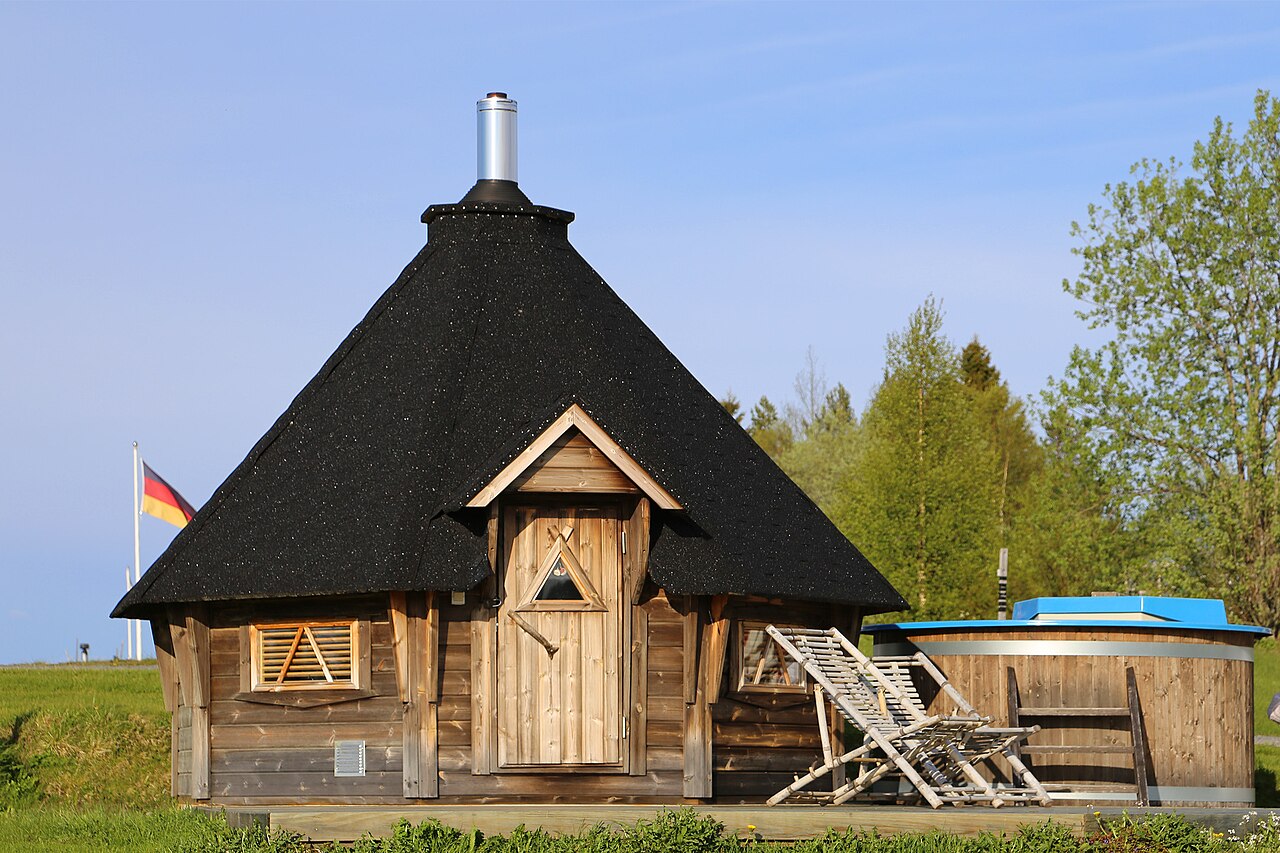
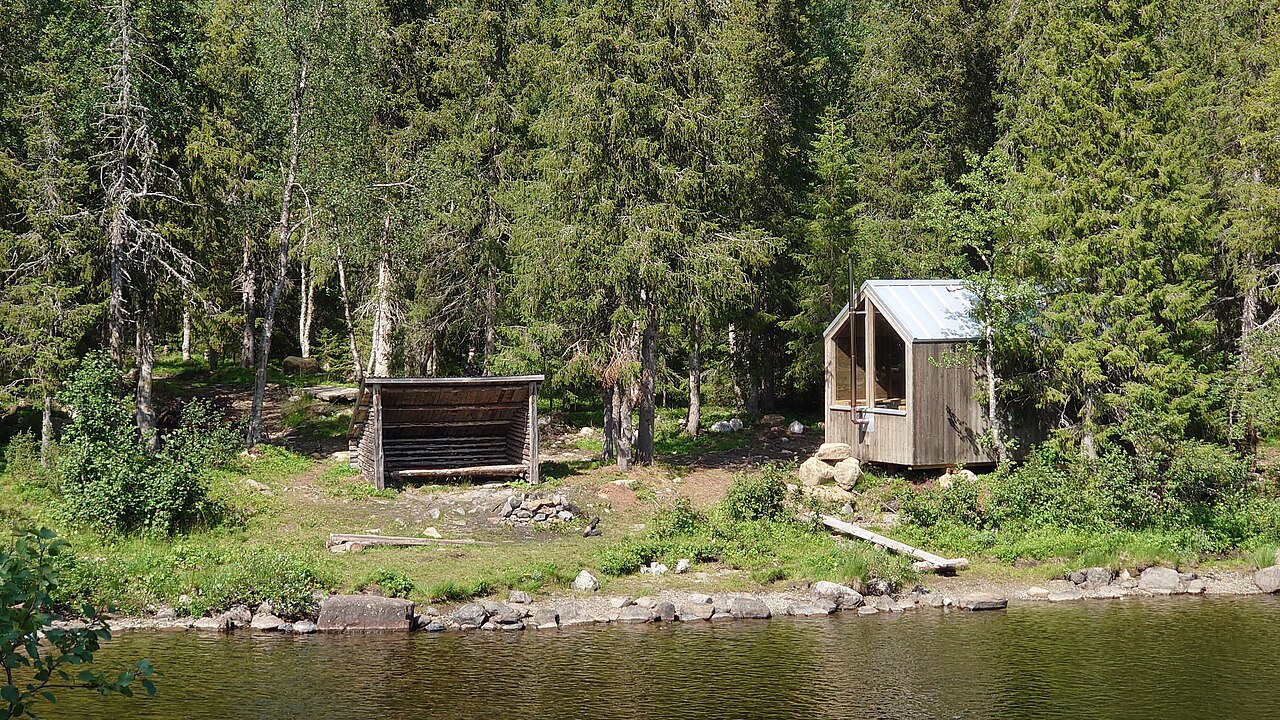
A sauna is a room or building designed as a place to experience dry or wet heat sessions, causing bathers to perspire. The word itself is an ancient Finnish term referring to both the traditional bath and the bathhouse, and it is the most widely known Finnicism in many languages. The earliest known Finnish saunas were pits dug into a slope, used as winter dwellings, featuring a fireplace where stones were heated. Water thrown on the hot stones produced steam, allowing people to remove their clothes. These first saunas were of the smoke sauna type, where a pile of rocks was heated by burning wood for many hours, the smoke was then let out, and the heat and steam, known as *löyly*, could last up to twelve hours. With the Industrial Revolution, a metal stove with a chimney and rocks on top was introduced, with air temperatures often reaching high levels. The electric sauna stove was introduced in 1938. Sauna culture became popular in Scandinavia and German-speaking Europe after the Second World War, as German soldiers who experienced Finnish saunas brought the custom home. Distinct traditions also exist elsewhere, such as the Korean *hanjeungmak*, a domed stone structure first mentioned in the 15th century, which was promoted for health benefits by King Sejong the Great and used in clinics run by Buddhist monks. In modern Finland, saunas are common in nearly every house, and public saunas exist, including one built into a Ferris wheel gondola in Helsinki. Finnish people typically bathe naked. The smoke sauna tradition in Võromaa and sauna culture in Finland have both been inscribed on UNESCO’s Representative List of the Intangible Cultural Heritage of Humanity.
- origin
- Finland
- earliest_known_form
- Pits dug in a slope in the ground, used as dwellings in winter
- traditional_type
- Savusauna (smoke sauna)
- key_term
- Löyly (Finnish for steam and heat)
Lore & Background
The sauna is a room or building designed for dry or wet heat sessions, where high temperatures and steam cause bathers to perspire. A thermometer measures temperature, while a hygrometer gauges humidity. The oldest known Finnish saunas were pits dug into slopes, originally used as winter dwellings, with a fireplace heating stones to high heat. Water thrown on these stones produced steam, raising the apparent temperature so occupants could remove their clothes. These early versions were *savusauna* (smoke saunas), requiring wood burned for 6–8 hours to heat a pile of rocks called a *kiuas*; the smoke was then released before enjoying *löyly*, the combined steam and heat. A properly heated smoke sauna retained heat for up to 12 hours. With the Industrial Revolution, wood-burning metal stoves with chimneys replaced open fires, and air temperatures averaged around a certain point, sometimes exceeding it. The electric sauna stove was introduced in 1938. Sauna culture is closely tied to Finland and Estonia, with traditions also valued in Baltic countries. Modern saunas are common in Finnish homes, including built-in units in apartment buildings and bathrooms, as well as public saunas like the one established in Tampere in 1906. Finnish people typically bathe naked. Sauna culture has been recognized by UNESCO, with the smoke sauna tradition in Võromaa registered in 2014 and sauna culture in Finland in 2020.
Reader's Guide
The sauna’s significance is rooted in its ancient origins and diverse cultural evolution. Early structures, such as Neolithic stone buildings in the Orkney islands and similar sites in Greenland and Newfoundland, featured fire areas and scorched stones, suggesting early steam-bathing practices. In Finland, the oldest saunas were pit dwellings with fireplaces for heating stones; water thrown on the stones produced steam, allowing bathers to undress. These were smoke saunas, heated by burning wood for hours before the smoke was released, providing heat for up to twelve hours. The Industrial Revolution introduced wood-burning metal stoves with chimneys, and later electric stoves appeared in 1938. Sauna culture spread globally through Finnish migration and, after World War II, became popular in Scandinavia and German-speaking regions when German soldiers brought the custom from Finland. The tradition is recognized by UNESCO, with entries for smoke sauna tradition in Võromaa and sauna culture in Finland. Modern saunas, originating in Northern Europe, are built into most Finnish homes and public spaces; bathers typically sit naked, and humidity is controlled to allow high temperatures. The practice remains central to Finnish and Estonian culture, valued for its customs and traditions.
Did You Know?
- The word sauna is the best known Finnicism in many languages.
- Traditional Korean saunas, called hanjeungmak, were first mentioned in the 15th century in the Sejong Sillok.
Linguistic Roots and the Germanic Question
The word "sauna" is an ancient Finnish term that refers to both the bathing practice and the physical structure itself. In Finnic languages beyond Finnish and Estonian, the word and its relatives don't always point to a bathing space—they can simply mean a small cabin or cottage, like one a fisherman might use. It has become the most widely recognized Finnicism across many world languages. Interestingly, scholar Petri Kallio has proposed a Germanic origin for the word, a theory that has earned some academic backing. Under this hypothesis, the term traces back to Proto-Germanic *stakka- or an earlier Palaeo-Germanic form, cognate with the English word "stack." The original meaning referred to a pile or heap, which in this context would describe an early sauna oven made of stacked stones. The borrowed word supposedly evolved into Proto-Finnic *sakna before becoming the Finnish sauna we know today.
Ancient Precedents Across Three Continents
Evidence of heat-based bathing practices stretches back thousands of years across multiple continents. On the rocky Orkney islands of Scotland, Neolithic stone structures dating to roughly 4000 B.C.E. contain dedicated fire and bathing areas, and some may have incorporated steam in a manner resembling the sauna, though this remains speculative. In Greenland and Newfoundland, archaeological digs have revealed structures closely resembling traditional Scandinavian farm saunas, complete with bathing platforms and large amounts of badly scorched stones. In East Asia, the Korean hanjeungmak—a domed stone structure—was first documented in the 15th-century Sejong Sillok. Backed by King Sejong the Great, these facilities were promoted for their health benefits and used to treat illness. Buddhist monks ran hanjeungso clinics in the early 15th century, operating separate men's and women's sections due to heavy demand. Korean sauna culture and kiln saunas remain ubiquitous in the country today.
From Finnish Pits to a Post-War European Boom
The Western sauna tradition traces directly to Finland, where the earliest known saunas were pits dug into ground slopes, serving primarily as winter dwellings. A fireplace heated a pile of stones called a kiuas, and water thrown onto those stones generated steam, raising the apparent temperature enough for bathers to undress. The original savusauna, or smoke sauna, required burning large quantities of wood for six to eight hours, then venting the smoke before enjoying the löyly—the combined steam and heat. A properly heated savusauna could sustain warmth for up to twelve hours. The Industrial Revolution brought a wood-burning metal stove with a chimney, pushing temperatures to 75–100 °C and occasionally above 110 °C. In 1938, Metos Ltd in Vaasa introduced the electric sauna stove. After World War II, German soldiers who had fought alongside Finns during the Continuation War carried the custom home, having built saunas in mobile tents and even bunkers during the war. This sparked a sauna boom across Germany, Austria, Switzerland, Belgium, the Netherlands, and Luxembourg in the latter half of the 20th century.
Modern Design, Finnish Customs, and UNESCO Recognition
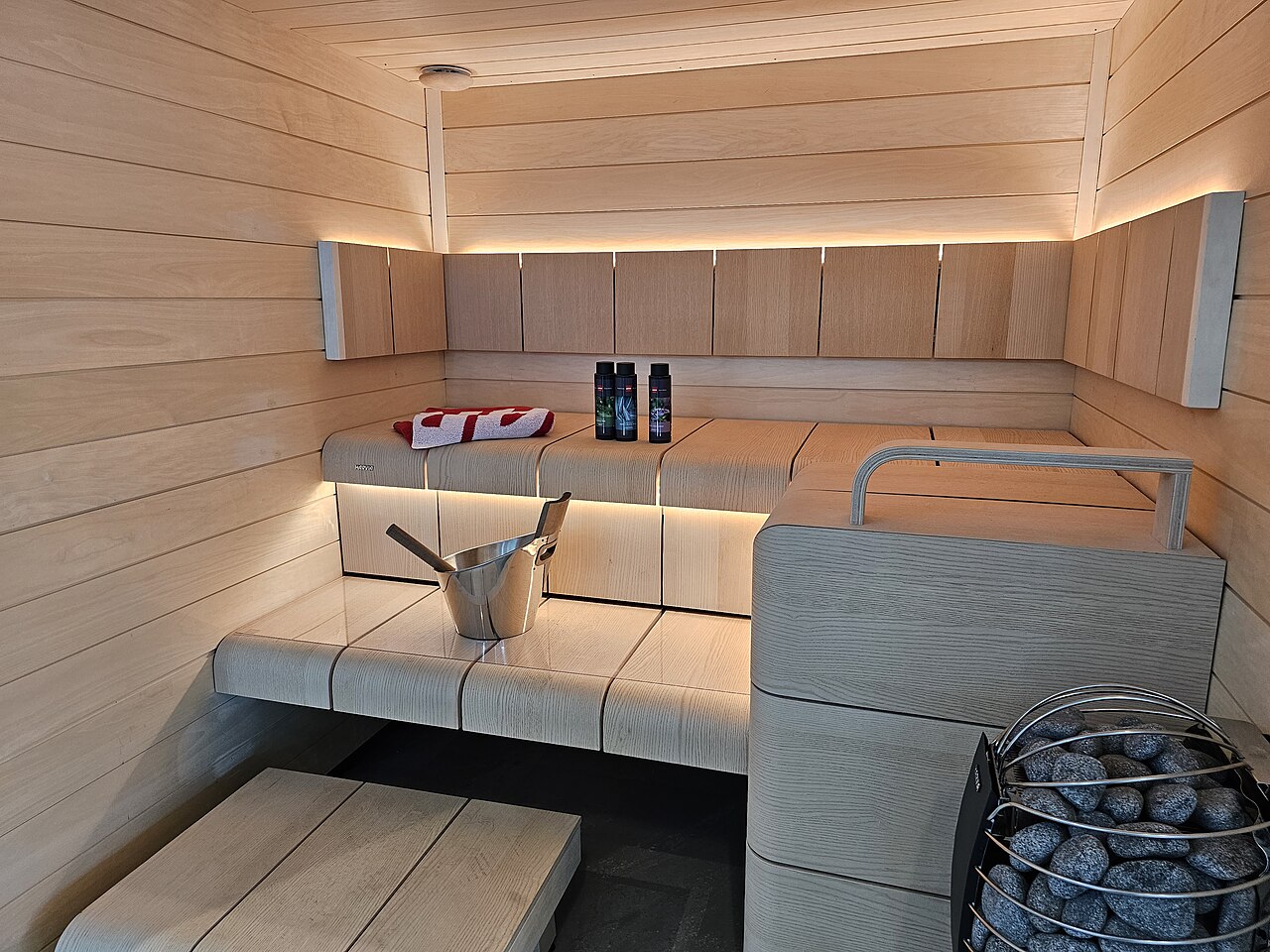
In contemporary Finland, saunas are embedded in nearly every household, including communal facilities in older apartment blocks and private units built into bathrooms of typical flats since the 1980s, sometimes even in student housing. Public saunas like Rajaportin Sauna in Tampere, established in 1906 by Hermanni and Maria Lahtinen, and a sauna built into a Ferris wheel gondola in Helsinki, illustrate the cultural ubiquity. Finnish bathers typically go nude rather than wearing swimsuits or towels. The technical design of a sauna hinges on humidity control: the hottest Finnish saunas maintain relatively low humidity, with steam produced by pouring water onto hot stones, allowing air temperatures near or above 100 °C to be tolerated. In contrast, steam baths like the hammam, where humidity approaches 100%, must operate at around 50 °C to avoid scalding. A thermometer measures temperature while a hygrometer tracks humidity. The practice has earned international recognition: UNESCO registered the "Smoke sauna tradition in Võromaa" in 2014 and "Sauna culture in Finland" in 2020 on its Representative List of the Intangible Cultural Heritage of Humanity.
Gallery
Frequently Asked Questions
Who is Sauna?
Sauna is a heated space built around the practice of dry or wet heat sessions that make bathers sweat, with roots stretching back to ancient Finnish tradition. It has since grown into a worldwide cultural phenomenon with its own distinct variations in Finland, Korea, and other regions.
Why is Sauna important?
Sauna represents one of Finland's most enduring cultural exports, turning a basic winter-survival method into a practice people around the world now seek out for relaxation and community. Its two UNESCO recognitions highlight how deeply it is woven into both regional and national identity.
What is Sauna's earliest known form?
The oldest recognized version was a pit carved into a hillside, originally serving as a winter shelter before it became a dedicated heat-and-sweat chamber. That humble beginning eventually gave rise to the traditional savusauna, or smoke sauna, still practiced in parts of Estonia and Finland.
More in Other 1-21
Spotted an error? Know more?
This is a living reference — every entry is fact-audited, and reader corrections feed straight into our audit queue. Suggest an edit · See this site's audit record