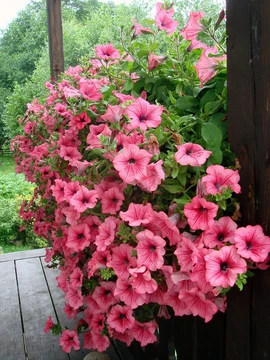
Chrysanthemum
A late-season flower symbolizing autumn, cultivated for centuries in East Asia.
Last updated
Chrysanthemums, often called mums or chrysanths, are perennial herbaceous flowering plants from the Asteraceae family that flower in autumn. They are native to East Asia and northeastern Europe, with most species coming from East Asia and the greatest variety found in China. Countless horticultural varieties and cultivars exist.
Description
The plants are perennial herbs, sometimes subshrubs. Their leaves grow alternately, are divided into leaflets, and can be pinnatisect, lobed, or serrated, though rarely entire; the leaf stalks have hairy bases. The flower heads form a compound inflorescence, either in clusters or alone. Each head sits on a base covered in layered phyllaries.
A single row of ray florets may be white, yellow, or red, while the disc florets are yellow. Pollen grains measure about 34 microns. The fruit is a ribbed achene.
Etymology
The name comes from the Ancient Greek chrysos (gold) and anthemon (flower).
Taxonomy
Linnaeus first formally described the genus in 1753, listing 14 species, so his name (L.) is the botanical authority. The genus once included more species but was split decades ago into several genera, moving the commercially important florist's chrysanthemums into Dendranthema. Naming became contentious, but a 1999 International Botanical Congress ruling changed the defining species to Chrysanthemum indicum, returning florist's chrysanthemums to Chrysanthemum. Genera now separated include Argyranthemum, Glebionis, Leucanthemopsis, Leucanthemum, Rhodanthemum, and Tanacetum.
As of September 2025, Plants of the World Online accepts the listed species. Former species include Chrysanthemum carinatum (now Ismelia carinata), C. cinerariifolium (Tanacetum cinerariifolium), C. coccineum (Tanacetum coccineum), C. coronarium (Glebionis coronaria), C. frutescens (Argyranthemum frutescens), C. maximum (Leucanthemum maximum), C. pacificum (Ajania pacifica), and C. segetum (Glebionis segetum).
Cultivation
Cultivation began in China as early as the 15th century BCE, with over 500 cultivars recorded by 1630. By 2014, an estimated 20,000 cultivars existed worldwide, about 7,000 in China. The plant is one of the Four Gentlemen in East Asian art and is especially important during the Double Ninth Festival. In Japan, cultivation started in the Nara and Heian periods (early 8th to late 12th centuries) and became popular in the Edo period (early 17th to late 19th centuries).
Many flower shapes, colors, and varieties emerged, and growing techniques developed. Edo-period cultivars were exported to China, influencing Chinese cultivation. From the Meiji period (late 19th to early 20th centuries), the Ogiku style—flowers over 20 cm in diameter—was created.
The imperial crest of Japan is a chrysanthemum, and the monarchy is called the Chrysanthemum Throne. Autumn festivals and shows occur across Japan. Chrysanthemum Day, one of the five ancient sacred festivals, is celebrated on the 9th day of the 9th month, starting in 910 with the first imperial chrysanthemum show. In the U.S., Colonel John Stevens imported the Dark Purple variety from England in 1798 for Elysian Fields in Hoboken, New Jersey.
For horticulture, all cultivars are divided into 13 categories based on flower form, as classified by the National Chrysanthemum Society (USA).
Modern cultivated chrysanthemums are often brighter and more striking than wild types. Many have been bred to have multiple rows of ray florets in various colors. Flower heads range from daisy-like to pompon or button forms.
The genus includes many hybrids and thousands of horticultural cultivars. Besides traditional yellow, colors include white, purple, and red. The key hybrid is Chrysanthemum × morifolium (syn. C. × grandiflorum), mainly from C. indicum but involving other species.
Over 140 cultivars have received the Royal Horticultural Society's Award of Garden Merit (confirmed 2017). In Japan, chrysanthemum bonsai developed over centuries; the plant lives about five years and can be kept miniature. A bonsai-like effect is also created by growing the flower over dead wood to suggest a miniature tree.
Yellow or white flowers of C. morifolium are boiled to make tea in parts of East Asia, known as chrysanthemum tea.
Scientific classification
- CladeTracheophytes
- CladeAngiosperms
- CladeEudicots
- CladeAsterids
- OrderAsterales
- FamilyAsteraceae
- GenusChrysanthemum
Named by L.
Sources: Wikipedia taxobox: Chrysanthemum (CC BY-SA 4.0)
Lore & Background
Chrysanthemums are perennial herbaceous flowering plants, sometimes taking the form of subshrubs, belonging to the family Asteraceae. Their leaves are arranged alternately along the stem and are typically divided into leaflets; they may be pinnatisect, lobed, or serrated (toothed), though they are rarely entire. The leaves are connected to stalks that have hairy bases. The plant’s inflorescence is a compound structure, consisting of an array of several flower heads, or occasionally a solitary head.
Each head is supported by a base covered in layers of phyllaries. The ray florets, arranged in a simple row, are white, yellow, or red, while the disc florets are yellow. Pollen grains measure approximately 34 microns. The fruit is a ribbed achene.
Native to East Asia and northeastern Europe, most species originate from East Asia, with the center of diversity located in China. As a late-season flower, chrysanthemums are associated in the Northern Hemisphere with the month of November. The genus was first formally described by Linnaeus in 1753, originally containing 14 species. A ruling by the International Botanical Congress in 1999 changed the defining species of the genus to Chrysanthemum indicum, restoring the florist’s chrysanthemums to the genus Chrysanthemum after a period of taxonomic splitting.
Reader's Guide
Chrysanthemums are perennial herbaceous flowering plants in the family Asteraceae, native to East Asia and northeastern Europe, with their center of diversity in China. They bloom in autumn and are associated in the Northern Hemisphere with the month of November. The name derives from Greek words for gold and flower.
The genus was first formally described by Linnaeus in 1753, though its taxonomic history is complex: the genus once included many more species, but was split into several genera, with the economically important florist’s chrysanthemums moved to Dendranthema. A 1999 ruling by the International Botanical Congress changed the defining species to Chrysanthemum indicum, restoring the florist’s chrysanthemums to the genus. The leaves are alternate, divided into leaflets, and may be pinnatisect, lobed, or serrate, with hairy-based stalks.
The inflorescence is an array of several flower heads or a solitary head, with a base covered in layers of phyllaries. Ray florets are white, yellow, or red, while disc florets are yellow. The fruit is a ribbed achene. Cultivation began in China as early as the 15th century BCE, and over 500 cultivars were recorded by 1630.
By 2014, over 20,000 cultivars existed worldwide, with about 7,000 in China. In Japan, cultivation began during the Nara and Heian periods and flourished in the Edo period, producing many flower shapes and colors. Chrysanthemums entered American horticulture in 1798 when a cultivated variety was imported from England.
Did You Know?
- Pyrethrum, a natural insecticide, is derived from chrysanthemum flowers.
Frequently Asked Questions
Where does Chrysanthemum originate?
The genus is native to East Asia, with China recognized as its center of diversity. Most wild species trace their lineage to that region rather than to Europe or the Americas.
How long has Chrysanthemum been cultivated?
Formal horticultural cultivation dates back to at least the 15th century CE in China, though decorative use likely predates that period. Both China and Japan developed layered traditions around growing, arranging, and displaying the flower over many centuries.
More in Ornamental & Garden Plants
Sources
Compiled from Wikipedia and the sources listed below. Text from Wikipedia is available under CC BY-SA 4.0; this entry is adapted from it.
- Wikipedia: Chrysanthemum (CC BY-SA 4.0).
- Word definitions: the Codexery glossary, each quoted from its Wikipedia article.
Spotted an error? Know more?
Reader corrections go straight into our review queue. Suggest an edit · How this site is sourced