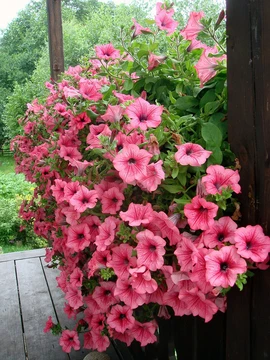
Dahlia
Genus of tuberous perennials native to Mexico and Central America.
Last updated
Mexico and Central America are the native regions of the genus Dahlia, which consists of bushy, tuberous, herbaceous perennial plants.[1] The genus Dahlia contains 49 species, and its flowers come in nearly every color except blue.[2]
Scientific classification
- CladeTracheophytes
- CladeAngiosperms
- CladeEudicots
- CladeAsterids
- OrderAsterales
- FamilyAsteraceae
- GenusDahlia
Named by Cav.
Sources: Wikipedia taxobox: Dahlia (CC BY-SA 4.0)
Quick Facts
- Type species
- Dahlia pinnata
Facts from the source article.
Biology and range
The most common pollinators are bees and small beetles.[3] Dahlias possess tuberous roots and are classified as perennial plants.[3] In regions with cold winters, dahlias are not frost-hardy and need to be shielded from frost.[3] Some dahlias have stems that are herbaceous, whereas others develop stems that become lignified and regrow after a winter dormant period.[3]
The majority of dahlia species are found in Mexico, though a few extend as far south as northern South America.[4] Across Mexico's many mountain ranges, most dahlia species have restricted distributions.[3] As a result, they cannot survive temperatures below freezing.[5][6]
What the specialist sources record
The same source states that dahlias hail from central America and were brought to Europe by the Spanish, initially for eating.[5] The National Dahlia Society, formed in 1881, promotes the dahlia through exhibitions, trials, and conferences.[7] The National Dahlia Society publishes a Winter Bulletin and a summer publication, The Dahlia Annual, to keep members informed on dahlia news.[7] The National Dahlia Society notes that dahlias attract insects, some of which are harmful, and are subject to several diseases.[8]
References
- Wikipedia, "Dahlia" (CC BY-SA 4.0), which cites: Wells, "Longman pronunciation dictionary", Longman, 1990 (we also read that source) en.wikipedia.org
- Wikipedia, "Dahlia" (CC BY-SA 4.0), which cites: "Dahlia Cav. Icon. 1: 56 (t. 80) (1791)", World Flora Online, 2022 (original not read by us) en.wikipedia.org
- Wikipedia, "Dahlia" (CC BY-SA 4.0), which cites: Saar, "A Phylogenetic Analysis of the Genus Dahlia (Asteraceae) Based on Internal and External Transcribed Spacer Regions of Nuclear Ribosomal DNA", Systematic Botany, 2003, p. 627–639 (original not read by us) en.wikipedia.org
- Wikipedia, "Dahlia" (CC BY-SA 4.0), which cites: "Ornamental Geophytes: From Basic Science to Sustainable Production", CRC Press, 2012 (we also read that source) en.wikipedia.org
- "How to Grow Dalias", BBC- Gardners World. facts only, no text reused. gardenersworld.com
- Wikipedia, "Dahlia" (CC BY-SA 4.0), which cites: "How to Grow Dalias", BBC- Gardners World (we also read that source) en.wikipedia.org
- "National Dahlia Society: Dahlia species". facts only, no text reused. dahlia-nds.co.uk
- Nash, "Pests & Diseases", National Dahlia Society. facts only, no text reused. dahlia-nds.co.uk
Each numbered sentence above was checked against the source it cites before publication. Sentences citing Wikipedia adapt text from the English Wikipedia article Dahlia (contributors), used under CC BY-SA 4.0; this entry is available under the same licence. Other sources were used for facts only; no text or images are copied from them.
More in Ornamental & Garden Plants
Sources
Compiled from Wikipedia and the sources listed below. Text from Wikipedia is available under CC BY-SA 4.0; this entry is adapted from it.
- Wikipedia: Dahlia (CC BY-SA 4.0).
- Word definitions: the Codexery glossary, each quoted from its Wikipedia article.
Spotted an error? Know more?
Reader corrections go straight into our review queue. Suggest an edit · How this site is sourced