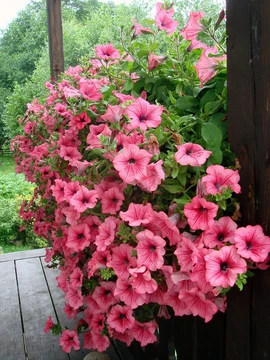
Dianthus
A genus of flowering plants known for carnations and pinks.
Last updated
Common names for this genus include carnation, pink, and sweet william. The genus comprises roughly 340 species within the Caryophyllaceae family, with a natural distribution centered on Europe and Asia. A few species are native to northern and southern Africa, and one, Dianthus repens, occurs in arctic North America.
Description
Two species, Dianthus armeria and Dianthus deltoides, have been introduced to North America. Most species are herbaceous perennials, though some are annual or biennial, and a few take the form of low subshrubs with woody bases. The leaves are arranged oppositely, are simple and mostly linear, and often display a strongly glaucous grey-green or blue-green hue. The flowers typically have five petals with a frilled or pinked margin, and in nearly all species the colour ranges from pale to dark pink.
An exception is Dianthus knappii, which bears yellow flowers with a purple centre. Some perennial pinks are noted for their strong, spicy fragrance. The name Dianthus derives from Greek, combining Dios (of Zeus) and anthos (flower), a term used by the ancient botanist Theophrastus.
The colour pink may itself be named after the flower, stemming from the frilled petal edges; the verb "to pink" has meant to decorate with a perforated pattern since the 14th century, as seen in pinking shears. Alternatively, the word may come from the Dutch "pinksteren," referring to the Pentecost flowering season. Since 1717, these plants have been extensively bred and hybridized, yielding thousands of cultivars in white, pink, yellow, and red, with diverse flower shapes and markings. Over 100 such cultivars have received the Royal Horticultural Society's Award of Garden Merit.
In culture
In the language of flowers, pink dianthus symbolize boldness. Dianthus gratianopolitanus, the Cheddar pink, was chosen as the county flower of Somerset in 2002, while Dianthus japonicus is the official flower of Hiratsuka, Japan. In Japan, Dianthus superbus (fringed pink or nadeshiko) appears in the term Yamato nadeshiko, describing a traditional ideal of womanhood.
Scientific classification
- CladeTracheophytes
- CladeAngiosperms
- CladeEudicots
- OrderCaryophyllales
- FamilyCaryophyllaceae
- GenusDianthus
Named by L.
Sources: Wikipedia taxobox: Dianthus (CC BY-SA 4.0)
Quick Facts
- Type species
- Dianthus caryophyllus
Facts from the source article.
Lore & Background
The genus Dianthus comprises around 340 species of flowering plants within the carnation family, Caryophyllaceae. Its natural distribution centers on Europe and Asia, with a smaller number of species occurring in northern and southern Africa. One species, Dianthus repens, is native to arctic North America, while two others, Dianthus armeria and Dianthus deltoides, have been introduced to North America. Common names for various species include carnation (for Dianthus caryophyllus), pink (for Dianthus plumarius and related species), and sweet william (for Dianthus barbatus).
Most species are herbaceous perennials, though a few are annual or biennial, and some take the form of low subshrubs with woody bases. The leaves are arranged opposite each other, are simple, mostly linear in shape, and often display a strongly glaucous grey-green to blue-green color. The flowers typically bear five petals with a frilled or pinked margin, and in nearly all species the blooms range from pale to dark pink.
An exception is Dianthus knappii, which produces yellow flowers with a purple center. Many perennial pinks are especially valued for their strong, spicy fragrance. The genus name derives from the Greek diosanthos, a compound of Dios (meaning "of Zeus") and anthos ("flower"), a term used by the ancient Greek botanist Theophrastus. The common name "pink" may originate from the frilled edge of the petals, as the verb "to pink" (meaning to decorate with a perforated pattern) dates from the 14th century and is the source of "pinking shears." Alternatively, "pink" could come from the Dutch word pinksteren, referring to the Pentecost season when the flowers bloom, meaning the color may be named after the flower rather than the reverse.
Reader's Guide
Dianthus species serve as host plants for the larvae of several Lepidoptera, including the cabbage moth, double-striped pug, large yellow underwing, and the lychnis. Three species of Coleophora case-bearer moths feed exclusively on Dianthus: C. dianthi, C. dianthivora, and C. musculella, the last of which is restricted to Dianthus superbus. The genus has been extensively bred and hybridised since 1717, yielding thousands of cultivars for gardens and floristry in shades of white, pink, yellow, and red, with diverse flower shapes and markings. These cultivars are typically grouped into border carnations, perpetual flowering carnations (grown under glass for year-round bloom and exhibition), Malmaison carnations (valued for their intense clove fragrance), old-fashioned pinks (evergreen perennials with blue-green foliage and summer flowers), modern pinks (often blooming two or three times per year), and alpine pinks (mat-forming plants for rockeries).
Over 100 varieties have received the Royal Horticultural Society’s Award of Garden Merit. Dianthus gratianopolitanus, the Cheddar pink, was chosen as the county flower of Somerset in 2002. Dianthus japonicus is the official flower of Hiratsuka, Kanagawa, Japan, while Dianthus superbus, the fringed pink or nadeshiko, appears in the Japanese term Yamato nadeshiko, describing the archetype of a traditional ideal woman.
More in Ornamental & Garden Plants
Sources
Compiled from Wikipedia and the sources listed below. Text from Wikipedia is available under CC BY-SA 4.0; this entry is adapted from it.
- Wikipedia: Dianthus (CC BY-SA 4.0).
- Word definitions: the Codexery glossary, each quoted from its Wikipedia article.
Spotted an error? Know more?
Reader corrections go straight into our review queue. Suggest an edit · How this site is sourced