Photonic crystal
Periodic nanostructures that control light propagation via photonic band gaps.

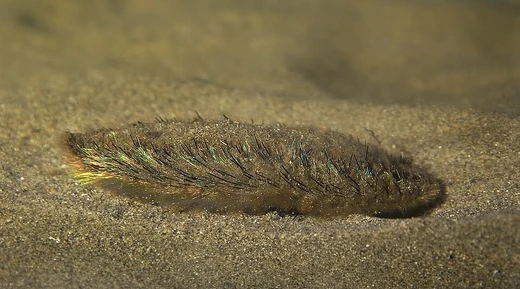
A photonic crystal is an optical nanostructure defined by a periodic variation in its refractive index. This periodicity governs the propagation of light in a manner analogous to how the periodic atomic lattice of a semiconductor affects the conductivity of electrons, or how a natural crystal’s structure gives rise to X-ray diffraction. The structure consists of regularly repeating regions of high and low refractive index. Depending on their wavelength, light waves may either propagate through the crystal (in allowed bands of wavelengths called modes) or be entirely disallowed (in ranges called photonic band gaps). This phenomenon arises from the destructive interference of multiple reflections at each interface between the high- and low-index layers. The periodicity of the structure must be at least half the wavelength of the light within the material for these interference effects to occur; for visible light, this requires features on the scale of hundreds of nanometers. Photonic crystals occur naturally, producing the iridescent colors of opals and the structural coloration in the wings of butterflies like *Teinopalpus imperialis*. Artificially, they can be fabricated in one, two, or three dimensions. One-dimensional versions are made by depositing thin film layers, while two-dimensional crystals can be created via photolithography or by drilling holes into a substrate. Three-dimensional fabrication methods include drilling at multiple angles, stacking two-dimensional layers, direct laser writing, or using self-assembly of spheres that are later dissolved. Applications include dielectric mirrors (one-dimensional crystals providing ultra-high reflectivity), photonic-crystal fibers for fiber-optic communication, and potential future uses in optical computers and more efficient photovoltaic cells. The study of these structures dates back to 1887, when Lord Rayleigh experimented with periodic multi-layer dielectric stacks and demonstrated a one-dimensional photonic band gap. The modern field expanded dramatically following milestone papers by Eli Yablonovitch and Sajeev John in 1987, which explored periodic optical structures in more than one dimension.
- field
- Photonics, Optical Engineering
- known_for
- Periodic dielectric structures that create photonic band gaps, controlling light propagation
Lore & Background
Photonic crystals are optical nanostructures defined by a periodic variation in refractive index. This repeating pattern of high and low refractive index regions directly influences how light propagates through the material. Depending on the wavelength, light may either be allowed to travel through the structure (in what are called modes and bands) or be completely blocked, a phenomenon known as a photonic band gap. This band gap arises from destructive interference of light reflecting at each interface between the different refractive index layers. The structural period must be at least half the wavelength of the light within the material for these interference effects to occur. For visible light, this requires fabricating features at the nanoscale. Photonic crystals occur naturally, as seen in the iridescent colors of opals and the wings of butterflies like *Teinopalpus imperialis*, where the periodic microstructure creates structural coloration. They can also be artificially manufactured in one, two, or three dimensions. One-dimensional versions are made by depositing thin film layers, while two-dimensional crystals can be created through photolithography or drilling holes. Three-dimensional fabrication methods include drilling at multiple angles, stacking two-dimensional layers, direct laser writing, or using self-assembly of spheres. These structures have a wide range of potential applications wherever light manipulation is needed, including ultra-high reflectivity mirrors, photonic-crystal fibers for communication, and future uses in optical computing and more efficient solar cells.
Reader's Guide
Photonic crystals are significant because they provide a means to manipulate light in ways analogous to how semiconductors control electrons, enabling technologies such as ultra-high reflectivity mirrors, photonic-crystal fibers for fiber-optic communication, and potential future applications in optical computers and more efficient photovoltaic cells. The concept of a photonic band gap—a range of wavelengths that cannot propagate through the structure—arises from destructive interference of multiple reflections at interfaces between regions of high and low refractive index. Fabrication methods vary by dimension: one-dimensional crystals use thin-film deposition; two-dimensional ones use photolithography or drilling; three-dimensional ones involve drilling at different angles, stacking 2-D layers, direct laser writing, or self-assembly of spheres. Despite the name, analysis of photonic crystals requires only classical physics, and the term 'photonic' refers to the study of light (photonics).
Did You Know?
- Photonic crystals occur naturally as structural coloration and animal reflectors.
- Three-dimensional photonic crystals may one day be used in optical computers and more efficient photovoltaic cells.
More in Optics And Photonics 1-24
Spotted an error? Know more?
This is a living reference — every entry is fact-audited, and reader corrections feed straight into our audit queue. Suggest an edit · See this site's audit record