
Linear polarization
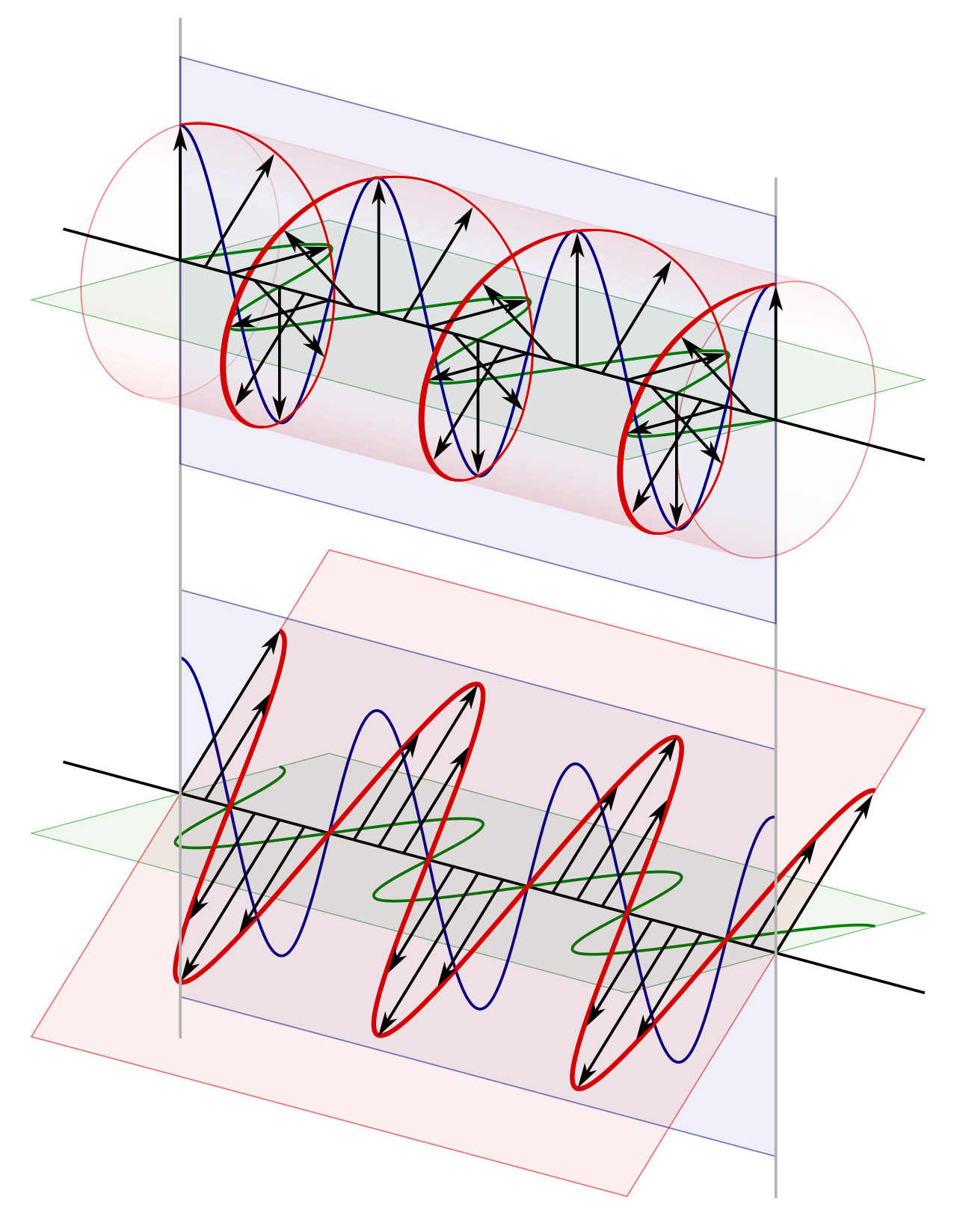
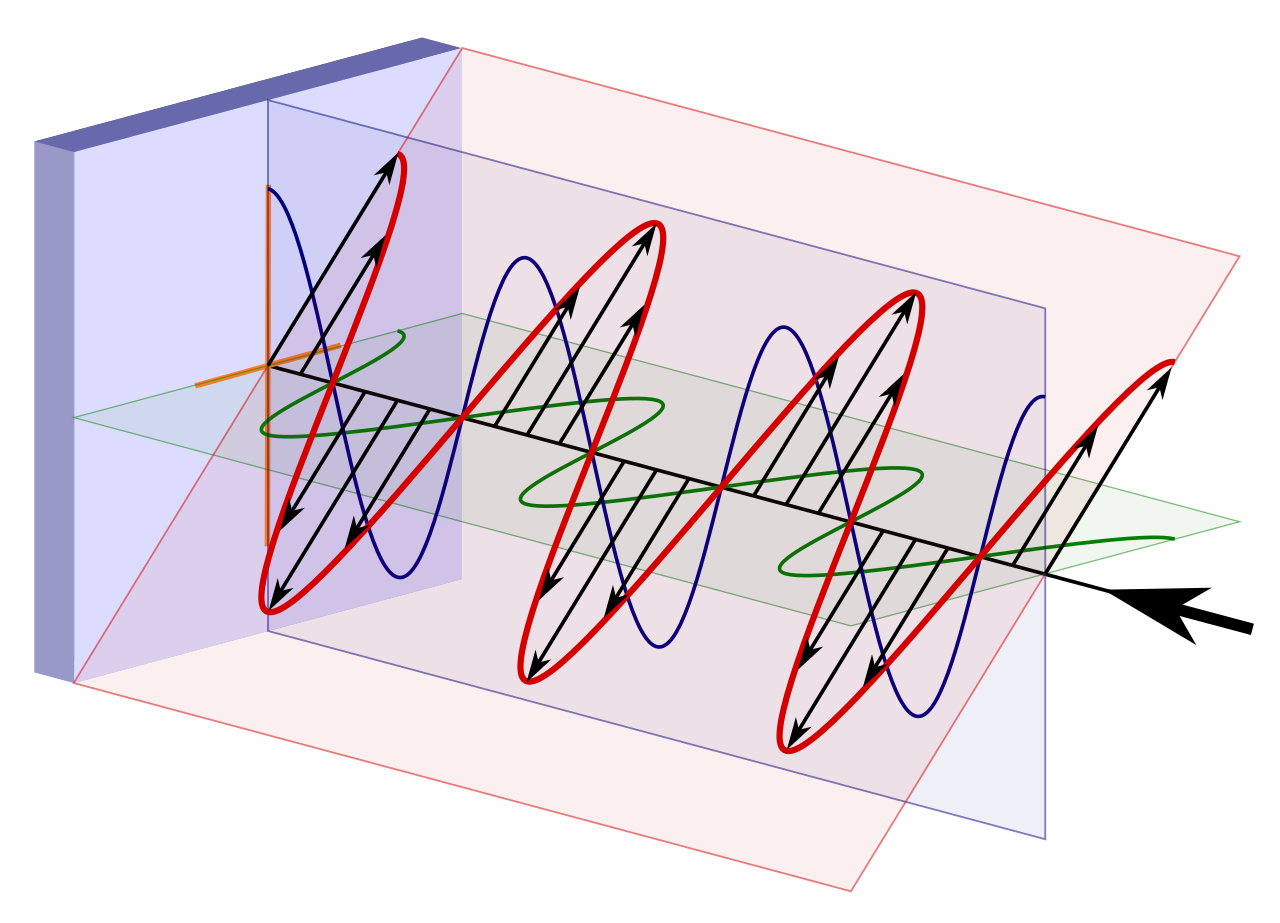
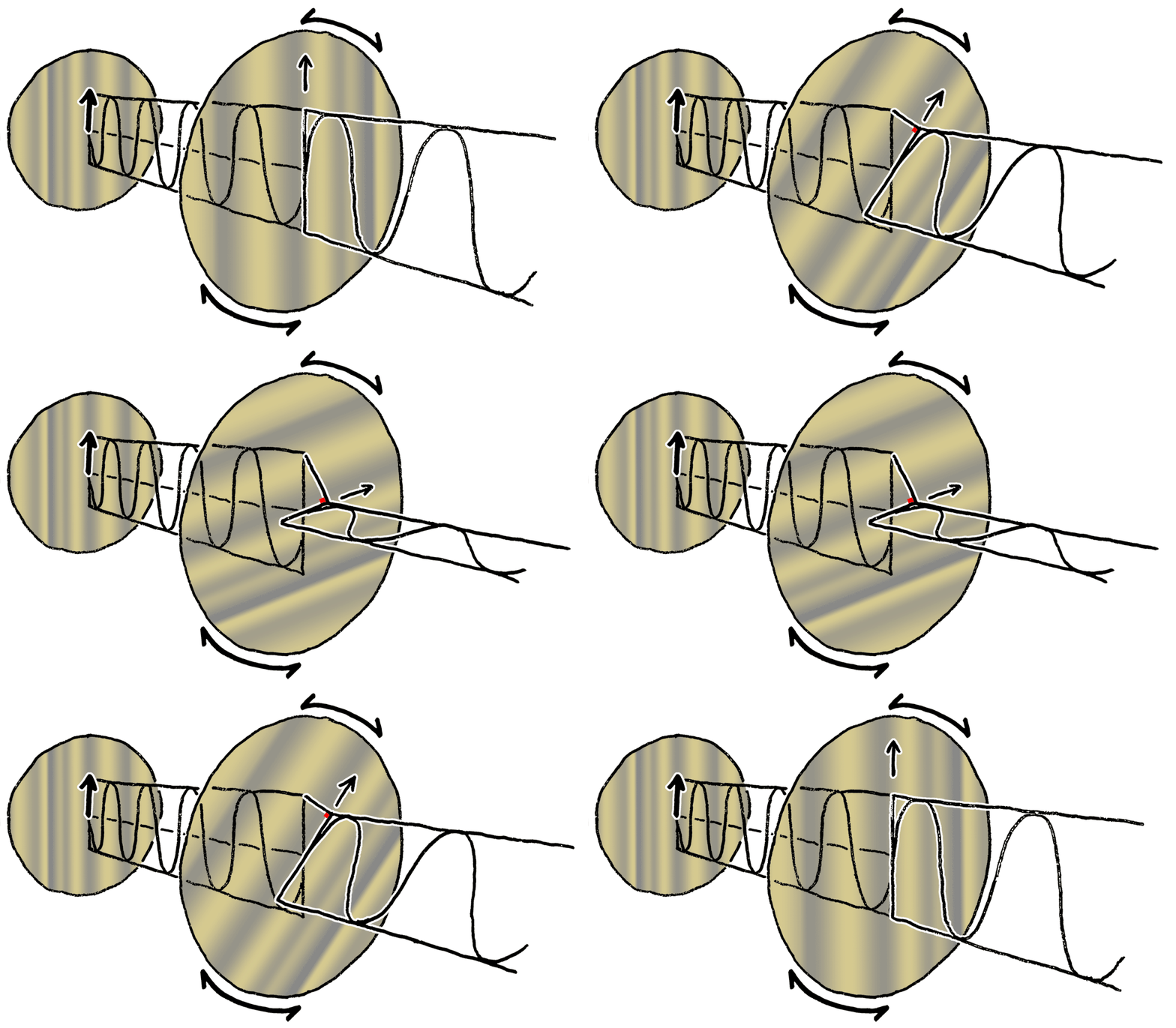
Linear polarization confines the electric field to a single plane.

Dave3457 · Public domain
Linear polarization, also referred to as plane polarization, describes a state of electromagnetic radiation in which the electric field vector (and consequently the magnetic field vector) oscillates within a single, fixed plane along the direction of wave propagation. The term "linear polarization" (or, in French, *polarisation rectiligne*) was introduced by the physicist Augustin-Jean Fresnel in 1822. The orientation of such a wave is defined by the direction of its electric field vector; for instance, a wave whose electric field alternates vertically is described as vertically polarized.
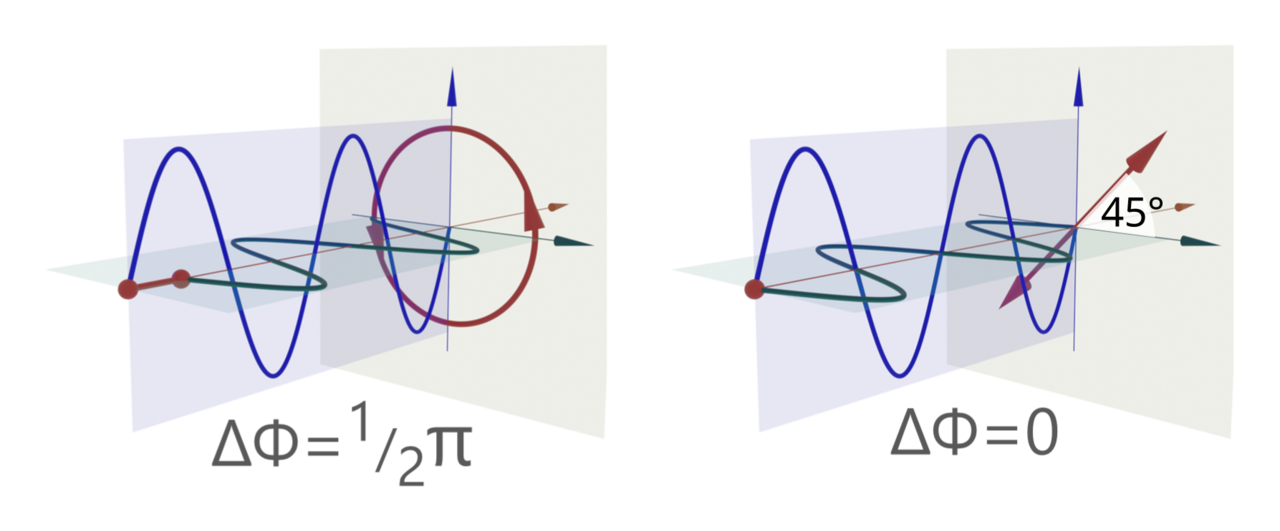
Mathematically, a classical sinusoidal plane wave solution to the electromagnetic wave equation can be expressed for both the electric and magnetic fields. The wave's behavior in a given plane, such as the x-y plane, is often described using a Jones vector, which captures the amplitude and phase of the field components. A wave is linearly polarized when the phase angles of its two orthogonal components (for example, along the x and y axes) are equal. In this case, the resulting electric field oscillates along a line at a specific angle relative to the x-axis. The Jones vector for such a wave can be written to reflect this single direction of oscillation. The special cases of pure x-polarization or pure y-polarization are subsets of this general linear state. By defining unit vectors along the x and y axes, the polarization state can be represented in this "x-y basis" as a combination of those two orthogonal, in-phase components. This confinement of the field to a single plane distinguishes linear polarization from other forms, such as circular or elliptical polarization.
- field
- Electrodynamics
- related_concept
- Polarization and plane of polarization
Lore & Background
In electrodynamics, linear polarization, also known as plane polarization, describes electromagnetic radiation where the electric field vector (or magnetic field vector) is confined to a single plane along the direction of propagation. The orientation of a linearly polarized wave is defined by the direction of the electric field vector; for instance, a vertically oscillating field corresponds to vertical polarization. The term "linear polarization" (French: *polarisation rectiligne*) was introduced by Augustin-Jean Fresnel in 1822. Mathematically, a classical sinusoidal plane wave solution of the electromagnetic wave equation can be represented in terms of its electric and magnetic fields. For a wave propagating in a given direction, the electric field can be expressed using a Jones vector in the x-y plane. Linear polarization occurs when the phase angles of the two orthogonal components of the wave are equal, resulting in a wave polarized at a specific angle relative to the x-axis. The state vectors for purely x or y linear polarization are special cases of this general state. The polarization state can be written in the x-y basis using defined unit vectors. This confinement of the field vector to a fixed plane distinguishes linear polarization from other forms, such as circular or elliptical polarization, where the field vector rotates over time.
Reader's Guide
Linear polarization is a fundamental concept in electrodynamics, describing a state where the electric field vector oscillates in a single plane. The mathematical description uses the classical sinusoidal plane wave solution of the electromagnetic wave equation, with the electric field expressed via a Jones vector in the x-y plane. The wave is linearly polarized when the phase angles α_x and α_y are equal, representing a wave polarized at an angle θ with respect to the x axis. This formalism allows the polarization state to be written in the x-y basis as a combination of unit vectors. The concept is essential for understanding wave propagation, antenna design, and optical phenomena, and it remains a key topic in physics and engineering curricula.
Did You Know?
- Linear polarization is also called plane polarization.
- The orientation of a linearly polarized wave is defined by the direction of the electric field vector.
- A wave is linearly polarized when the phase angles α_x and α_y are equal.
Gallery

Frequently Asked Questions
Who is Linear polarization?
It is not a character but a fundamental state of an electromagnetic wave in which the electric field oscillates within one fixed plane as the wave travels forward. Fans of optics often call it the simplest, most 'upright' way a transverse wave can be polarized.
What are Linear polarization's powers and role?
Its defining trait is locking the electric field vector into a single plane of oscillation, making it the baseline reference from which circular and elliptical polarizations are constructed. In electrodynamics it serves as the foundational case for describing transverse wave propagation.
How does Linear polarization's story end?
Rather than a dramatic finale, it persists as a permanent fixture in the broader narrative of polarization, showing up in sunglasses, fiber-optic links, and antenna design alike. Its legacy is woven into every subsequent treatment of transverse wave behavior.
Why is Linear polarization important to the canon?
It gives physicists the simplest geometric picture of how transverse electromagnetic waves carry directional information, which is essential for designing lasers, optical filters, and communication systems. Without this baseline concept, the richer polarization states would be far harder to define and manipulate.
More in Optics And Photonics 1-24
Spotted an error? Know more?
This is a living reference — every entry is fact-audited, and reader corrections feed straight into our audit queue. Suggest an edit · See this site's audit record