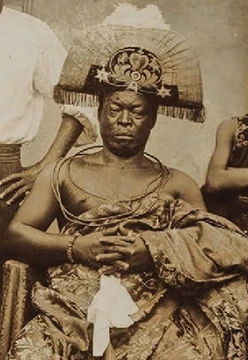
Eresoyen
Twenty-ninth Oba who restored royal authority and patronised the arts.
Eresoyen, also spelt Eresonyen, was the twenty-ninth Oba of Benin, reigning in the eighteenth century around 1735. He was the eldest son of Oba Akenzua I and is noted for reinforcing royal authority after a period of decentralisation. His rule is associated with renewed territorial control, direct participation in Atlantic trade, and significant artistic patronage.
Quick Facts
- Reign
- c. 1735 – c. 1750
- Predecessor
- Akenzua I
- Successor
- Akengbuda
- Died
- c. 1750
- Place of death
- Benin City
- Issue
- Ogiomo (later bin, Oba Akengbuda)
- Princess Omosede
- Princess Osana
- Princess Akesogie
- Dynasty
- Eweka dynasty
- Mother
- Ede
Facts from the source article.
Reign
Eresoyen is remembered in Benin oral history as the ruler who brought the monarchy back to prominence after powerful chiefs had taken control of politics and trade. Before him, under Oba Ehengbuda, central authority had weakened, and local chiefs managed coastal commerce. Eresoyen reversed this trend, reasserting royal power, expanding territory, and opening direct trade with Europeans. When Agbor rebelled, he sent his commander Ezomo Ehennua to crush the uprising. The Agbor ruler was captured and executed, and Agbor stayed under Benin’s control until another rebellion in the 1800s. Eresoyen also stepped into a succession dispute in the Kingdom of Aboh, backing one claimant who received Benin insignia as Obi or Eze, while the rival was subdued.
His era was marked by great wealth, especially from cowrie shells. Oral tradition says this prosperity came from making peace with the sea god Olokun, but scholars point to Atlantic imports during the slave trade. The flood of goods like textiles and metals fueled Benin’s art. Eresoyen was a major patron of the arts. He built the Owigho, or “House of Money,” decorated with cowries, and chiefs like the Ezomo copied this style. Brass items—stools and leopard figures—were produced in larger numbers. He ordered a brass stool modeled on older royal designs, linking himself to Oba Esigie. Many famous bronzes date to his reign and that of Akenzua I.
He strengthened ceremonial kingship, highlighting sacred and dynastic authority. He introduced the Ododua masquerade to honor the royal lineage tracing back to Oromiyan, replacing the Ovia masquerade. He changed royal marriage customs: princesses no longer lived in Ulegun waiting for suitors; instead, marriages were arranged directly with chiefs and citizens. He brought in ivory flutes called akehen and created new titles such as Imaran, Osula, Osague, Osonlaye, Obamagiagbonrhia, and Ebagua. He also formalized festival practices, including adjustments to the Ehiekhu festival.
Personal life and family
Eresoyen’s children included a son, Ogiomo, whom historian Jacob Egharevba noted was light-skinned, tall, and very handsome, as well as several daughters. Among them, Princess Omosede wed the Iyase, Princess Osana married the Edogun, and Princess Akesogie married the Ihaza. Oral traditions criticized Akesogie’s conduct, prompting the Oba to scold her for disrespecting her husband and his family.
More in Obas of Benin
Spotted an error? Know more?
Reader corrections go straight into our review queue. Suggest an edit · How this site is sourced