4674 Pauling
Binary Hungaria asteroid named after chemist Linus Pauling.

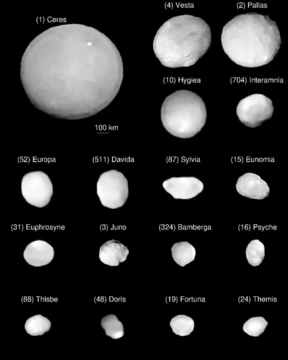
4674 Pauling (provisional designation 1989 JC) is a binary Hungaria asteroid located in the innermost part of the asteroid belt, with a diameter of about 4.5 kilometers. It was discovered on 2 May 1989 by American astronomer Eleanor Helin at the Palomar Observatory in California, and was named for Linus Pauling, the American chemist and Nobel laureate.
This bright E-type asteroid belongs to the Hungaria family, the densest cluster of asteroids in the inner Solar System. It orbits the Sun at a distance of 1.7 to 2.0 astronomical units, completing one orbit every 2 years and 6 months (926 days). Its orbit has an eccentricity of 0.07 and an inclination of 19° relative to the ecliptic. The first precovery image, taken at Palomar in 1985, extends the observation arc by four years before its official discovery.
Measurements from NASA’s Spitzer and WISE telescopes indicate a diameter between 4.2 and 4.8 kilometers, with a surface albedo ranging from 0.17 to 0.39.
Photometric observations between 2005 and 2015, notably by Italian astronomer Silvano Casulli and American astronomer Brian Warner at the Palmer Divide Observatory in Colorado, yielded rotational lightcurves with a period of 2.531 to 2.533 hours. The brightness amplitude is exceptionally low—less than 0.01 magnitude—suggesting the asteroid is nearly spheroidal.
In 2004, a team using ESO’s Very Large Telescope in Chile announced that Pauling has a small moon. Designated S/2004 (4674) 1, the moon was initially thought to be 2.5 kilometers in diameter, but this estimate has since been revised to about 1.5 kilometers, following a reduction in the primary’s size from 8 to 4.5 kilometers. It orbits Pauling at a distance of roughly 250 kilometers every 1200 hours.
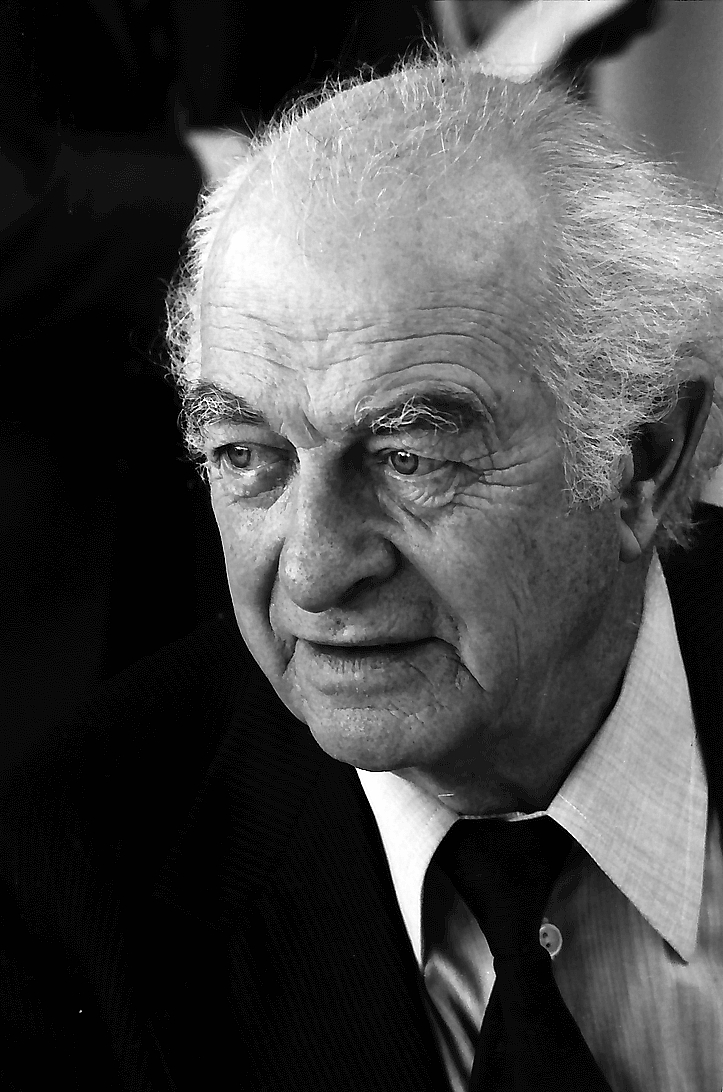
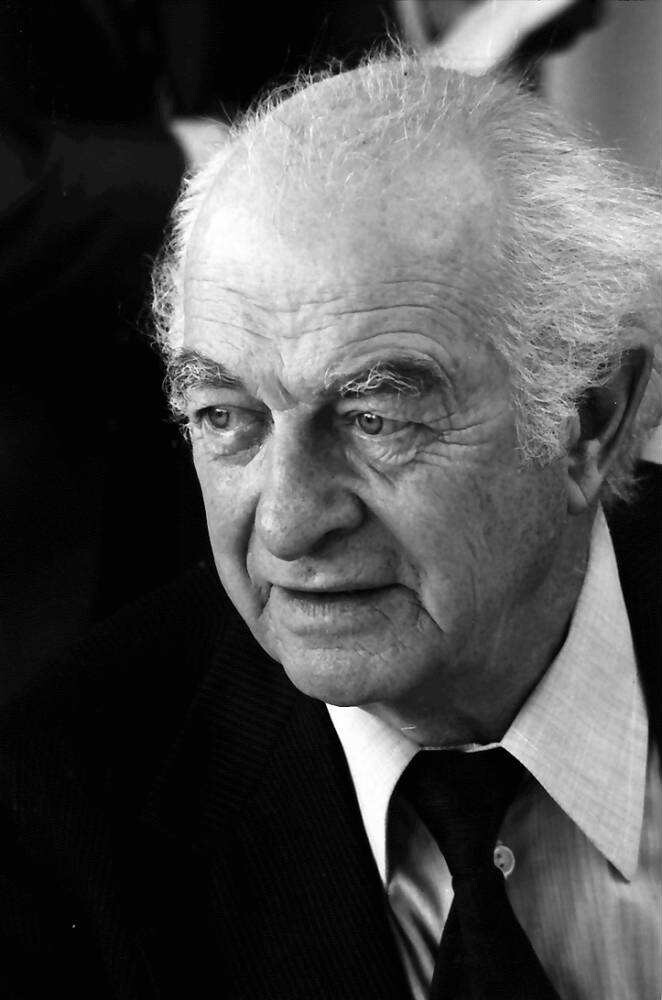
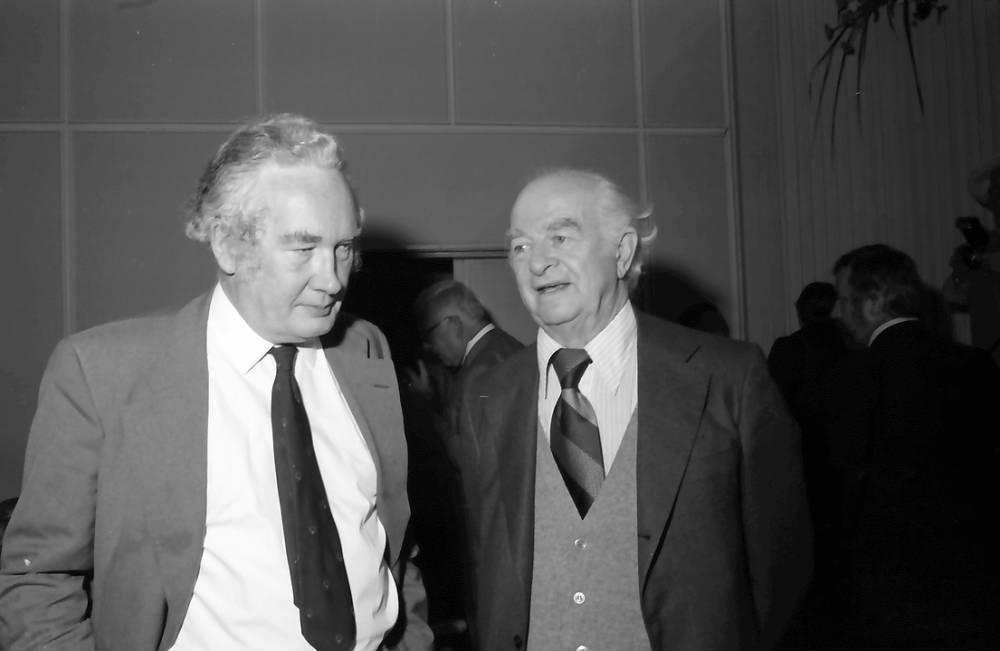
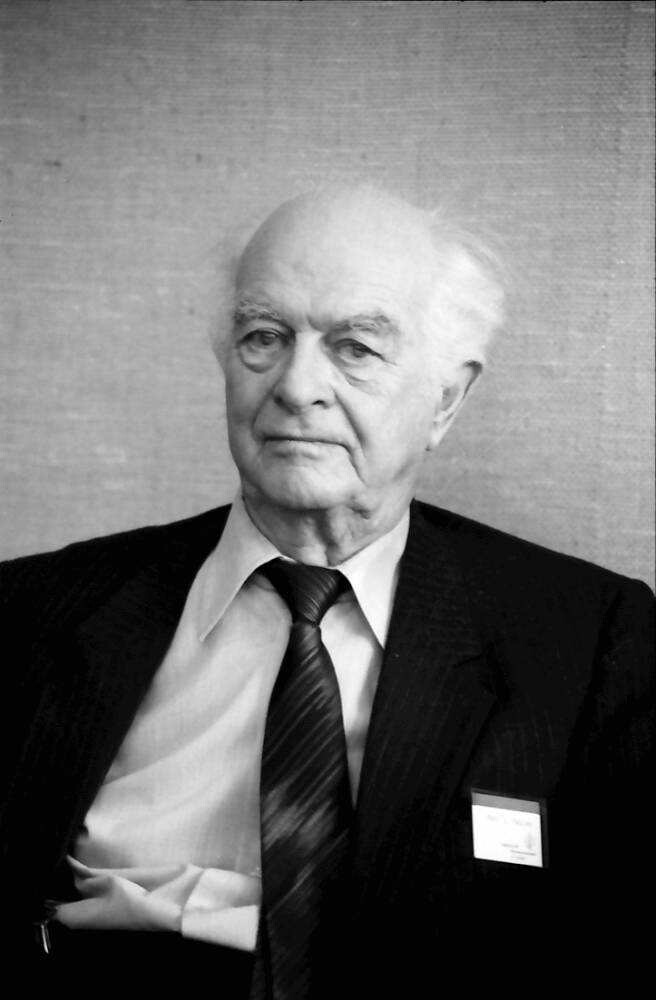
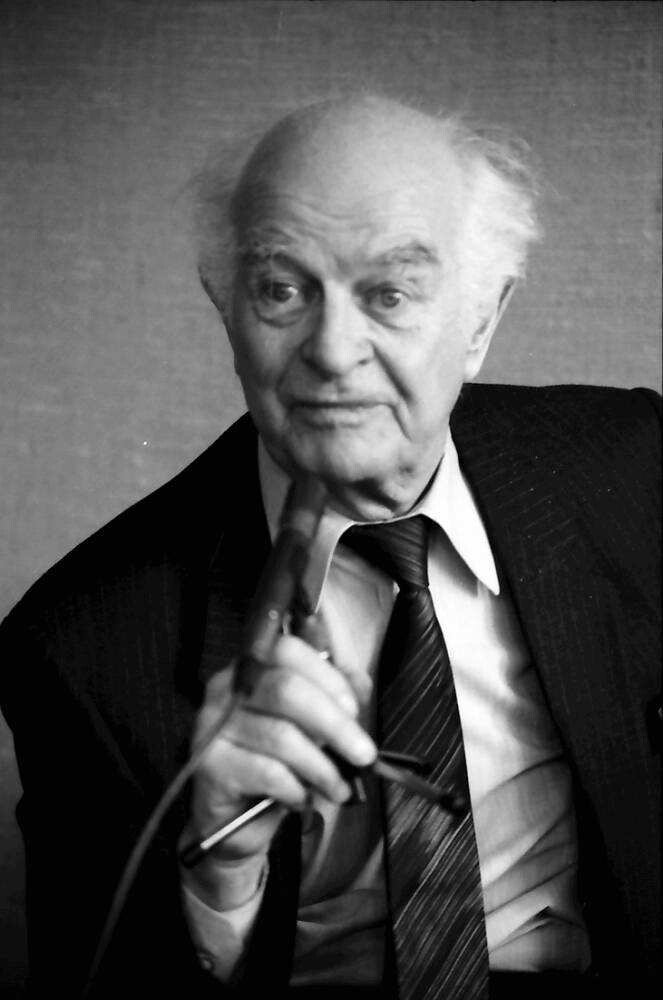
The asteroid was named in honor of Linus Pauling (1901–1994), the American chemist, biochemist, peace activist, author, educator, and multiple Nobel laureate. The naming occurred on his 90th birthday. Pauling spent decades at Caltech, leading its Department of Chemistry and Chemical Engineering, and received the Nobel Prize in Chemistry in 1954 and the Nobel Peace Prize in 1962. Discoverer Eleanor Helin was among his admirers. The official naming citation was published by the Minor Planet Center on 30 March 1991 (M.P.C. 17981).
Quick Facts
- Minorplanet
- yes
- Background
- #D6D6D6
- Discovered
- 2 May 1989
- Discoverer
- E. F. Helin
- Discovery Site
- Palomar Obs.
- Mpc Name
- (4674) Pauling
- Pronounced
- ˈ · p · ɔː · l · ɪ · ŋ
- Named After
- Linus Pauling / (American Nobel laureate)
- Mp Category
- main-beltHungaria
- Epoch
- 4 September 2017 (JD 2458000.5)
- Uncertainty
- 0
- Observation Arc
- 31.47 yr (11,493 days)
Facts from the source article.
Lore & Background
4674 Pauling is a bright E-type asteroid and a member of the Hungaria family, which forms the innermost dense concentration of asteroids in the Solar System. It orbits the Sun in the inner main-belt at a distance of 1.7–2.0 AU once every 2 years and 6 months (926 days), with an eccentricity of 0.07 and an inclination of 19° with respect to the ecliptic. The first precovery was taken at Palomar Observatory in 1985, extending the asteroid's observation arc by 4 years prior to its discovery.
According to surveys by NASA's Spitzer and WISE telescopes, the asteroid measures between 4.2 and 4.8 kilometers in diameter and has a surface albedo of 0.17 to 0.39. Several rotational lightcurves obtained between 2005 and 2015, notably by Italian astronomer Silvano Casulli and American astronomer Brian Warner at the Palmer Divide Observatory, Colorado, gave a rotation period of 2.531–2.533 hours with an exceptionally low brightness amplitude of less than 0.01 in magnitude, indicating a nearly spheroidal shape.
In 2004, a team of astronomers at ESO's Very Large Telescope, Chile, announced that Pauling is orbited by a small asteroid moon, provisionally designated S/2004 (4674) 1. It was believed to measure 2.5 kilometers in diameter (now rather 1.5 km, since the primary's size estimate has been reduced from 8 to 4.5 kilometers) and to orbit Pauling at a distance of 250 kilometers once every 1200 hours.
Reader's Guide
The naming of 4674 Pauling honors American chemist, biochemist, peace activist, author, educator, and multiple Nobel laureate Linus Pauling (1901–1994), taking place on the occasion of his 90th birthday. Pauling had a renowned career at Caltech, leading its Department of Chemistry and Chemical Engineering, and received the Nobel Prize in Chemistry in 1954 and the Nobel Peace Prize in 1962. Astronomer Eleanor Helin was one of his admirers. The approved naming citation was published by the Minor Planet Center on 30 March 1991. The asteroid's significance lies in its binary nature, with a moon whose size estimate has been revised downward as the primary's diameter was reduced from 8 to 4.5 kilometers. Its exceptionally low lightcurve amplitude suggests a nearly spheroidal shape, and its classification as a Hungaria E-type asteroid places it in the innermost dense concentration of asteroids in the Solar System. The discovery and characterization of its moon in 2004 at the Very Large Telescope add to its legacy as a well-studied small body.
Did You Know?
- 4674 Pauling was discovered by American astronomer Eleanor Helin at Palomar Observatory on 2 May 1989.
- It is a binary asteroid with a moon provisionally designated S/2004 (4674) 1, discovered in 2004 at ESO's Very Large Telescope.
- The asteroid's rotation period is about 2.531–2.533 hours, with a brightness amplitude less than 0.01 magnitude, indicating a nearly spheroidal shape.
- It was named after Linus Pauling on the occasion of his 90th birthday, and the naming citation was published on 30 March 1991.
A Singular Nobel Record
Linus Carl Pauling stands apart in the history of scientific recognition. He received the Nobel Prize in Chemistry in 1954 for his foundational work in the field, and then, eight years later, the Nobel Peace Prize in 1962 for his activism on behalf of nuclear disarmament. This dual achievement places him among only five individuals in history to have received more than one Nobel Prize. Within that exclusive group, Pauling is the sole recipient to have earned two unshared prizes, and he shares the distinction—alongside Marie Curie—of being one of just two people honored in entirely different fields. His prolific output exceeded 1,200 published papers and books, roughly 850 of which addressed scientific topics. The publication Scientific American later ranked him among the twenty greatest scientists of all time, a testament to the breadth and depth of a career that spanned fundamental chemistry, structural biology, and global peace advocacy.
Architect of Quantum Chemistry and Protein Structure
Pauling is widely recognized as a co-founder of both quantum chemistry and molecular biology. His work on the theory of the chemical bond brought forward the idea of orbital hybridisation and established the first reliable electronegativity scale for the elements. Beyond abstract theory, he applied a multidisciplinary methodology that wove together X-ray crystallography, physical molecular model building, and quantum-mechanical calculations to investigate the architecture of biological molecules. His identification of the alpha helix and beta sheet as fundamental elements of protein secondary structure became cornerstones of structural biology. The ripple effects of his work were enormous: his discoveries directly inspired the collaborative efforts of James Watson, Francis Crick, Rosalind Franklin, and Maurice Wilkins in elucidating the structure of DNA, a breakthrough that ultimately enabled geneticists to decode the genetic code shared by all living organisms.
From Oregon's Small Towns to the Laboratory
Born in Portland, Oregon, on February 28, 1901, Pauling grew up in a household shaped by loss and resourcefulness. His father, a drugstore owner, died of a perforated ulcer in 1910, leaving his mother Lucy to raise three children alone. Young Linus's fascination with chemistry was sparked by a friend's small lab kit, and in high school he and a companion ran a makeshift operation called Palmon Laboratories out of a basement, scavenging equipment from an abandoned steel plant. At fifteen, he had accumulated enough credits to enter Oregon State University but lacked two history courses for his diploma; the school refused to let him take them concurrently, so he left without one. He supported himself through odd jobs—grocery work, apprenticeship as a machinist, a photography lab—before being admitted in September 1917. At OSU he met Ava Helen Miller in a chemistry class he taught for home-economics students. He graduated in chemical engineering in 1922 and moved on to graduate study at the California Institute of Technology.
Peace, Vitamins, and a Contested Legacy
In the latter decades of his life, Pauling turned his considerable intellect toward causes that divided the scientific community. His most celebrated later endeavor was a sustained campaign for nuclear disarmament, which earned him the 1962 Nobel Peace Prize. Simultaneously, he championed what he called orthomolecular medicine, advocating megavitamin therapy and the use of high-dose ascorbic acid—commonly known as Vitamin C—as a dietary supplement for broad health benefits. None of these medical claims gained substantial acceptance within the mainstream scientific community, and they remain a point of contention to this day. His personal life was anchored by his marriage to Ava Helen Pauling, an American human rights activist whose own commitments to social justice complemented his later peace work. Together, the couple's advocacy extended beyond the laboratory into the public square, making Pauling a figure whose influence was felt as much in political and medical discourse as in the chemistry and biology departments where his earlier work still stands as foundational.
Gallery
Frequently Asked Questions
What is 4674 Pauling?
It is a binary E-type asteroid sitting in the innermost stretch of the main asteroid belt, with a diameter of roughly 4.5 kilometers. It belongs to the Hungaria family, the densest asteroid cluster in the inner Solar System.
Who discovered 4674 Pauling and when?
American astronomer Eleanor Helin identified it on 2 May 1989 from Palomar Observatory in California. It was first logged under the provisional designation 1989 JC before receiving its permanent number.
Where does 4674 Pauling orbit and how long is its year?
It circles the Sun between 1.7 and 2.0 astronomical units, finishing one full orbit in about 926 days, or roughly two and a half Earth years. This keeps it firmly in the inner asteroid belt.
What makes 4674 Pauling stand out among asteroids?
It is a binary system with a companion object, and it sits within the densely packed Hungaria group. Its E-type composition also gives it a notably bright surface compared to many neighboring rocks.
Why is the asteroid named 4674 Pauling?
It honors Linus Pauling, the American chemist and Nobel laureate celebrated for his work on chemical bonding and vitamin C. The name follows the long tradition of dedicating asteroids to distinguished scientists.
More in Notable Asteroids, Part 3 1-24
Spotted an error? Know more?
Reader corrections go straight into our review queue. Suggest an edit · How this site is sourced