VS Naipaul
Trinidad-born British writer, Nobel laureate, known for fiction and travel writing.

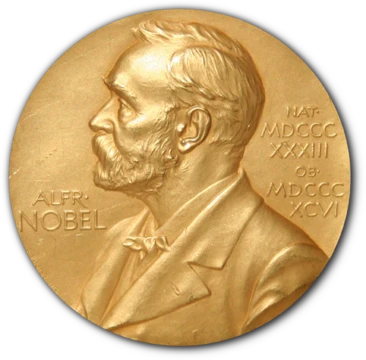
Sir Vidiadhar Surajprasad Naipaul, a Trinidad-born British writer, produced over thirty books across five decades, blending fiction and nonfiction. He first gained acclaim for his comic early novels set in his native Trinidad, before turning to bleaker explorations of alienation in the wider world. His prose earned widespread admiration, though his personal views frequently sparked controversy. Naipaul’s breakthrough came with the 1961 novel *A House for Mr Biswas*. He later won the Booker Prize in 1971 for *In a Free State*, the Jerusalem Prize in 1983, and the Nobel Prize in Literature in 2001. He was also knighted and received the Trinity Cross, Trinidad and Tobago’s highest honor, both in 1990.
Born in 1932 in the sugar plantation town of Chaguanas, Naipaul was the eldest son of Seepersad Naipaul, a journalist whose reverence for the writing life inspired his son’s ambitions. His paternal and maternal grandfathers had emigrated from British India as indentured labourers in the 1880s and 1890s, part of a wave of migration to British colonies after famines in India. The family were Hindu Brahmins, though ritual restrictions—on diet, dress, and social interaction—gradually loosened in Trinidad. By Naipaul’s childhood, English was the only language encouraged at home, and Western clothing had replaced traditional attire. The family moved to Port of Spain when he was seven, and more permanently at age nine.
Naipaul attended Queen’s Royal College, a school modelled on a British boys’ public school. Before turning 17, he won a Trinidad Government scholarship to study abroad, choosing Oxford to pursue a degree in English. He left Trinidad in August 1950, determined to become a writer, and recorded his journey in notes that later informed his novel *The Enigma of Arrival*. At Oxford, he initially showed promise but soon struggled with loneliness and depression, nearly returning to Trinidad in 1952. During this period, he met Patricia Ann Hale, a history student whose support helped him recover and begin writing seriously. Both graduated in 1953 with second-class degrees.
- field
- Literature
- nationality
- Trinidad and Tobago-born British
Quick Facts
- Honorific Prefix
- Sir
- Honorific Suffix
- size=100% · list=TC FRAS
- Birth Name
- Vidiadhar Surajprasad Naipaul
- Birth Date
- 1932-08-17
- Birth Place
- Chaguanas, Trinidad
- Death Date
- 2018-08-11
- Death Place
- London, England
- Education
- University College, Oxford
- Occupation
- Novelist · travel writer · essayist
- Spouses
- Patricia Ann Hale · 1955 · 1996 · reason=died / Nadira Khannum Alvi · 1996
- Relatives
- Seepersad Naipaul (father) / Savi Naipaul Akal (sister) / Shiva Naipaul (brother)
- Family
- Capildeo
Facts from the source article.
Lore & Background
V. S. Naipaul was born to Droapatie and Seepersad Naipaul in the sugar plantation-town of Chaguanas, Trinidad. His father was an English-language journalist whose reverence for writers inspired Naipaul's aspirations. His paternal and maternal grandfathers had emigrated from British India as indentured labourers in the 1880s and 1890s. The family were Hindu Brahmins, though ritual restrictions gradually loosened in Trinidad; by Naipaul's childhood, chicken and fish were eaten, and the languages of India were disappearing as the family spoke only English. At Oxford he met Patricia Ann Hale, a history student who became his close friend and later his wife. After graduating with a second-class degree, he failed a B.Litt. and moved to London. He published more than thirty books over fifty years.
Reader's Guide
V. S. Naipaul's significance lies in his literary output spanning over fifty years, encompassing both fiction and nonfiction that drew on his Trinidadian background and his experiences of displacement. His early comic novels set in Trinidad, such as A House for Mr Biswas, are considered landmarks, while later works explored alienation and the postcolonial world. His prose was widely admired, though his views sometimes sparked controversy. Naipaul's awards—including the Booker Prize, the Trinity Cross, a knighthood, and the Nobel Prize in Literature—reflect his international recognition. His legacy includes influencing discussions of identity, migration, and the legacy of empire, though his personal views and relationships, including his marriage to Patricia Ann Hale and his strained family ties, remain part of his complex biography. He is remembered as a meticulous observer of societies and individuals, whose work continues to be studied and debated.
Did You Know?
- Naipaul's paternal grandfather emigrated from British India as an indentured labourer in the 1880s; his maternal grandfather did the same in the 1890s.
More in Nobel And Booker Prize Laureates 1-23
Spotted an error? Know more?
This is a living reference — every entry is fact-audited, and reader corrections feed straight into our audit queue. Suggest an edit · See this site's audit record