Mario Vargas Llosa
Peruvian novelist, essayist, and Nobel laureate.

via Wikipedia: Mario Vargas Llosa · see source
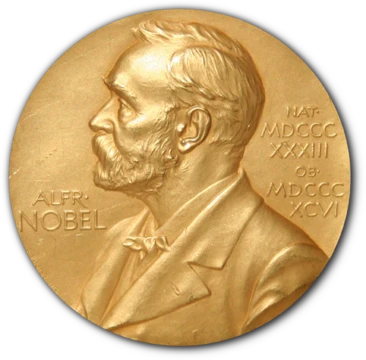
Jorge Mario Pedro Vargas Llosa, 1st Marquess of Vargas Llosa (28 March 1936 – 13 April 2025), was a Peruvian novelist, journalist, essayist, and politician. A major figure among Latin American novelists and essayists, he is often ranked as the writer of his generation with the greatest international reach and readership, surpassing even other authors of the Latin American Boom. The Nobel Prize in Literature came to him in 2010, with the Swedish Academy citing "his cartography of structures of power and his trenchant images of the individual's resistance, revolt, and defeat."
His international reputation took off in the 1960s with novels like *The Time of the Hero* (1963/1966), *The Green House* (1965/1968), and the sprawling *Conversation in The Cathedral* (1969/1975). Across his career, he worked in many genres—literary criticism, journalism, comedies, murder mysteries, historical novels, and political thrillers. The Rómulo Gallegos Prize came his way in 1967, and the Prince of Asturias Award in 1986. Several of his books were turned into feature films, among them *Captain Pantoja and the Special Service* (1973/1978) and *Aunt Julia and the Scriptwriter* (1977/1982). His own background as a native Peruvian shaped much of his fiction, though he later broadened his scope to tackle subjects from other parts of the world. In his essays, he took aim at nationalism in various countries.
Like many Latin American writers, Vargas Llosa was deeply involved in politics. He initially backed Fidel Castro’s Cuban revolution, but grew disillusioned after the 1971 imprisonment of poet Heberto Padilla. Over time, he identified as a classical liberal and held anti–left-wing views. In 1990, he ran for president of Peru as the candidate of the centre-right Democratic Front, pushing for liberal reforms, but lost heavily to Alberto Fujimori.
After stepping back from direct political involvement in Peru, he kept writing and continued to support right-wing activists and candidates internationally. His honors include the Miguel de Cervantes Prize (1994), the Jerusalem Prize (1995), the Nobel Prize in Literature (2010), the Carlos Fuentes Prize (2012), and the Pablo Neruda Order of Artistic and Cultural Merit (2018). In 2011, King Juan Carlos I of Spain made him Marquess of Vargas Llosa. He was elected to the Académie Française in 2021.
**Early life and family**
Mario Vargas Llosa was born on 28 March 1936 in Arequipa, a provincial city in southern Peru, into a middle-class family. He was the only child of Ernesto Vargas Maldonado, a radio operator for an aviation company, and Dora Llosa Ureta, who came from an old criollo family. His parents had separated a few months before his birth. Shortly after Mario was born, his father revealed he was in a relationship with a German woman, who later gave birth to Mario’s two younger half-brothers, Enrique and Ernesto Vargas.
For the first year after his parents’ divorce, Vargas Llosa lived with his mother’s family in Arequipa. Then his maternal grandfather was named honorary consul for Peru in Bolivia, and the family—including Mario and his mother—moved to Cochabamba, Bolivia, where he spent his early childhood. The Llosas were supported by his grandfather, who managed a cotton farm. As a child, Vargas Llosa was told his father had died; his mother and her relatives chose not to explain the separation. During the presidency of José Bustamante y Rivero, his maternal grandfather—a cousin of the president—received a diplomatic post in the northern Peruvian coastal city of Piura, and the whole family returned to Peru. In Piura, Vargas Llosa attended elementary school at the Colegio Salesiano religious academy. At age ten, in 1946, he moved to Lima and met his father for the first time. His parents reconciled, and the family lived in Magdalena del Mar, a middle-class Lima suburb, through his teenage years. From 1947 to 1949, he studied at Colegio La Salle, a Catholic middle school in Lima.
When Vargas Llosa was fourteen, his father sent him to the Leoncio Prado Military Academy in Callao. At sixteen, before graduating, he started working as a journalist for local newspapers. He left the military academy, finished his studies in Piura, worked for the local paper *La Industria*, and saw the theatrical debut of his first dramatic work, *La huida del Inca*.
In 1953, under the government of Manuel A. Odría, he enrolled at Lima’s National University of San Marcos to study law and literature. While there, he joined a communist group, drawn to the ideology as a reaction to the corruption and inequality widespread in Latin America. In 1955, at age nineteen, he married Julia Urquidi, his maternal uncle’s sister-in-law; she was ten years older. His literary career began in earnest in 1957 with the publication of his first short stories, “The Leaders” and “The Grandfather,” while he worked for two Peruvian newspapers. After graduating from San Marcos in 1958, he received a scholarship to study at the Complutense University of Madrid in Spain.
In 1960, once his Madrid scholarship ended, Vargas Llosa moved to France, believing he had a scholarship to study there. Upon arriving in Paris, he learned the request had been denied. Despite this unexpected financial hardship, he and Julia decided to stay.
- born
- 28 March 1936
- died
- 13 April 2025
- field
- Novelist, journalist, essayist, politician
- nationality
- Peruvian
- known_for
- Nobel Prize in Literature (2010); novels such as The Time of the Hero, The Green
Verified Timeline
Quick Facts
- Honorific Prefix
- The Most Illustrious
- Honorific Suffix
- size=100% · list=OSP OCC
- Birth Name
- Jorge Mario Pedro Vargas Llosa
- Birth Date
- df=yes · 1936 · 3 · 28
- Birth Place
- Arequipa, Peru
- Death Date
- 2025-04-13
- Death Place
- Lima, Peru
- Citizenship
- Peru / Spain (from1993) / Dominican Republic (from2023)
- Education
- National University of San Marcos / Complutense University of Madrid
- Title
- Marquess of Vargas Llosa (from2011)
- Political Party
- People's Liberty (2023–2025)
- Other Party
- Liberty Movement (1987–1993) / Democratic Front (1988–1990)
Facts from the source article.
Lore & Background
Mario Vargas Llosa was born to a middle-class family in Arequipa, Peru, on 28 March 1936. His parents separated a few months before his birth, and he lived with his maternal family in Arequipa until a year after their divorce, when his maternal grandfather was named honorary consul for Peru in Bolivia. The family moved to Cochabamba, Bolivia, where Vargas Llosa spent his early childhood. As a child, he was led to believe his father had died—his mother and her family did not want to explain the separation. During the government of President José Bustamante y Rivero, his maternal grandfather obtained a diplomatic post in Piura, and the family returned to Peru. In 1946, at age ten, he moved to Lima and met his father for the first time. His parents re-established their relationship, and they lived in Magdalena del Mar during his teenage years. When Vargas Llosa was fourteen, his father sent him to the Leoncio Prado Military Academy in Callao. At 16, before graduation, he began working as a journalist for local newspapers. He withdrew from the military academy and finished his studies in Piura, where he worked for the local newspaper La Industria and witnessed the theatrical performance of his first dramatic work, La huida del Inca. In 1953, during the government of Manuel A. Odría, he enrolled in Lima's National University of San Marcos to study law and literature. While at the university, he was a member of a communist group. He married Julia Urquidi, his maternal uncle's sister-in-law, in 1955 at age 19; she was 10 years older. They divorced in 1964. A year later, he married his first cousin, Patricia Llosa, with whom he had three children: Álvaro (born 1966), Gonzalo (born 1967), and Morgana (born 1974).
Reader's Guide
Vargas Llosa rose to international fame in the 1960s with novels such as The Time of the Hero (La ciudad y los perros, 1963/1966), The Green House (La casa verde, 1965/1968), and Conversation in The Cathedral (Conversación en La Catedral, 1969/1975). His first novel, The Time of the Hero, set among cadets in a Lima military school, won the Premio de la Crítica Española but sparked controversy in Peru, with several generals attacking it. The Green House won the first edition of the Rómulo Gallegos International Novel Prize in 1967. In 1967, he published Los cachorros, a short novel centered on a boy marked by a brutal school accident. He lectured on Spanish American Literature at King's College London from 1969 to 1970. In 1971, he published García Márquez: Story of a Deicide, his doctoral thesis for the Complutense University of Madrid. He won the 1967 Rómulo Gallegos Prize, the 1986 Prince of Asturias Award, the 1994 Miguel de Cervantes Prize, the 1995 Jerusalem Prize, the 2010 Nobel Prize in Literature, the 2012 Carlos Fuentes Prize, and the 2018 Pablo Neruda Order of Artistic and Cultural Merit. Politically active, he initially supported the Cuban revolutionary government of Fidel Castro but became disenchanted after the imprisonment of Cuban poet Heberto Padilla in 1971, later identifying as a classical liberal. He ran for president of Peru with the centre-right Democratic Front coalition in the 1990 election, advocating for liberal reforms, but lost to Alberto Fujimori in a landslide. He was made Marquess of Vargas Llosa by King Juan Carlos I of Spain in 2011 and elected to the Académie Française in 2021.
Did You Know?
- Vargas Llosa was the only child of Ernesto Vargas Maldonado and Dora Llosa Ureta, who separated a few months before his birth.
- As a child, he was led to believe his father had died; he met his father for the first time at age ten in 1946.
- He married Julia Urquidi in 1955 at age 19; she was 10 years older and his maternal uncle's sister-in-law.
- His novel The Green House won the first edition of the Rómulo Gallegos International Novel Prize in 1967.
- He was made Marquess of Vargas Llosa by King Juan Carlos I of Spain in 2011 and elected to the Académie Française in 2021.
More in Nobel And Booker Prize Laureates 1-23
Spotted an error? Know more?
This is a living reference — every entry is fact-audited, and reader corrections feed straight into our audit queue. Suggest an edit · See this site's audit record