1755 Lisbon earthquake
The 1755 Lisbon earthquake, with an estimated magnitude of 7.7 or greater, devastated Lisbon and triggered a tsunami and fires, leading to the birth of modern seismology.
Last updated

Elliott Bledsoe from Brisbane, Australia · CC BY 2.0
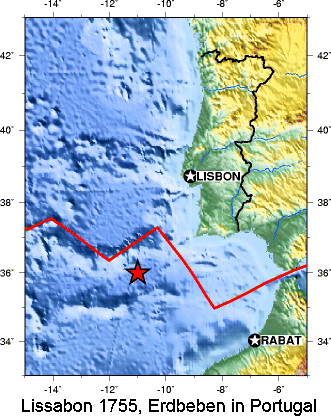
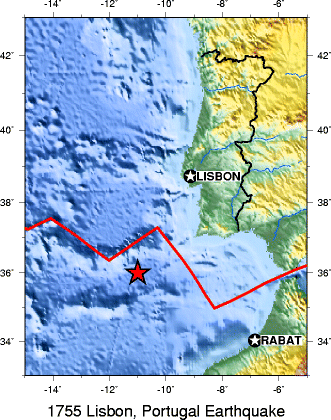
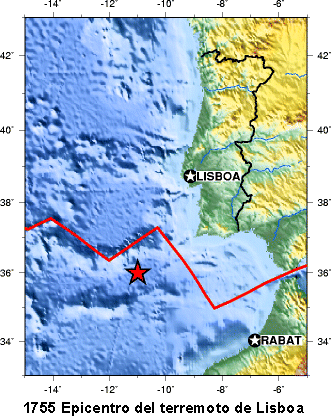
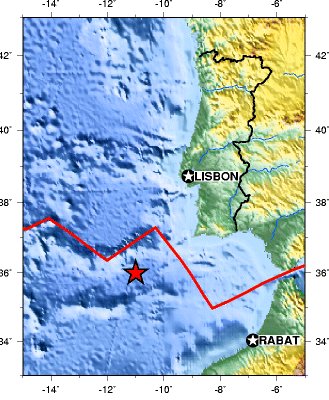
On the morning of Saturday, 1 November 1755—the Feast of All Saints—a massive earthquake struck the Iberian Peninsula and Northwest Africa at about 09:40 local time. Known as the Great Lisbon earthquake, it was followed by fires and a tsunami that together devastated Lisbon and its surroundings. Seismologists estimate the quake reached a magnitude of 7.7 or higher on the moment magnitude scale. Its epicenter lay in the Atlantic Ocean, roughly 200 kilometers west-southwest of Cape St. Vincent in the Algarve, and about 290 kilometers southwest of Lisbon.
Casualties and damage
This was the third major earthquake recorded in Lisbon, after those in 1356 and 1531. The death toll in the city is estimated at 30,000 to 40,000, with another 10,000 possible deaths in Morocco.
The disaster worsened political tensions in Portugal and severely disrupted the Portuguese Empire. It became a central topic among European Enlightenment philosophers, prompting major developments in theodicy. As the first earthquake studied scientifically across a wide area, it also gave rise to modern seismology and earthquake engineering.
Earthquake and tsunami
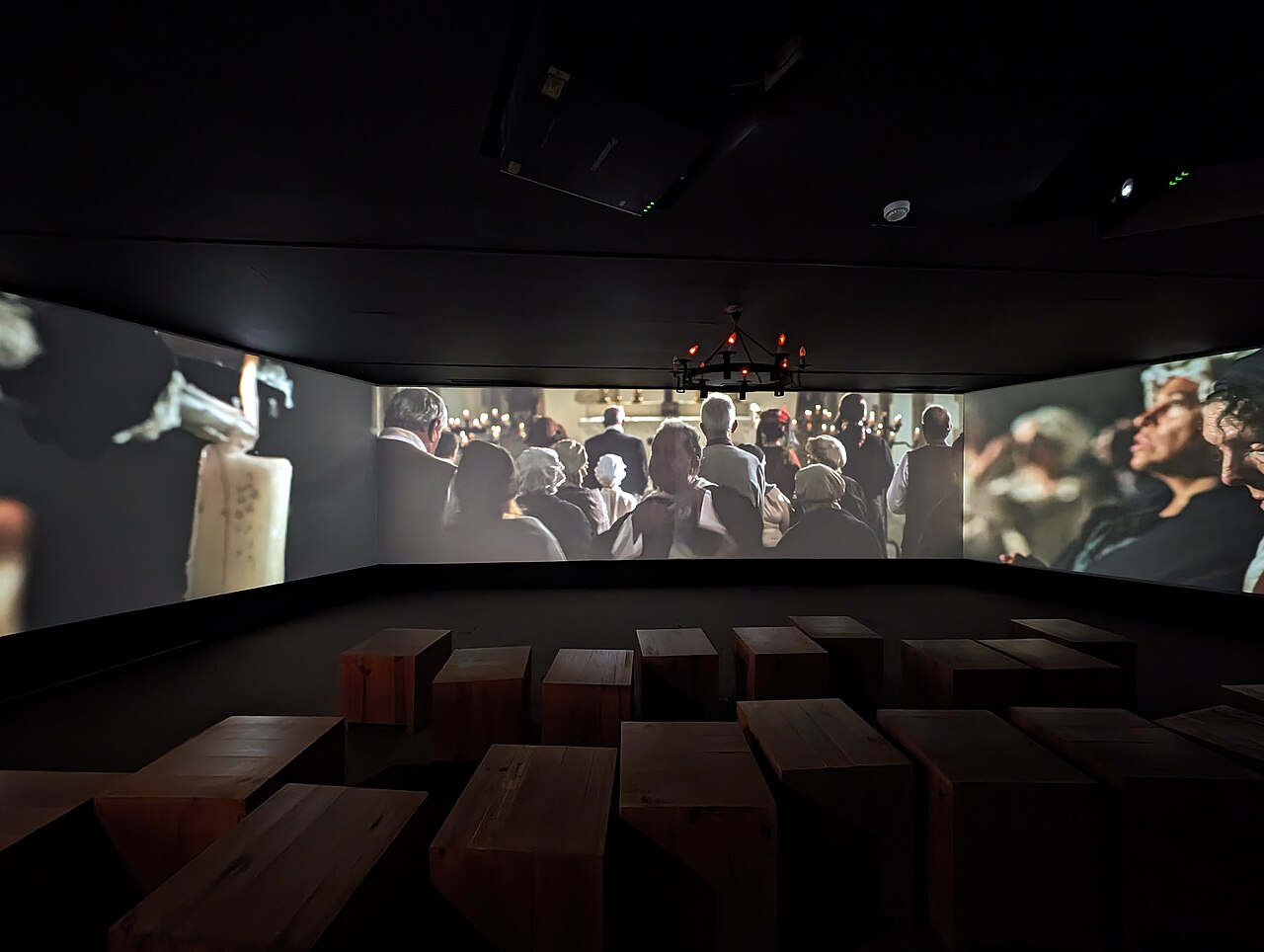
The earthquake lasted between three and a half and six minutes, according to contemporary accounts, opening fissures up to 5 meters wide in the city center. Survivors who fled to the docks saw the sea retreat, exposing a muddy plain littered with wrecked ships and lost cargo. About 40 minutes later, a tsunami swept into the harbor and downtown, rushing up the Tagus River so fast that people on horseback had to gallop to higher ground to escape. Two more waves followed. Candles lit for All Saints' Day in homes and churches were knocked over, igniting a firestorm that burned for hours and asphyxiated people up to 30 meters from the flames.
Lisbon was not alone in its suffering. Across southern Portugal, especially the Algarve, destruction was widespread. The tsunami destroyed coastal fortresses and razed many houses in the Algarve. Almost all coastal towns and villages there were heavily damaged, except Faro, shielded by the sandy banks of Ria Formosa.
In Lagos, waves reached the top of the city walls. Other towns like Peniche, Cascais, Setúbal, and even Covilhã—located near the Serra da Estrela mountain range in central inland Portugal—were visibly affected by the earthquake, tsunami, or both. The shock waves damaged part of Covilhã’s castle walls and its large towers, and harmed buildings in Cova da Beira and Salamanca, Spain. In Setúbal, parts of the Fort of São Filipe de Setúbal were damaged.
On Madeira, Funchal and many smaller settlements suffered significant damage. In the Azores, almost all ports were hit hardest by the tsunami, with the sea penetrating about 150 meters inland. Portuguese towns in northern Africa, including Ceuta (ceded to Spain in 1668) and Mazagon, were also affected; the tsunami struck their coastal fortifications hard, in some cases overtopping them and flooding the harbors. In Spain, the waves swept the Andalusian Atlantic coast, damaging the city of Cádiz.
Shocks from the earthquake were felt across Europe as far as Finland and in North Africa, and reportedly even in Greenland and the Caribbean. Tsunamis up to 20 meters high swept North Africa’s coast and reached Martinique and Barbados. A 3-meter tsunami hit Cornwall on the southern British coast. Galway, on Ireland’s west coast, was struck, partially destroying the Spanish Arch section of the city wall.
In County Clare, a low-lying connection to the mainland was washed away, creating Aughinish Island. At Kinsale, several vessels spun in the harbor, and water poured into the marketplace. In 2015, it was determined that the tsunami waves reached Brazil, then a Portuguese colony; letters from Brazilian authorities at the time describe damage from gigantic waves.
The exact epicenter has been debated. Early hypotheses pointed to the Gorringe Ridge, about 320 kilometers southwest of Lisbon, but simulations showed a location closer to Portugal’s coast better matched the tsunami’s effects. A 1992 seismic reflection survey of the ocean floor along the Azores–Gibraltar Transform Fault detected a 50-kilometer thrust fault southwest of Cape St. Vincent, with a dip-slip throw of more than 1 kilometer, which may have caused the main tectonic event.
Economic historian Álvaro Pereira estimated that of Lisbon’s population of about 200,000, 30,000 to 40,000 died. Another 10,000 may have perished in Morocco.
Lore & Background
Chronologically, it was the third known large-scale earthquake to hit the city (following those of 1356 and 1531). Estimates place the death toll in Lisbon around 30,000–40,000. A further 10,000 may have died in Morocco.
The earthquake accentuated political tensions in Portugal and profoundly disrupted the Portuguese Empire. The event was widely discussed and dwelt upon by European Enlightenment philosophers, and inspired major developments in theodicy. As the first earthquake studied scientifically for its effects over a large area, it led to the birth of modern seismology and earthquake engineering.
The Hour of Ruin: Quake, Tsunami, and Fire
The morning of All Saints' Day, 1 November 1755, brought a sequence of destruction that unfolded over roughly an hour. At approximately 09:40, the ground beneath Lisbon shuddered for between three and a half and six minutes, tearing open fissures as wide as five metres through the city's heart. Frightened residents fled toward the open waterfront, only to witness the Tagus pull back and expose a vast plain of mud strewn with broken cargo and wrecked hulls. Roughly forty minutes after the initial shaking ceased, the sea returned with terrifying force, surging up the river and sweeping through the harbor and downtown so rapidly that riders on horseback had to gallop for their lives.
Two additional waves followed. Meanwhile, the thousands of candles lit in churches and homes for the All Saints' observance toppled in the shaking, igniting a firestorm that raged for hours and suffocated victims as far as thirty metres from the flames. The combined assault obliterated roughly 85 percent of the city's structures, including the Ópera do Tejo, a grand opera house that had opened just seven months earlier.
A Tremor Felt Across the World
The rupture that unleashed the catastrophe originated far from any coastline. Seismologists place the epicenter in the open Atlantic, roughly two hundred kilometres west-southwest of Cape St. Vincent and some two hundred and ninety kilometres southwest of Lisbon, with a magnitude of at least 7.7. Yet the reach of the event was astonishingly global. Shocks were recorded across Europe as far north as Finland and across the Mediterranean into North Africa, with some contemporary accounts extending the tremor to Greenland and the Caribbean.
Tsunami waves towering up to twenty metres battered the North African shore, while smaller surges of around three metres lapped the southern coast of England at Cornwall. In Ireland, the sea partially demolished the Spanish Arch in Galway and, in County Clare, washed away a low-lying isthmus, leaving Aughinish Island newly isolated. Across the Atlantic, waves struck Martinique and Barbados, and 2015 research confirmed that the surge also reached the Brazilian coast. In 1992, a deep-sea survey along the Azores–Gibraltar Transform Fault identified a fifty-kilometre thrust fault with a vertical slip exceeding one kilometre, likely the structure responsible for the primary tectonic rupture.
Lives Lost and a Heritage Erased
The human cost was staggering. Lisbon's population at the time stood at roughly two hundred thousand, and between thirty and forty thousand residents perished in the quake, the fires, and the tsunami. An additional ten thousand lives were likely lost in Morocco, bringing the combined toll across Portugal, Spain, and Morocco to somewhere between forty and fifty thousand.
The cultural devastation was equally profound. Eighty-five percent of the city's buildings were lost, and among them went some of Portugal's most treasured architectural heritage: the majority of surviving examples of the ornate Manueline style from the sixteenth century, along with renowned palaces and libraries. The Royal Ribeira Palace, perched beside the Tagus, was among the structures consumed.
Beyond Lisbon, the Algarve's coastal towns were nearly all heavily damaged, with waves cresting over the walls of Lagos and fortresses reduced to rubble, while only Faro escaped serious harm thanks to the natural barrier of the Ria Formosa. In the Azores, the sea pushed roughly one hundred and fifty metres inland, devastating nearly every port. Even the inland town of Covilhã, nestled near the Serra da Estrela range, saw its castle walls and great towers crumble.
The Shock That Forged Modern Science and Philosophy
Beyond the immediate ruin, the 1755 catastrophe rippled into the intellectual and political life of Europe, reshaping entire fields of thought. For the Portuguese state, the disaster sharpened existing political tensions and dealt a severe blow to the cohesion of the Portuguese Empire, whose overseas holdings from Africa to Brazil had all felt the tremor or the wave. Across the continent, Enlightenment philosophers seized upon the event as a philosophical challenge: how could a benevolent God permit such indiscriminate suffering on a holy day? The question drove major advances in theodicy, the branch of theology concerned with justifying divine goodness amid evil.
On the empirical side, the earthquake marked a watershed. Because its effects could be documented across such a vast area—from Finland to the Caribbean, from the Azores to Brazil—scholars for the first time attempted a systematic, scientific study of a seismic event and its consequences. That effort is widely regarded as the birth of modern seismology and earthquake engineering. It was, notably, only the third major earthquake to strike Lisbon, following earlier shocks in 1356 and 1531, but the first examined with the rigor of natural philosophy.
Reader's Guide
The earthquake struck on the morning of 1 November 1755, All Saints' Day. Contemporary reports state that the earthquake lasted from three and a half to six minutes, causing fissures 5 m wide in the city center.
Survivors rushed to the open space of the docks for safety and watched as the sea receded, revealing a plain of mud littered with lost cargo and shipwrecks. Approximately 40 minutes after the earthquake, a tsunami engulfed the harbor and downtown area, rushing up the Tagus river 'so fast that several people riding on horseback ... were forced to gallop as fast as possible to the upper grounds for fear of being carried away.' It was followed by two more waves. Candles lit in homes and churches all around the city for All Saints' Day were knocked over, starting a fire that developed into a firestorm which burned for hours in the city, asphyxiating people up to 30 m from the blaze.
More in Natural Disasters
Sources
Compiled from Wikipedia and the sources listed below. Text from Wikipedia is available under CC BY-SA 4.0; this entry is adapted from it.
- Wikipedia: 1755 Lisbon earthquake (CC BY-SA 4.0).
Spotted an error? Know more?
Reader corrections go straight into our review queue. Suggest an edit · How this site is sourced