Madhu Road National Park
Last updated
Where it is
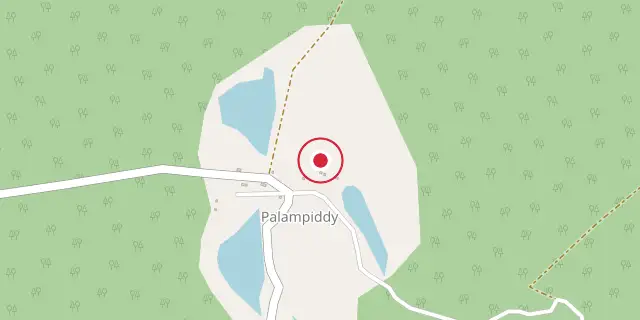
Coordinates: 8°55′52″N 80°12′50″E (8.9310, 80.2140) · Open in OpenStreetMap
Coordinates and connected clubs: the infobox of Wikipedia: Madhu Road National Park (CC BY-SA 4.0). Map: drawn by Codexery from OpenStreetMap tiles.
Madhu Road National Park lies in northern Sri Lanka, about 25 kilometers east of Mannar. It was first set aside as a sanctuary on June 28, 1968, under the Fauna and Flora Protection Ordinance of 1937, covering 26,677 hectares. After the Sri Lankan Civil War ended, the government planned to turn several northern sanctuaries into national parks. The sanctuary had faced problems like illegal sand mining, tree cutting, and unplanned government development.
An assessment published in October 2014, produced by the government with help from the United Nations Development Programme and United Nations Environment Programme, recommended upgrading the sanctuary—excluding built-up areas—and adding nearby state-owned forests to create a national park. This would increase the area from 26,677 hectares to 63,067.39 hectares.
The Shrine of Our Lady of Madhu would lie within the new park. In May 2015, the government announced that Madhu Road, along with Adam’s Bridge, Chundikkulam, and Delft, would become national parks. Madhu Road sanctuary was officially designated a national park on June 22, 2015, with an area of 63,067.39 hectares.
Flora and fauna
The park hosts many bird species, including Alexandrine parakeet, ashy-crowned sparrow-lark, ashy prinia, ashy woodswallow, Asian koel, Asian palm swift, baya weaver, black drongo, black-hooded oriole, black-rumped flameback, black-winged kite, blue-faced malkoha, brahminy kite, brown-headed barbet, changeable hawk-eagle, common emerald dove, common iora, common myna, common tailorbird, common woodshrike, coppersmith barbet, crested honey buzzard, crimson-fronted barbet, greater coucal, greater racket-tailed drongo, Asian green bee-eater, green imperial pigeon, grey-breasted prinia, house crow, house sparrow, Indian paradise flycatcher, Indian peafowl, Indian robin, Indian roller, Jerdon’s bush lark, Jerdon’s leafbird, jungle crow, jungle prinia, large cuckooshrike, Malabar pied hornbill, orange-breasted green pigeon, oriental magpie-robin, paddyfield pipit, plain prinia, Sri Lanka green pigeon, purple sunbird, red-rumped swallow, red-vented bulbul, red-wattled lapwing, rock dove, rose-ringed parakeet, scaly-breasted munia, shikra, small minivet, spotted dove, Sri Lanka grey hornbill, Sri Lankan junglefowl, tawny-bellied babbler, white-bellied sea eagle, white-browed bulbul, white-browed fantail, white-rumped munia, white-rumped shama, yellow-billed babbler, yellow-eyed babbler, and Zitting cisticola.
Mammals found here include Asian elephant, bear, chevrotain, chital, golden jackal, grey langur, grizzled giant squirrel, Indian grey mongoose, Indian hare, Indian palm squirrel, leopard, muntjac, purple-faced langur, ruddy mongoose, toque macaque, water buffalo, and wild boar.
More in National parks of Sri Lanka
Sources
Compiled from Wikipedia and the sources listed below. Text from Wikipedia is available under CC BY-SA 4.0; this entry is adapted from it.
- Wikipedia: Madhu Road National Park (CC BY-SA 4.0).
Spotted an error? Know more?
Reader corrections go straight into our review queue. Suggest an edit · How this site is sourced