Pigeon Island National Park
Last updated
Where it is
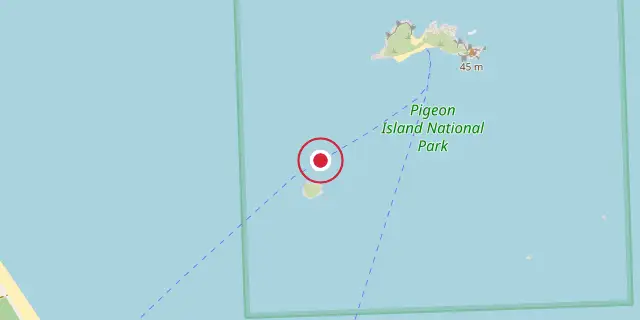
Coordinates: 8°43′01″N 81°12′00″E (8.7170, 81.2000) · Open in OpenStreetMap
Coordinates and connected clubs: the infobox of Wikipedia: Pigeon Island National Park (CC BY-SA 4.0). Map: drawn by Codexery from OpenStreetMap tiles.
Pigeon Island National Park is one of the three marine national parks of Sri Lanka, located 1 km off the coast of Nilaveli in Eastern Province. It encompasses a total area of 471.429 hectares and derives its name from the rock pigeon that has colonized the island. The park contains some of the best remaining coral reefs in Sri Lanka and was designated a sanctuary in 1963, later re-designated as a national park in 2003, making it the 17th such park in the country.
Background
Pigeon Island consists of two islands: large pigeon island and small pigeon island. The large island is fringed by a coral reef, about 200 m long and 100 m wide, with its highest point at 44.8 m above mean sea level. The small pigeon island is surrounded by rocky islets. The national park lies within the dry zone of Sri Lanka, with a mean annual temperature around 27.0 °C and annual rainfall between 1,000–1,700 mm, most received during the North-eastern monsoon from October to March.
The coral reef fauna on the large island is dominated by Acropora spp. with some Montipora spp., while Faviidae, Mussidae and Poritidae species dominate the reef around the rocky islets. Soft corals such as Sinularia, Lobophyton, and Sarcophyton are also present.
The reef harbors many vertebrates and invertebrates, including 100 species of corals and 300 coral reef fishes recorded in the Trincomalee area. Juvenile and adult blacktip reef shark are seen in shallow coral areas, and visiting sea turtles include hawksbill, green, and olive ridley. The island is an important breeding ground for the rock pigeon.
During the colonial era, the island was used as a shooting range. It was one of several protected areas affected by the Indian Ocean tsunami in 2004.
Fishing and ornamental fish collection are the main economic uses of the coral reef, and the island is also used as a scuba diving site. Uncontrolled tourism has led to reef degradation and loss of biodiversity and fish density. Scientific research was hindered by the civil war in the past two decades, and a proposed pier between the mainland and the island has attracted criticism.
More in National parks of Sri Lanka
Sources
Compiled from Wikipedia and the sources listed below. Text from Wikipedia is available under CC BY-SA 4.0; this entry is adapted from it.
- Wikipedia: Pigeon Island National Park (CC BY-SA 4.0).
- Word definitions: the Codexery glossary, each quoted from its Wikipedia article.
Spotted an error? Know more?
Reader corrections go straight into our review queue. Suggest an edit · How this site is sourced