Świętokrzyski National Park
Poland's oldest mountain range national park, established in 1950.
Last updated
Where it is
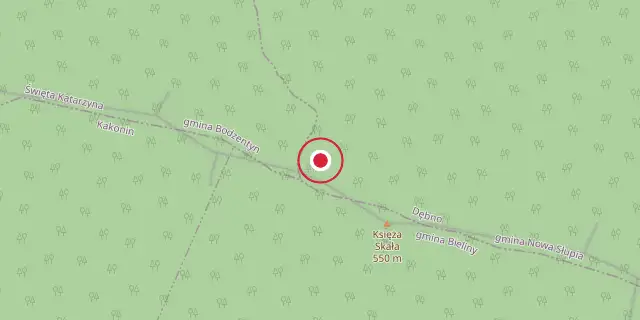
Coordinates: 50°52′34″N 20°58′41″E (50.8760, 20.9780) · Open in OpenStreetMap
Coordinates and connected clubs: the infobox of Wikipedia: Świętokrzyski National Park (CC BY-SA 4.0). Map: drawn by Codexery from OpenStreetMap tiles.
Świętokrzyski National Park lies in central Poland’s Świętokrzyskie Voivodeship. It protects the highest part of the Holy Cross Mountains—the Łysogory range—including the two tallest peaks: Łysica (612 m) and Łysa Góra, or “Bald Mountain” (595 m). The park also takes in the eastern Klonowski Ridge and part of the Pokrzywianski Ridge, and its administrative center is in Bodzentyn.
Efforts to safeguard this area began before World War I. In 1921, the first forest reserve in the Świętokrzyskie Mountains was established on Chełmowa Góra, covering 1.63 square kilometers. The next year, two sections of the Łysogory totaling 3.11 square kilometers were also protected.
The reserve officially grew to 13.47 square kilometers in 1932, but the national park itself wasn’t created until 1950. Its original area was 60.54 square kilometers, later expanded to 76.26 square kilometers, of which 72.12 square kilometers are forested. Within the park, five strictly protected zones cover 17.31 square kilometers.
Landscape
The Świętokrzyskie Mountains are Poland’s oldest, shaped across three separate tectonic periods. They spread across the Małopolska Upland between the Pilica and Vistula rivers, with gentle, low profiles. Their appeal lies in their unusual geological structure, diverse plant life, and varied animal populations.
Flora
The park is noted for its trees: 674 are recognized as natural monuments and receive protection. Yew trees have been successfully reintroduced, and now about 1,300 grow here. Most of the park is forested, primarily with pines and beeches, while firs and mixed oak-fir forests are less common. Unique to the area are endemic fir wilderness and stands of Polish larch on Chełmowa Góra.
More than 4,000 invertebrate species and 210 vertebrate species (187 of them protected) live in the park. A notable feature is that many of these animals are mountain species, which typically thrive in the strictly protected zones and deep forest interiors.
Architecture
Beyond its natural features, the park and its surroundings hold several important architectural sites, mostly religious. The most significant is the Benedictine Holy Cross Abbey, built in the early 12th century on the summit of Łysa Góra. It is thought to be where the oldest known Polish text, the Holy Cross Sermons, was created. Numerous roadside chapels are also a distinctive part of the landscape.
Ranked in
More in National parks of Poland
Sources
Compiled from Wikipedia and the sources listed below. Text from Wikipedia is available under CC BY-SA 4.0; this entry is adapted from it.
- Wikipedia: Świętokrzyski National Park (CC BY-SA 4.0).
- Word definitions: the , each quoted from its Wikipedia article.
Spotted an error? Know more?
Reader corrections go straight into our review queue. Suggest an edit · How this site is sourced