Prince (musician)

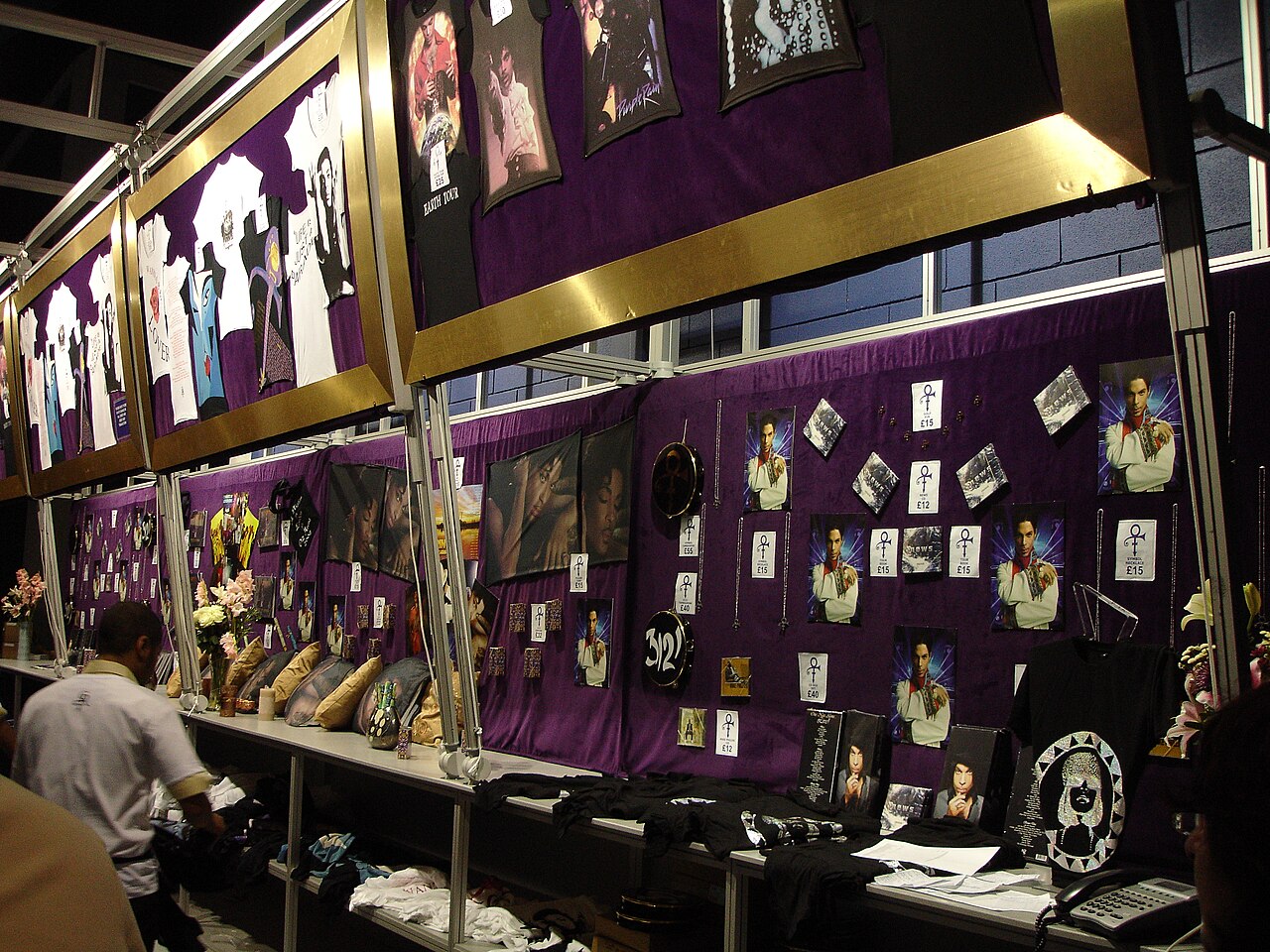
Rob Deutscher from Melbourne, Australia · CC BY 2.0
Prince Rogers Nelson (June 7, 1958 – April 21, 2016) was an American musician, singer, songwriter, dancer, actor, and filmmaker. Widely regarded as one of the most gifted artists of his era, he created the Minneapolis sound and helped shape several other musical styles. He sold over 100 million records, making him one of the top-selling artists ever. He was born and raised in Minneapolis, Minnesota. At 18, he signed with Warner Bros. Records, and two years later put out his first album, For You. He earned critical praise for Dirty Mind (1980), Controversy (1981), and 1999 (1982). In 1984, Prince became the first artist to hold the number-one film, album, and single in the U.S. at the same time, with Purple Rain, its soundtrack, and "When Doves Cry." That album, made with his new band the Revolution, stayed at number one on the Billboard 200 for 24 straight weeks and won an Academy Award for Best Original Song Score. He kept up his success with the single "Kiss," which also hit number one on the Billboard Hot 100. After splitting with the Revolution, he released his first solo double album, Sign o' the Times (1987), which many consider his best work and one of the greatest albums ever. In 1993, during a contract dispute with Warner Bros., Prince changed his stage name to an unpronounceable symbol, known to fans as the "Love Symbol." He was often called the Artist Formerly Known as Prince (TAFKAP), or simply the Artist. After signing with Arista Records in 1999, he went back to using his original name in 2000 and kept releasing albums, including Musicology (2004), which won two Grammys. Over his lifetime, he put out 39 albums, with a huge amount of unreleased material left behind. On April 21, 2016, at age 57, Prince died at his Paisley Park home and studio in Chanhassen, Minnesota, from an accidental overdose of counterfeit hydrocodone/paracetamol pills laced with fentanyl. His honors include the Grammy President's Merit Award, the American Music Awards for Achievement and of Merit, the Billboard Icon Award, an Academy Award, and a Golden Globe. He was inducted into the Rock and Roll Hall of Fame in 2004, the Rhythm and Blues Music Hall of Fame in 2016, the Songwriters Hall of Fame in 2024, and twice into the Black Music & Entertainment Walk of Fame in 2022. Prince Rogers Nelson was born on June 7, 1958, at Mount Sinai Hospital in Minneapolis, Minnesota, to jazz singer Mattie Della (née Shaw) and pianist and songwriter John Lewis Nelson. All four of his grandparents came from Louisiana. Jazz drummer Louis Hayes was his paternal cousin. His father gave him the name Prince after his own stage name, Prince Rogers, which he used while performing with Della in a jazz group called the Prince Rogers Trio. In 1991, Prince's father told A Current Affair that he named his son Prince because he wanted him "to do everything I wanted to do." As a child, Prince didn't like his name and went by "Skipper" instead. He said he was "born epileptic" and had seizures when young. He recalled, "my mother told me one day I walked in to her and said, 'Mom, I'm not going to be sick anymore,' and she said, 'Why?' and I said, 'Because an angel told me so.'" His younger sister, Tyka, was born on May 18, 1960. Both siblings were encouraged by their father to pursue music. His parents were members of the Seventh-day Adventist Church. Prince wrote his first song, "Funk Machine," on his father's piano at age seven. His parents divorced when he was ten. His mother then married Hayward Baker, who Prince said improved the family's finances. They had a son named Omarr, with whom Prince had a difficult relationship, causing him to move back and forth between his father's and mother's homes. Baker took Prince to see James Brown in concert. After a short time living with his father, who bought him his first guitar, Prince was thrown out and moved into the basement of his neighbors, the Anderson family. He became friends with their son, André Cymone, who later worked with him. Prince briefly attended Minneapolis's Bryant Junior High, then moved to Central High School, where he played football, basketball, and baseball. He played on Central's junior varsity basketball team and kept playing basketball for fun as an adult. He trained in classical ballet at the Minnesota Dance Theatre through the Urban Arts Program of Minneapolis Public Schools. He became a supporter of dancers and used his money to save the struggling Joffrey Ballet in Chicago in the 1990s. In 1975, Pepe Willie, the husband of one of Prince's cousins, formed the band 94 East with Marcy Ingvoldstad and Kristie Lazenberry, hiring André Cymone and Prince to record tracks. Willie wrote the songs, with Prince adding guitar parts, and they co-wrote "Just Another Sucker." The band recorded tracks that later appeared on the album Minneapolis Genius – The Historic 1977 Recordings. In 1976, shortly after graduating from Central High School, Prince made a demo tape with producer Chris Moon in Moon's Minneapolis studio. Unable to get a recording contract, Moon brought the tape to Minneapolis businessman Owen Husney. Husney signed Prince, then 19, to a management deal and helped him create a demo at Sound 80 Studios in Minneapolis with producer/engineer David Z. That demo, along with a press kit made at Husney's ad agency, drew interest from several record labels.
Last updated 2026-10-01 from the source article.
Quick Facts
- Birth name
- Prince Rogers Nelson
- Born
- 7 June 1958
- Birthplace
- Minneapolis, Minnesota, U.S.
- Died
- 21 April 2016
- Place of death
- Paisley Park, Chanhassen, Minnesota, U.S.
- Death cause
- Accidental fentanyl overdose (details)
- Other names
- The Artist Formerly Known as Prince (TAFKAP); Camille
- Occupation
- Singer
- musician
- songwriter
- record producer
- dancer
- actor
- filmmaker
Facts from the source article.
Lore & Background
He wrote his first song, 'Funk Machine', at age seven. After his parents divorced, he lived with his father and mother at different times. He attended Central High School, where he played basketball and trained in classical ballet. The album spent 24 consecutive weeks at number one on the U.S. He released 39 albums during his life.
Musical Output & Commercial Dominance
Prince Rogers Nelson, born in Minneapolis in 1958 and gone by 2016 at 57, left behind a body of work that resists simple categorization. As singer, songwriter, multi-instrumentalist, dancer, actor, and filmmaker, he blurred every boundary the industry had drawn. His estimated 100-plus million records sold place him among the best-selling artists in history, yet the numbers barely capture what he built. After signing with Warner Bros. at eighteen and releasing his debut For You, he moved rapidly through critically acclaimed records—Dirty Mind, Controversy, and 1999—each sharpening the Minneapolis sound he helped pioneer. By 1984, working with his backing group the Revolution, he became the first singer to simultaneously hold a number-one film, album, and single in the United States. Purple Rain spent 24 consecutive weeks atop the Billboard 200 and earned an Academy Award for Best Original Song Score. He followed that with "Kiss" topping the Hot 100, then, after disbanding the Revolution, delivered the solo double LP Sign o' the Times in 1987, widely regarded as his masterpiece. He released 39 albums in total, including the double Grammy-winning Musicology in 2004, and left behind a vast trove of unreleased material.
The Name Change & Final Chapter
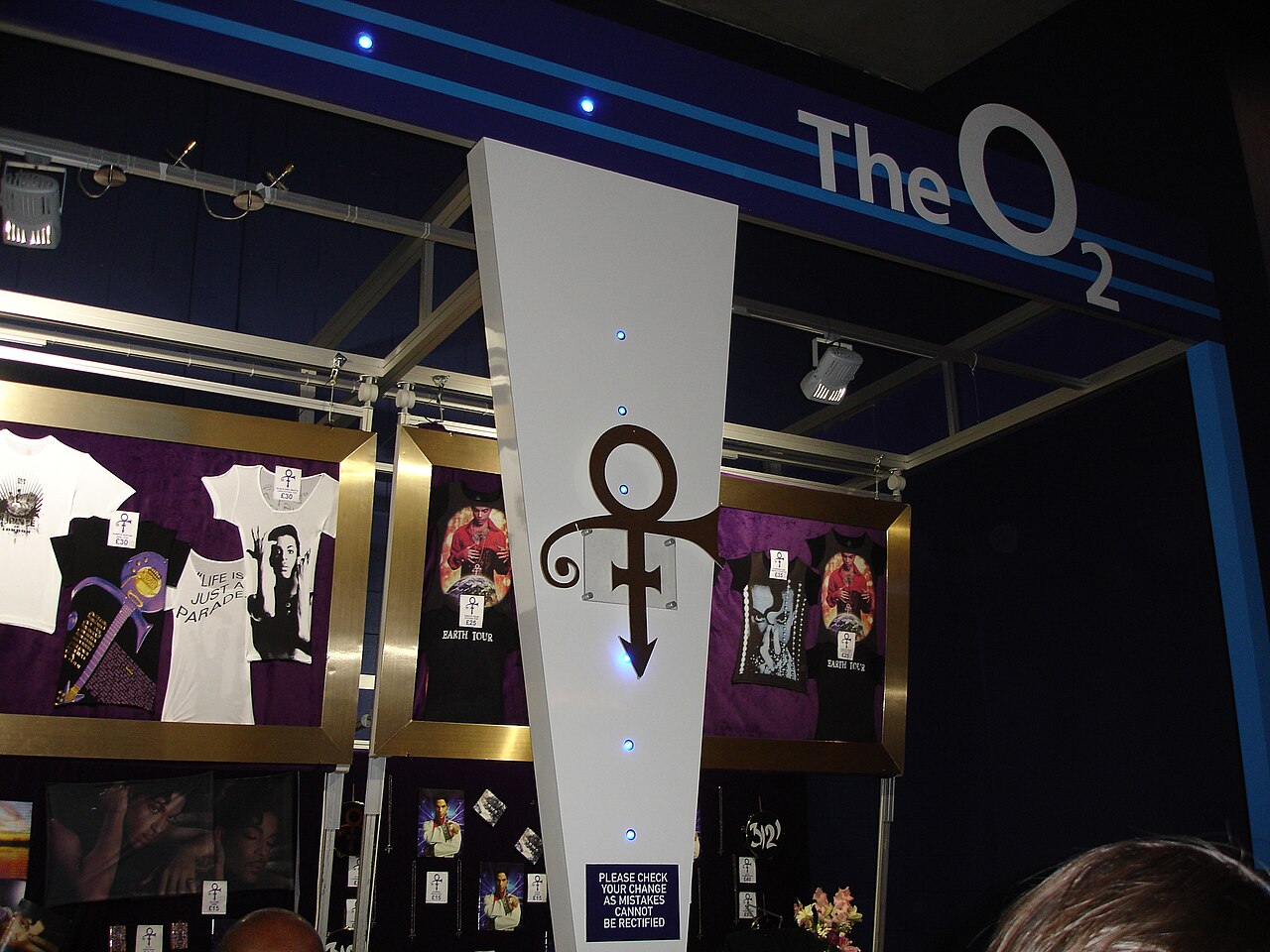
In 1993, amid a bitter contractual dispute with Warner Bros., Prince made a dramatic public statement: he changed his stage name to an unpronounceable symbol, which fans quickly dubbed the "Love Symbol." The music press took to calling him TAFKAP—the Artist Formerly Known as Prince—or simply "the Artist." This was not a mere branding exercise; it was a direct act of defiance against a label he felt was stifling his creative freedom. The standoff eventually ended when he signed with Arista Records in 1999, and by 2000 he had quietly reverted to his birth name. His post-Arista output included Musicology in 2004, a double Grammy Award winner that proved his creative fire had not dimmed. His final chapter was tragic. On April 21, 2016, at his Paisley Park home and recording studio in Chanhassen, Minnesota, Prince died at 57 after accidentally overdosing on counterfeit hydrocodone and paracetamol pills that had been laced with fentanyl. The loss stunned the music world and ended a career that had spanned nearly four decades of relentless output.
Awards, Inductions & Lasting Influence
Prince's influence on popular music extends far beyond his own recordings. Credited as one of the greatest musicians of his generation, he pioneered the Minneapolis sound and shaped the evolution of numerous other genres. His formal recognition reflects that breadth: he collected the Grammy President's Merit Award, American Music Awards for both Achievement and Merit, the Billboard Icon Award, an Academy Award, and a Golden Globe. His hall-of-fame inductions read like a career retrospective in themselves—Rock and Roll Hall of Fame in 2004, Rhythm and Blues Music Hall of Fame in 2016, Songwriters Hall of Fame in 2024, and two separate inductions into the Black Music & Entertainment Walk of Fame in 2022. Each honor arrived at a different stage of his life, underscoring how consistently he pushed musical boundaries. From the funk-inflected grit of his early albums to the orchestral sweep of Purple Rain and the sprawling ambition of Sign o' the Times, Prince kept reinventing himself. His legacy is not a single sound or era but a continuous thread of experimentation that still echoes through contemporary music.
Minneapolis Roots & Formative Years
Prince Rogers Nelson was born at Mount Sinai Hospital in Minneapolis on June 7, 1958, to jazz singer Mattie Della Shaw and pianist-composer John Lewis Nelson. His father had performed under the stage name Prince Rogers, and in a 1991 interview he explained he named his son that way because he wanted the boy to do everything he himself had wanted to do. Young Prince, who called himself "Skipper" and battled childhood seizures, wrote his first song, "Funk Machine," at age seven on his father's piano. His parents divorced when he was ten, and his mother's remarriage to Hayward Baker brought a stepbrother, Omarr, into the picture; their relationship was fraught enough to send Prince repeatedly switching between his parents' homes. Baker took him to see James Brown live, and his father bought him his first guitar. After a period of instability he lived in the Anderson family's basement, where he befriended their son André Cymone. At Central High School he played football, basketball, and baseball, and trained in classical ballet through the Minnesota Dance Theatre. By 1975 he was recording with the band 94 East, and by 1977 he had signed with Warner Bros. to record his debut album.
Death
Prince saw a local family medicine specialist on April 7 and again on April 20, 2016. He postponed two tour performances citing influenza, and after rescheduling, gave his final show on April 14 despite feeling unwell. The next morning, he became unresponsive on his private jet, which made an emergency landing in Illinois; he was hospitalized and given naloxone for a suspected opioid overdose, then left against medical advice. He was seen cycling and shopping the following days. On April 19, his representatives sought help from an addiction medicine specialist. On April 21, a 911 call reported Prince unconscious at Paisley Park; the caller was the specialist's son, who had brought buprenorphine for opioid addiction treatment. Prince was found dead in an elevator, pronounced at 10:07 am. The medical examiner ruled his death an accidental fentanyl overdose at age 57. The fentanyl was in counterfeit hydrocodone pills. An investigation ended with no charges. Prince was cremated, and his sister opened a probate case as no will was found; he was unmarried with no known surviving children.
Posthumous releases
The first posthumous release was the greatest hits album 4Ever on November 22, 2016, which included the previously unreleased track "Moonbeam Levels". In February 2017, Prince's estate signed a distribution deal with Universal Music Group for post-1995 recordings and vault material, but the deal was later voided by a court after Comerica, acting for the estate, argued it conflicted with a 2014 Warner Music Group contract. An EP of six unreleased tracks, Deliverance, was announced but halted by a restraining order obtained by the estate. A deluxe reissue of Purple Rain was released on June 23, 2017, featuring a remaster, unreleased material, B-sides, and a live DVD. In April 2018, the original 1984 recording of "Nothing Compares 2 U" was released as a single. The estate then signed a distribution deal with Sony Music Entertainment, covering all studio albums and unreleased music. Since 2021, albums from 1978 to 1996 are distributed by Sony/Legacy in the U.S., with Warner holding international rights. Post-1996 albums were released on streaming platforms in August 2018, along with the compilation Anthology: 1995–2010. Piano and a Microphone 1983, a private rehearsal recording, was released in September 2018. Sony/Legacy reissues began in 2019, including albums such as Musicology, 3121, and Emancipation.
Gallery

More in Musicians & Composers
Spotted an error? Know more?
Reader corrections go straight into our review queue. Suggest an edit · How this site is sourced