Modest Mussorgsky
Russian composer of The Five, innovator of national music.

via Wikipedia: Modest Mussorgsky · see source
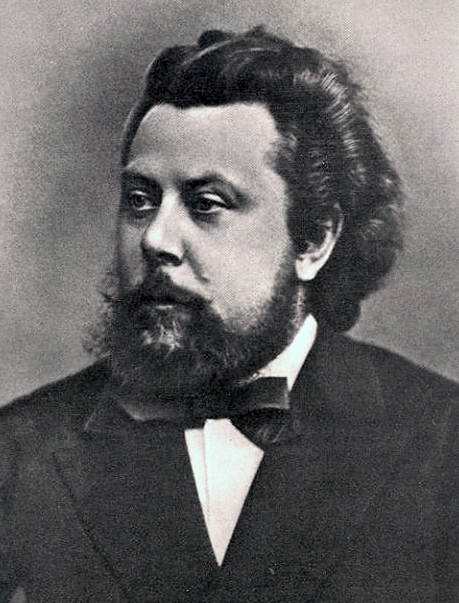
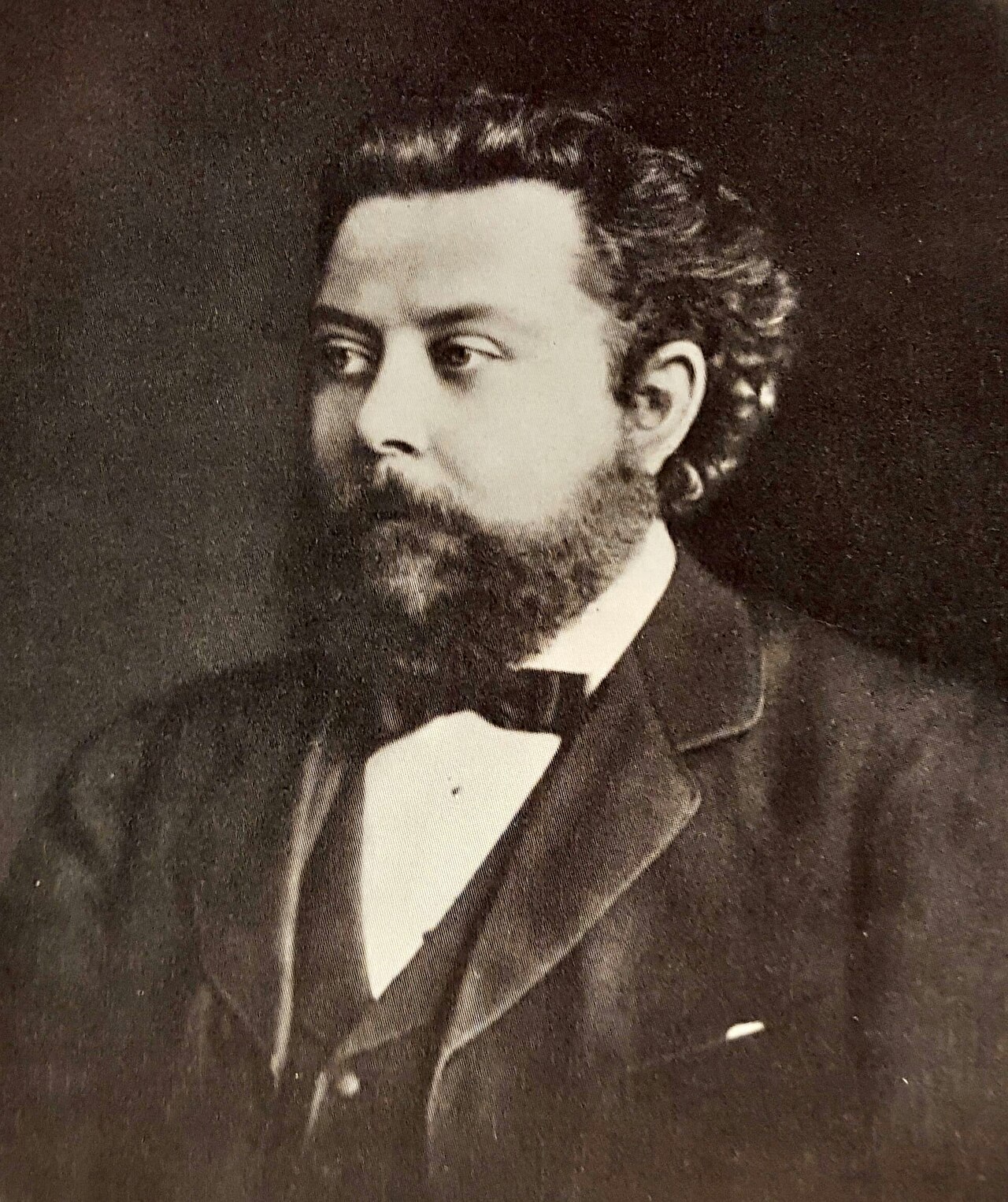
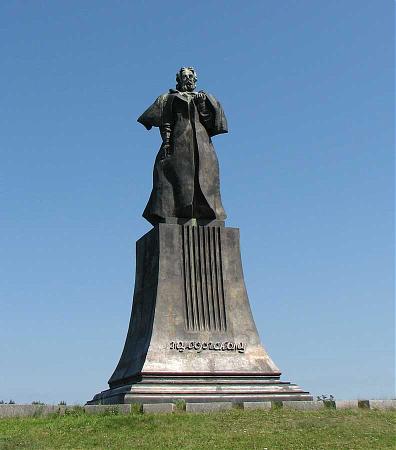
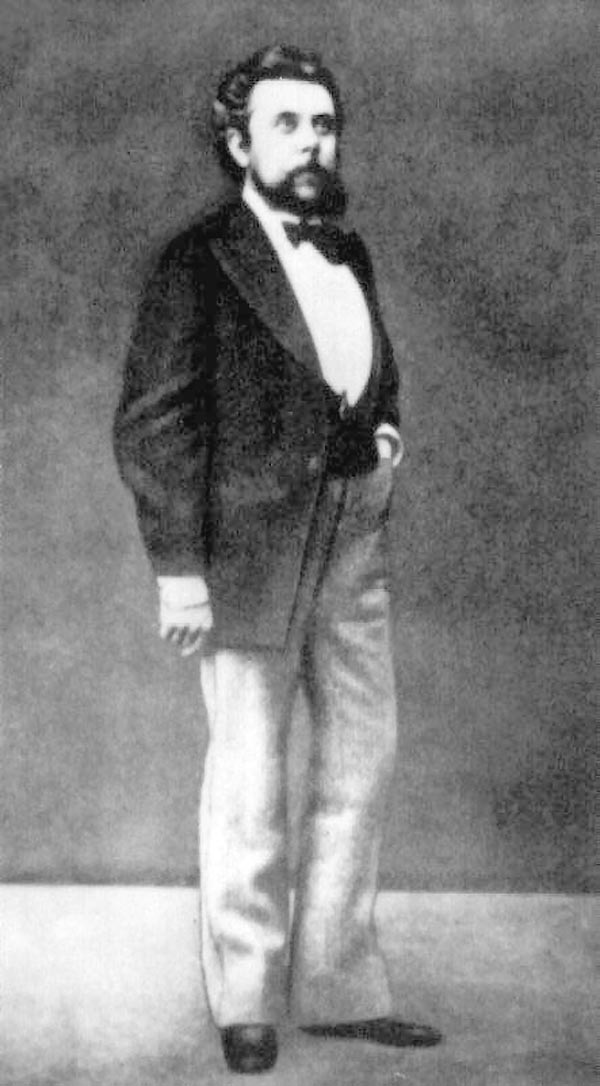
Modest Petrovich Mussorgsky was a Russian composer and a member of “The Five.” During the Romantic period, he pushed Russian music in new directions, working to create a sound that was distinctly Russian and often pushing back against Western musical norms. A lot of his music draws on Russian history, folklore, and national subjects—think the opera Boris Godunov, the tone poem Night on Bald Mountain, and the piano suite Pictures at an Exhibition.
For a long time, people mainly knew Mussorgsky’s work through versions that other composers had revised or finished. After his death, many of his key pieces were rediscovered in their original forms, and those original scores are now available. At the State Institute for Art Studies in Moscow, a complete academic edition of his works is being published. As of 2026, six volumes have come out, including Boris Godunov: two volumes of the vocal score (2020) and four volumes of the full score (2025). The vocal score was prepared by Nadezhda Teterina and Evgeny Levashev (1944–2022), and the full score by Levashev, Teterina, and Roman Berchenko.
The spelling and pronunciation of Mussorgsky’s name have caused some confusion. The family name comes from a 15th- or 16th-century ancestor, Roman Vasilyevich Monastyryov, who appears in the Velvet Book, a 17th-century genealogy of Russian boyars. He had the nickname “Musorga” (from the Greek musurgos, meaning “music maker”) and was the grandfather of the first Mussorgsky. The composer could trace his lineage back to Rurik, the legendary ninth-century prince of Novgorod and founder of the Russian monarchy.
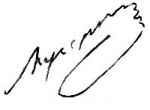
In family documents, the spelling varies: “Musarskiy,” “Muserskiy,” “Muserskoy,” “Musirskoy,” “Musorskiy,” and “Musurskiy.” The baptismal record gives “Muserskiy.” In early letters to Mily Balakirev (up to 1858), Mussorgsky signed his name “Musorskiy.” The “g” first appeared in a letter to Balakirev in 1863. Mussorgsky used the new spelling “Musorgskiy” for the rest of his life but sometimes reverted to the older form. The addition of the “g” was likely started by his older brother Filaret to hide the name’s root from an unsavory Russian word: músor (debris, rubbish, refuse). Mussorgsky didn’t seem to take the new spelling seriously and often signed letters to Vladimir Stasov and his family as “Musoryanin,” roughly “garbage-dweller” (compare dvoryanin: “nobleman”).
Originally, the stress fell on the first syllable (MÚS-ər-skiy), and it still does in Russia today, including the composer’s home district. The shifting vowel in the second syllable of the various spellings shows that syllable wasn’t stressed. The addition of the “g” and the shift in stress to the second syllable (Mu-SÓRK-skiy), sometimes called a Polish variant, was supported by Filaret’s descendants until his line ended in the 20th century. Their example was followed by influential Russians like Fyodor Shalyapin, Nikolay Golovanov, and Tikhon Khrennikov, who may have been bothered that the composer’s name sounded like “garbage” and pushed for the second-syllable stress, which has also become standard in the West.
The Western habit of doubling the first “s” (not used in scholarly works like The Grove Dictionary of Music and Musicians) likely came about because in many Western European languages, a single s between vowels often becomes voiced to z (as in “music”), while in Slavic languages it stays unvoiced. Doubling the consonant keeps the s sound sharp and voiceless. “Modest” is the Russian form of “Modestus,” meaning “moderate” or “restrained” in Late Latin. Close friends and relatives called him “Modinka,” a diminutive with the stressed O.
Mussorgsky was born in Karevo, Toropets Uyezd, Pskov Governorate, Russian Empire, about 400 km south of Saint Petersburg. His wealthy, land-owning family, the noble Mussorgskys, is said to descend from Rurik through the sovereign princes of Smolensk. His mother, Julia Chirikova, was the daughter of a comparatively less wealthy nobleman. His paternal grandmother Irina had been a serf who could be sold without land on his grandfather’s estate. At age six, Mussorgsky started piano lessons with his mother, a trained pianist. He progressed so quickly that by age nine, he could play a John Field concerto and works by Franz Liszt for family and friends. At ten, he and his brother were sent to Saint Petersburg to study at the elite German-language Petrischule (St. Peter’s School). There, he studied piano with Anton Gerke. In 1852, at age 12, his father paid to publish a piano piece by Mussorgsky called “Porte-enseigne Polka.”
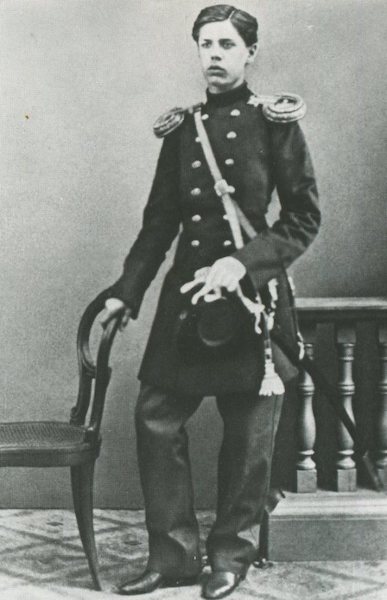
His parents planned the move to Saint Petersburg so both sons could continue the family tradition of military service. At 13, Mussorgsky entered the Cadet School of the Guards. There was controversy over the educational attitudes at the time of both the institute and its director, General Sutgof. Everyone agreed the Cadet School could be a brutal place, especially for new recruits. More significantly for Mussorgsky, it was likely where he began his eventual path to alcoholism.
Quick Facts
- Born
- 21 March [O.S. 9 March] 1839
- Died
- 28 March [O.S. 16 March] 1881
- Field
- Composer
- Nationality
- Russian
- Known for
- Opera Boris Godunov
- orchestral tone poem Night on Bald Mountain
- piano suite Pi
Facts from the source article.
Lore & Background
Mussorgsky was born in Karevo, Toropets Uyezd, Pskov Governorate, Russian Empire, 400 km south of Saint Petersburg. His wealthy and land-owning family is reputedly descended from Rurik, through the sovereign princes of Smolensk. At age six, he began receiving piano lessons from his mother, herself a trained pianist. By age nine, he could perform a John Field concerto and works by Franz Liszt. At age 10, he and his brother were taken to Saint Petersburg to study at the elite German language Petrischule, where he studied piano with Anton Gerke. In 1852, at age 12, he published a piano piece titled "Porte-enseigne Polka" at his father's expense. At age 13, he entered the Cadet School of the Guards. In 1856, he graduated and received a commission with the Preobrazhensky Regiment. In October 1856, the 17-year-old Mussorgsky met the 22-year-old Alexander Borodin while both served at a military hospital in Saint Petersburg. Borodin later remembered his "little uniform was spic and span, close-fitting, his feet turned outwards, his hair smoothed down and greased, his nails perfectly cut, his hands well groomed like a lord's." That winter, he was introduced to Alexander Dargomyzhsky, who was impressed with his pianism. Through Dargomyzhsky's soirées, he met critic Vladimir Stasov, César Cui, and Mily Balakirev. Within days, Balakirev took it upon himself to shape Mussorgsky's fate as a composer, explaining form by playing through Beethoven symphonies and works by Schumann, Schubert, and Glinka as piano duets. In 1858, within a few months of beginning his studies with Balakirev, Mussorgsky resigned his commission to devote himself entirely to music.
A Self-Taught Composer Among the Mighty Handful
Unlike the conservatory-trained elite, he was a self-taught amateur who had previously served in the prestigious Preobrazhensky Regiment of the Imperial Guard before moving into civil service. By 1862, when all five members were young men, Mussorgsky was twenty-three. His musical life was never free from practical constraints: even at the peak of his creative output in the 1870s, the expense of his drinking habit compelled him to maintain a full-time position in the State Forestry Department. This contrast between artistic ambition and the demands of daily survival defined his experience within the group, setting him apart from the court-connected Conservatory composers of Saint Petersburg. The Five, drawn largely from the minor provincial gentry, cultivated a collective identity rooted in authenticity rather than institutional prestige.
Gallery
Frequently Asked Questions
Who is Modest Mussorgsky?
Modest Petrovich Mussorgsky (1839–1881) was a Russian composer who became one of the most distinctive voices of the Romantic era. He is best remembered as a core member of the nationalist collective called 'The Five.'
What works is Modest Mussorgsky most known for?
His three most celebrated compositions are the opera Boris Godunov, the orchestral tone poem Night on Bald Mountain, and the piano suite Pictures at an Exhibition. These pieces remain staples of the classical repertoire worldwide.
What was 'The Five' and how did Mussorgsky fit in?
The Five was a loose circle of Russian composers united by a shared commitment to forging a distinctly national musical language. Mussorgsky was a central figure in the group, contributing bold, unconventional works that broke from Western European norms.
What made Mussorgsky's musical approach unique?
He deliberately rejected the polished conventions of Western classical tradition in favor of a raw, folk-inflected Russian sound. His music drew heavily on Russian history, folklore, and national themes to create something that felt unmistakably of its own culture.
More in Musicians & Composers
Spotted an error? Know more?
Reader corrections go straight into our review queue. Suggest an edit · How this site is sourced