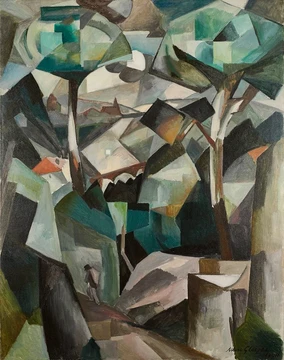
Srečko Kosovel
Slovenian modernist poet and avant-garde constructivist.

via Wikipedia: Srečko Kosovel · see source
Srečko Kosovel (18 March 1904 – 27 May 1926) is a Slovenian poet now recognized as a major modernist voice in central Europe. Critics have called him an impressionist poet of his native Karst region, a political poet who resisted the forced Italianization of Slovene lands annexed by Italy, an expressionist, a dadaist, a satirist, and a champion of international socialism who used avant-garde constructivist forms. Today he is a Slovenian poetic icon. Most of his work appeared nearly forty years after his death at age 22. In Slovenia, he entered the 20th-century literary canon with an impressive output: over 1,000 drafts, including 500 complete poems, whose quality is considered remarkably high for someone so young.
Kosovel was the youngest of five children. His father, Anton Kosovel, was a Slovene teacher barred from teaching in Slovene after the Austrian Littoral was annexed by Italy under the Treaty of Rapallo in 1920. His mother, Katarina (née Streš), was 40 when he was born and encouraged her children’s artistic talents. One sister played the piano, and a brother was an aspiring writer. Born in Sežana, then part of the Austro-Hungarian Empire, Kosovel lived in the nearby village of Tomaj until 1924. Before the Italian annexation of his Karst homeland, he immersed himself in Slovene culture, especially literature, and attended drama at the Slovene theatre in Trieste, housed in the Trieste National Hall, the cultural hub for Slovenes there.
Kosovel has been compared to Rimbaud, as both were exposed to war’s suffering at a young age. The Battles of the Isonzo—among the worst of World War I—started when Kosovel was 12 and ended when he was 17, fought near his home village. Rimbaud’s village was near the Franco-Prussian War battles. Kosovel regularly encountered wounded soldiers and saw corpses, as the battlefield was only about 15 kilometers away, which traumatized him. His parents wanted him away from the war, so in 1916 he and his sister moved to Ljubljana, where he lived until his early death.
After the Treaty of Rapallo and Italy’s annexation of Slovene territories, including the Karst, Kosovel felt robbed of his beloved landscape. The Fascist regime banned all Slovene schools and organizations, and Slovene intellectuals faced reprisals. This has been called one of the tragedies of his short life, stirring grief, anger, displacement, and disorientation. His new homeland, the Kingdom of Yugoslavia, showed no interest in the Slovene minority’s suffering under Italian Fascism. In 1923, when Benito Mussolini sought to modify the Rapallo borders to annex the independent state of Rijeka, King Alexander prioritized good relations with Italy over border corrections at Postojna and Idrija proposed by Prime Minister Nikola Pašić. This radicalized Kosovel politically and artistically. He had contacts with the radical anti-Fascist insurgent group TIGR. In 1926, he traveled to the Yugoslav town of Zagorje for a recital. While waiting for the train back to Ljubljana, he caught a cold that developed into meningitis. He returned to Tomaj, where he died on 27 May 1926.
His early works focused on longing for his family and the Karst landscape. At the University of Ljubljana, he met other Slovenes who had left Italian-annexed areas, and they founded the literary magazine *Lepa Vida* (“The Fair Vida,” a motif from Slovene folk poetry), which he edited. At the Ivan Cankar Club, named after the radical Slovene author, he encountered more radical ideas and was drawn to revolutionary thought and avant-garde Soviet and German works introduced by Ivo Grahor.
In 1925, Kosovel and constructivist artist Avgust Černigoj planned a new magazine, *Konstruktor* (“Constructor”). Kosovel began writing constructivist poems he called *konsi* (singular *kons*), short for *konstrukcije* (“constructions”). With constructivism, he abandoned silent lyricism for loud, presumptuous, offensive poetry full of linguistic innovations: syntax-free language, logical disorder, free imagery, typography, styles, colors, mathematical symbols, equations, paper collages, and other experimental forms. Around the same time, he prepared a collection of his early poems titled *Zlati čoln* (“Golden Boat”), intending to close his early style, heavily influenced by impressionist poet Josip Murn. However, negative responses from publishers and close friends crushed him. He then turned exclusively to his constructivist poetry, planning a collection called *Konsi*, but never saw it published. His constructivist work remained unknown until 1967, when Anton Ocvirk released the collection *Integrali '26*. Also in 1925, Kosovel became editor of the magazine *Mladina* (Youth), which had a huge impact on his life. He had ambitious plans to turn it into a nationwide left-wing publication attracting all modernist and avant-garde artists from the Slovene Lands and Yugoslavia.
- born
- 18 March 1904
- died
- 27 May 1926
- field
- Poetry
- nationality
- Slovenian
- known_for
- Modernist and constructivist poetry; political resistance to Italianization; pos
Verified Timeline
Lore & Background
Srečko Kosovel was born as the youngest of five children in Sežana, then part of the Austro-Hungarian Empire, and lived in the nearby village of Tomaj until 1924. His father, Anton Kosovel, was a Slovene teacher not allowed to continue teaching in Slovene after the Austrian Littoral was annexed by Italy with the Treaty of Rapallo in 1920. His mother, Katarina, was 40 years old at the time of his birth and nurtured the artistic talents of their children. The Battles of the Isonzo—one of the worst engagements of the First World War—began when Kosovel was 12 and officially ended when he was 17; the battlefield was some 15 kilometers from his home, and he had regular contacts with wounded soldiers and saw corpses, which had a traumatizing effect on him. In 1916, his parents sent him and his sister to Ljubljana to remove them from the war's vicinity. With the Italian annexation of Slovene territories, Kosovel felt robbed of his beloved landscape because all Slovene schools and organizations were forbidden by the Fascist regime. Slovene intellectuals were subjected to reprisals, evoking in him grief, anger, displacement, and disorientation. His new homeland, the Kingdom of Yugoslavia, showed no interest in the suffering of the Slovene minority under Fascist Italy. This led to his political and artistic radicalization, and he had contacts with the radical anti-Fascist organization TIGR. In 1926, while visiting the Yugoslav town of Zagorje to perform a recital, he caught a cold that developed into meningitis; he returned to Tomaj and died on 27 May 1926. Kosovel's early works were mainly about longing for his family and native Karst landscape. At the University of Ljubljana, he met peers from Italian-annexed Slovene areas and established the literary magazine Lepa Vida, where he served as editor. He became acquainted with radical ideas at the Ivan Cankar Club and was attracted to revolutionary ideas and avant-garde Soviet and German works. In 1925, with constructivist artist Avgust Černigoj, he considered establishing a new magazine Konstruktor and started writing constructivist poems called konsi, short for konstrukcije. He also became editor of the magazine Mladina, intending to transform it into a nationwide left-wing publication.
Reader's Guide
Srečko Kosovel's significance lies in his role as a central European modernist poet whose work spans impressionism, expressionism, and constructivism, incorporating elements of Dadaism, surrealism, and futurism. His poetry is seen as too complex to be identified by a single movement, reflecting his concern with social and political oppression in the Slovene Lands, the fate of Slovenes threatened by foreign powers, the feeling of a decadence of Europe, and the hope for a 'new dawn'. The Karst region, with its ascetic and rigid scenery, is a main motif in his poetry, which is full of wit, irony, depth, and a sentiment of tragedy. Most of Kosovel's works were published almost four decades after his early death at 22. In his homeland, he entered the 20th-century Slovene literary canon as a poet who produced an impressive body of work of more than 1000 drafts, among them 500 complete poems, with a quality regarded as unusually high for his age. His constructivist poetry remained unknown to the public until 1967, when Anton Ocvirk released the collection Integrali '26. Kosovel has been compared to other brilliant and tragic European authors from his same generation, such as Attila József, Cesare Pavese, and Federico García Lorca. His legacy includes posthumous publications that gradually revealed the full scope of his work, including unfinished lyrical prose, sketches, notes, diaries, and essays. A new selection of his poetry was translated into English in 2008 as The Golden Boat: Selected Poems of Srečko Kosovel, and further works were translated by Lesley Zore in 2020-2021. Kosovel's poetry continues to be studied and set to music, as by Slovene composer Breda Šček.
Did You Know?
- Kosovel wrote more than 1000 drafts of poems, including 500 complete poems, before dying at age 22.
- His constructivist poems, called konsi (short for konstrukcije), remained unpublished until 1967, over 40 years after his death.
- The Battles of the Isonzo during World War I took place only about 15 kilometers from his home, and he regularly saw wounded soldiers and corpses.
- Kosovel had contacts with TIGR, a radical anti-Fascist insurgent organization operating in the Slovene territories annexed by Italy.
- Slovene composer Breda Šček set Kosovel's texts to music.
War, Displacement, and the Loss of Home
Srečko Kosovel's formative years were shaped by proximity to one of the First World War's bloodiest theaters. The Battles of the Isonzo raged within roughly fifteen kilometers of his family's village of Tomaj, meaning that from the age of twelve to seventeen he lived in the shadow of a conflict that produced wounded soldiers and dead bodies at his doorstep. His parents, recognizing the psychological toll, relocated him and his sister to Ljubljana in 1916. The trauma never fully receded. After the war, the Treaty of Rapallo handed his native Karst to Italy, and the Fascist regime that followed banned Slovene-language schools and cultural organizations. Kosovel's father, a Slovene teacher, lost his right to instruct in his own language. The poet felt his beloved landscape stolen from him, and the Kingdom of Yugoslavia, his nominal new homeland, showed little interest in correcting the borders or aiding the Slovene minority under Italian rule. This double betrayal—by the annexing power and by the state that was supposed to protect his people—deeply radicalized his grief and sense of displacement, fueling both his political anger and his artistic urgency.
The Constructivist Break and the Konsi
By 1925, Kosovel had grown restless with the quiet, impressionist lyricism that had defined his earlier verse, a style heavily indebted to Josip Murn. He attempted to close that chapter with a planned collection called Zlati čoln, but the lukewarm reception from publishers and even close friends pushed him further into experimental territory. Together with the constructivist visual artist Avgust Černigoj, he began drafting a new magazine, Konstruktor, and started composing what he called konsi—short for konstrukcije, or constructions. These poems abandoned syntax, logical sequencing, and conventional imagery in favor of typography, color, mathematical symbols, equations, paper collages, and other forms of linguistic and visual disruption. The result was a loud, confrontational, deliberately offensive mode of writing that rejected the hushed lyric tradition. Tragically, Kosovel never saw his constructivist collection published in his lifetime. The poems remained hidden from public view for over four decades, finally appearing in 1967 under the title Integrali '26, assembled by Anton Ocvirk.
Political Radicalization and the Mladina Years
The political currents sweeping through Ljubljana in the mid-1920s found a receptive mind in Kosovel. Through the Ivan Cankar Club, named for a radical Slovenian author, and through the introductions of Ivo Grahor, he encountered revolutionary Soviet and German avant-garde works that sharpened his existing discontent. His contacts extended to TIGR, a radical anti-Fascist insurgent organization operating in the annexed Slovene territories. In 1925 he took on the editorship of the magazine Mladina and poured enormous ambition into transforming it into a nationwide left-wing platform that would draw modernist and avant-garde artists from across the Slovene Lands and Yugoslavia while simultaneously advancing a radical Slovenian political agenda. He remained the programme editor until his death. His prose grew simpler and more direct, deliberately reaching toward a proletarian readership. He conceived a union of proletarian writers and a publishing house called Strelci, or Archers, though neither project survived his brief tenure. The convergence of artistic experimentation and political commitment made 1925 his most prolific and ideologically charged year.
A Life Cut Short and a Legacy Reclaimed
Srečko Kosovel died on 27 May 1926, at the age of twenty-two, in his home village of Tomaj. The immediate cause was meningitis, a complication of a cold contracted while he waited for a train in Zagorje after performing a recital. The comparison to Arthur Rimbaud is often drawn: both poets were young, both were exposed to the horrors of war near their childhood homes, and both left behind bodies of work that seemed impossibly mature for their brevity. Kosovel's output included more than a thousand drafts and roughly five hundred complete poems, a volume and quality that critics have found remarkable for a writer so young. Yet most of this material was not published until nearly four decades after his death. Over time, he accumulated a constellation of labels—impressionist, expressionist, dadaist, satirist, constructivist, political poet, voice of international socialism—reflecting the sheer range of his short career. Today he stands as a Slovenian poetic icon and is regarded as one of central Europe's major modernist voices, a figure whose influence grew far beyond the boundaries of his brief, turbulent life.
Gallery
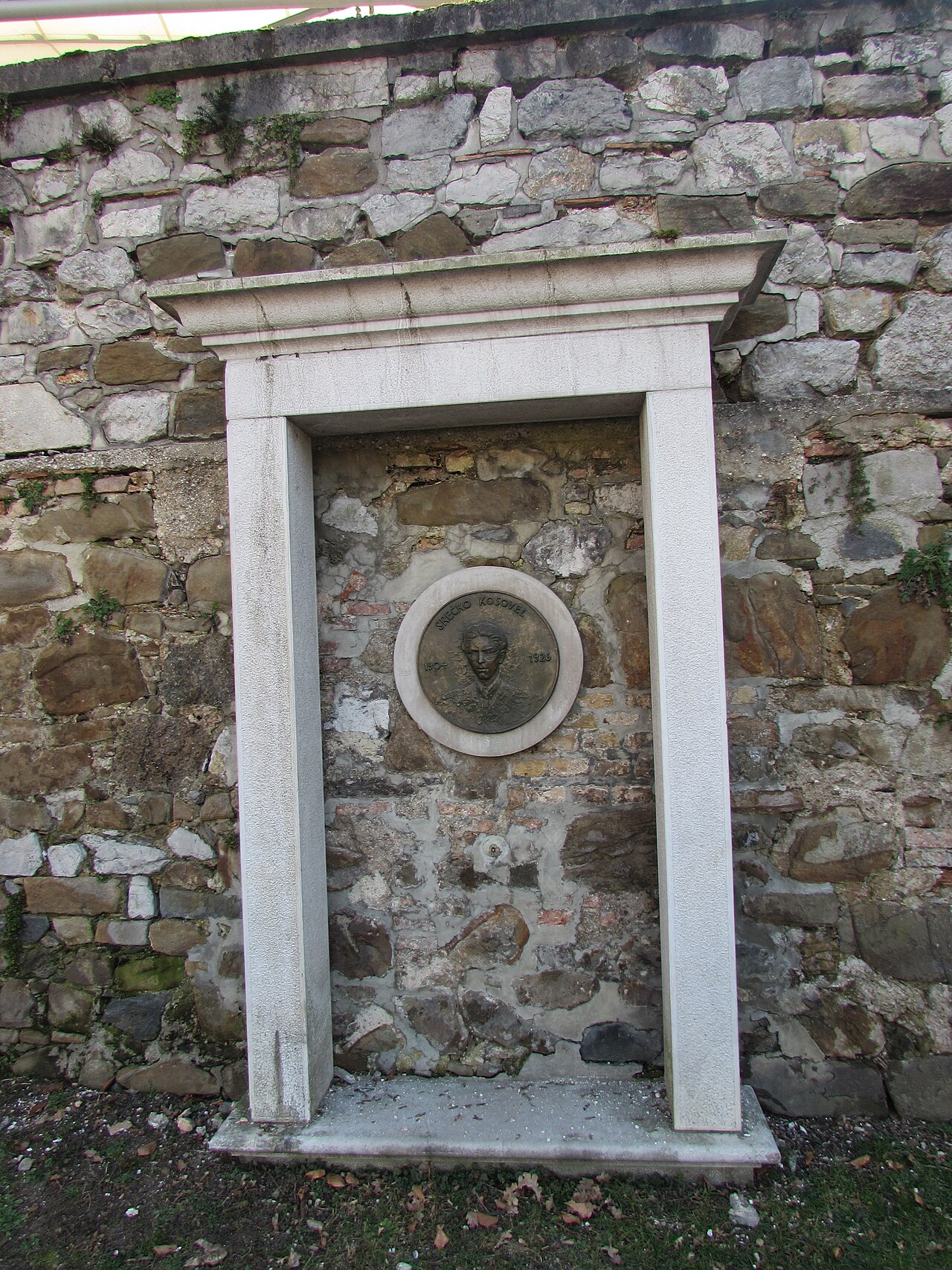
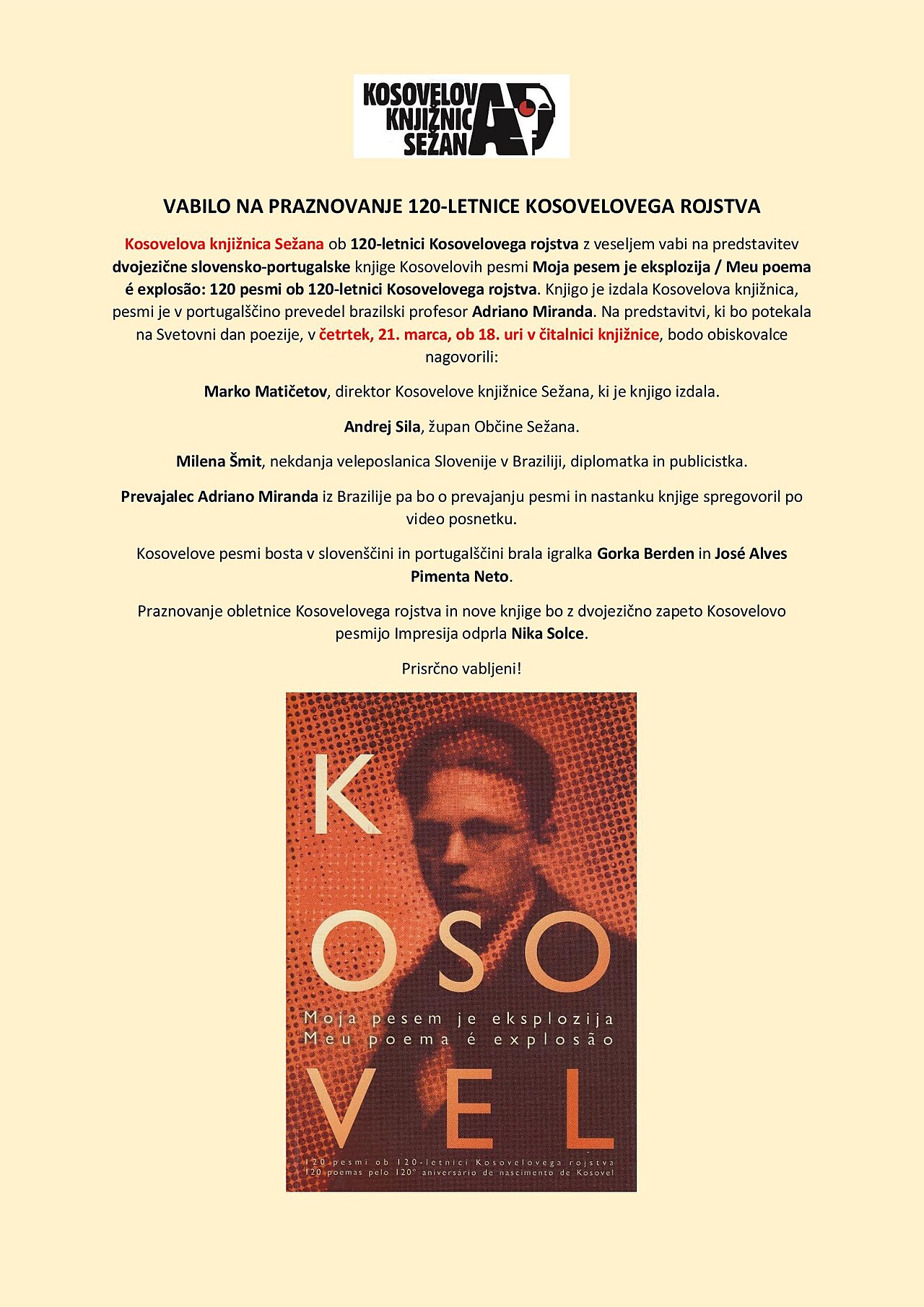
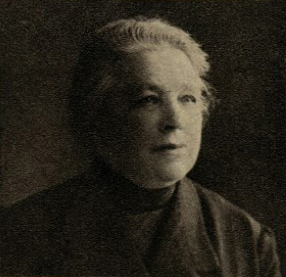
Frequently Asked Questions
Who is Srečko Kosovel?
Srečko Kosovel was a Slovenian poet born in 1904 in the Karst region who became one of central Europe's most significant modernist voices. Despite dying at just twenty-two in 1926, he is now regarded as a national poetic icon in Slovenia.
What poetic styles is Kosovel associated with?
His work blends impressionism rooted in the Karst landscape with expressionist intensity, dadaist experimentation, and avant-garde constructivist form. He is also remembered as a sharp satirist and a voice aligned with international socialist thought.
How did Srečko Kosovel's life end?
Kosovel was committed to a psychiatric institution in Ljubljana, where he died on 27 May 1926 at the age of twenty-two. His early death meant that much of his reputation was built posthumously as his work gained wider recognition.
What was Kosovel's political significance?
He wrote in active resistance to the forced Italianization of Slovene territories annexed by Italy after World War I. His poetry carried both a nationalist and an internationalist political charge, making him a symbol of cultural defiance.
Why is Kosovel considered important to 20th-century poetry?
He is credited with bringing avant-garde constructivist and dadaist techniques into Slovenian-language verse, helping the tradition break free from purely lyric or impressionistic modes. His brief but dense body of work is now studied as a key node in the broader European modernist movement.
More in Modernist & 20Th Century Poets 1-18
Spotted an error? Know more?
This is a living reference — every entry is fact-audited, and reader corrections feed straight into our audit queue. Suggest an edit · See this site's audit record