Sergei Yesenin
Russian lyric poet known for raw village nostalgia.

Главархив Москвы · CC BY 4.0
Sergei Aleksandrovich Yesenin was a Russian lyric poet, born on 3 October 1895 (21 September under the old calendar) and died on 28 December 1925. He is among the most popular and widely known Russian poets of the 20th century. His poetry is known for its raw, lyrical longing for the village life of his childhood, which he presented without idealisation, often implicitly condemning urbanisation and industrialisation.
Yesenin was born into a peasant family in the village of Konstantinovo, in Ryazan Governorate of the Russian Empire. His father was Alexander Nikitich Yesenin, and his mother was Tatyana Fyodorovna Yesenina, née Titova. Because both parents spent most of their time seeking work—his father in Moscow, his mother in Ryazan—Sergei was sent at age two to live with his maternal grandparents, Fyodor Alexeyevich Titov and Natalya Yevtikhiyevna Titova, in the nearby village of Matovo. They essentially raised him. The Titovs had three grown sons, who were Yesenin’s early companions. He later recalled that his uncles taught him to ride horses and swim, and one even used him as a hunting dog during duck hunts. He learned to read at five and began writing poetry at nine, inspired by the chastushkas and folklore his grandmother provided. He remembered her as deeply religious, taking him to every monastery she visited. He had two younger sisters, Yekaterina and Alexandra.
In 1904, Yesenin entered the Konstantinovo zemstvo school, graduating with an honorary certificate in 1909. He then attended a secondary parish school in Spas-Klepiki. From 1910 onward, he wrote poetry systematically; eight poems from that year later appeared in his 1925 Collected Works. During his school years, he wrote about thirty poems and compiled them into a manuscript titled "Volnye Dumy" (Free Thoughts), which he tried but failed to publish in Ryazan in 1912.
In 1912, having earned a teacher’s diploma, Yesenin moved to Moscow. He supported himself as a proofreader’s assistant at Sytin’s printing company. The next year, he enrolled as an external student at Shanyavsky Moscow City People’s University to study history and philology, but left after eighteen months due to lack of funds. There he befriended several aspiring poets, including Dmitry Semyonovsky, Vasily Nasedkin, Nikolai Kolokolov, and Ivan Filipchenko. In 1913, he married Anna Izryadnova, a co-worker from the publishing house; the marriage lasted three years and produced a son, Yuri.
That same year, Yesenin grew increasingly interested in Christianity, and biblical themes became frequent in his poems. He wrote to his childhood friend G. Panfilov that he was reading the Gospel and finding much that was new to him. He also became involved with Moscow revolutionary circles. For several months, his flat was under secret police surveillance, and in September 1913 it was raided and searched.
In January 1914, his first published poem, "Beryoza" (The Birch Tree), appeared in the children’s magazine Mirok. More poems followed in minor magazines like Protalinka and Mlechny Put. In December 1914, he left his job and, according to his wife, dedicated himself entirely to poetry. Around this time, he joined the Surikov Literary and Music circle.
Frustrated by the lack of interest in Moscow, Yesenin moved to Petrograd in 1915. He arrived on 8 March and the next day visited Alexander Blok at his home to read him poetry. He quickly met poets Sergey Gorodetsky, Nikolai Klyuev, and Andrei Bely. Blok was instrumental in promoting Yesenin’s early career, calling him "a gem of a peasant poet" and his verse "fresh, pure and resounding," though "wordy." Yesenin joined the Krasa (Beauty) group of peasant poets, which included Klyuev, Gorodetsky, Sergey Klychkov, and Alexander Shiryayevets. In his 1925 autobiography, Yesenin said Bely taught him about form, while Blok and Klyuev taught him lyricism. Klyuev introduced him to the publisher Averyanov, who in early 1916 released Yesenin’s debut poetry collection, Radunitsa, which contained many of his early religious poems. Yesenin later noted he would have gladly omitted some of those religious verses, but they served as an illustration of a poet’s progress toward the revolution. Yesenin and Klyuev maintained a close, intimate friendship for several years, and it is likely they became lovers.
Later in 1915, Yesenin co-founded the Krasa literary group and published poems in Petrograd magazines such as Russkaya Mysl, Ezhemesyachny Zhurnal, Novy Zhurnal Dlya Vsekh, Golos Zhizni, and Niva. Among the authors he met that year were Maxim Gorky, Vladimir Mayakovsky, Nikolai Gumilyov, and Anna Akhmatova; he also visited the painter Ilya Repin at his estate. Yesenin’s rise to fame was rapid; by the end of the year, he was the star of St Petersburg’s literary circles and salons. Gorky later wrote to Romain Rolland that the city embraced him with the delight of a gourmet finding strawberries in winter, and that he was met with excessive and often insincere praise.
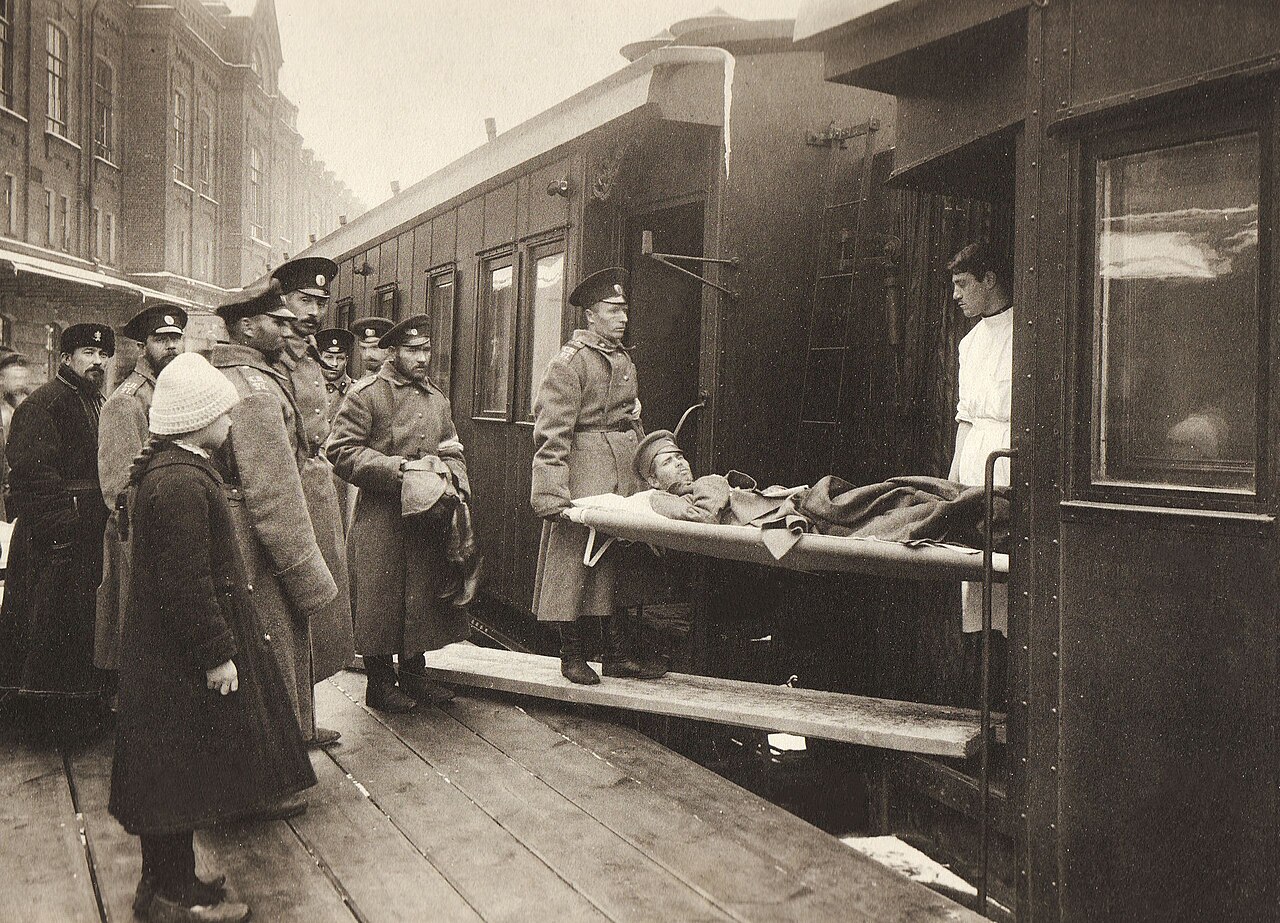
On 25 March 1916, Yesenin was drafted for military duty. In April, he joined a medical train based in Tsarskoye Selo under Colonel D.N. Loman. On 22 July 1916, at a special concert attended by Empress Alexandra Fyodorovna, the train’s patron, and her daughters, Yesenin performed.
- field
- Poetry
- nationality
- Russian
- known_for
- Lyrical poetry evoking village life and criticizing urbanisation
Quick Facts
- Birth Name
- Sergei Alexandrovich Yesenin
- Birth Date
- 3 October 1895
- Birth Place
- Konstantinovo, Ryazansky Uyezd, Ryazan Governorate, Russian Empire
- Death Date
- 28 December 1925 (aged 30)
- Death Place
- Leningrad, Soviet Union
- Death Cause
- Suicide by hanging
- Resting Place
- Vagankovo Cemetery, Moscow
- Occupation
- Lyrical poet
- Movement
- New peasant poetry, imaginism
- Spouse
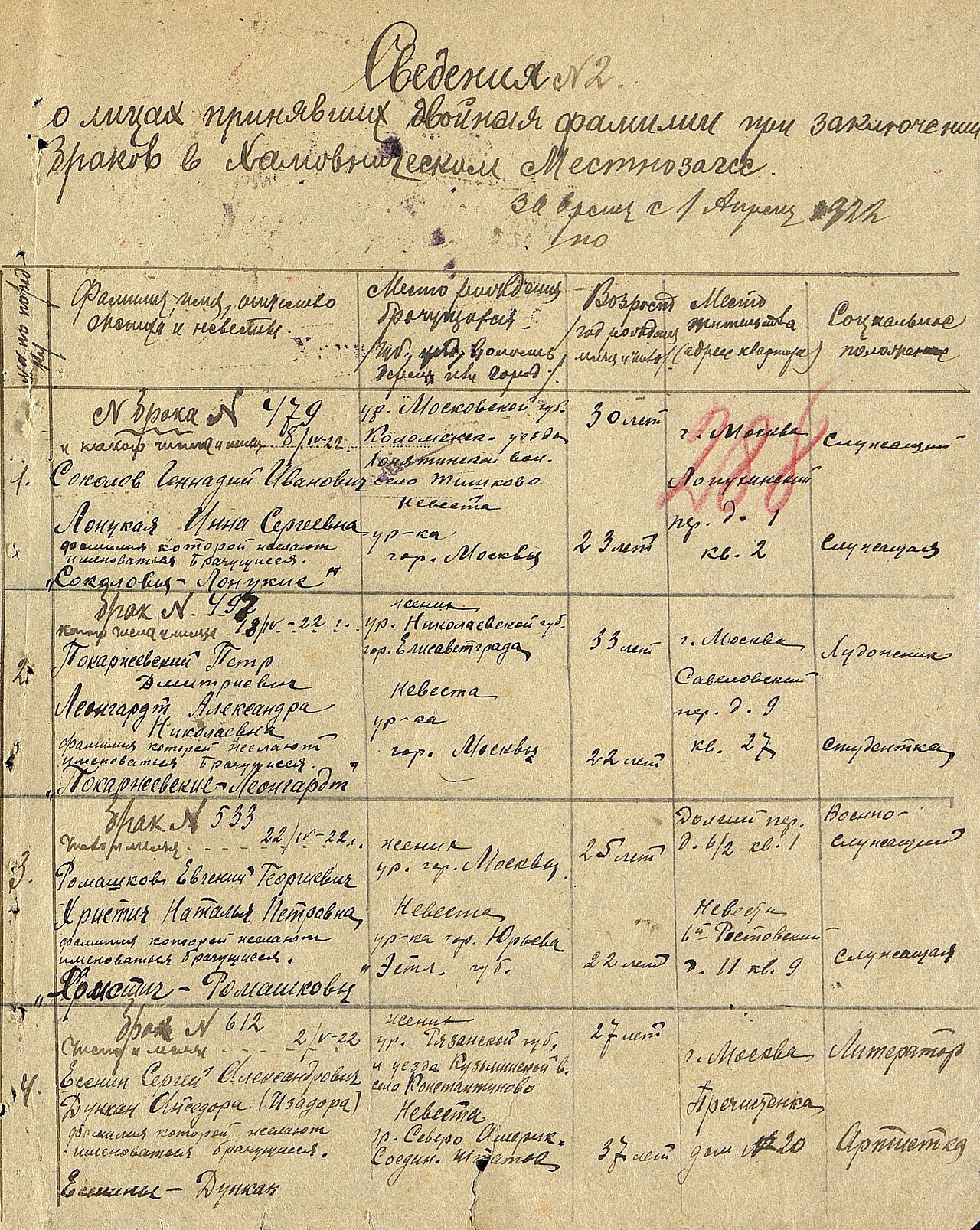
- Anna Izryadnova (1913–1915) · Zinaida Reich (1917–1921) · Isadora Duncan (1922–1923) · Sophia Tolstaya (1925)
Facts from the source article.
Lore & Background
Sergei Yesenin was born into a peasant family in the village of Konstantinovo. His parents spent most of their time seeking work, so at age two he was moved to live with his maternal grandparents, who raised him. He started reading at age five and began writing poetry at nine, inspired by chastushkas and folklore from his grandmother. He graduated from the Konstantinovo zemstvo school with a certificate of merit in 1909 and later studied at a secondary parish school in Spas-Klepiki. In 1912 he moved to Moscow, working as a proofreader's assistant, and enrolled at Shanyavsky Moscow City People's University to study history and philology, but left after eighteen months due to lack of funds. His first marriage was in 1913 to Anna Izryadnova, with whom he had a son, Yuri. His first published poem, 'Beryoza' (The Birch Tree), appeared in January 1914 in the children's magazine Mirok.
Reader's Guide
Yesenin's significance lies in his role as a leading Russian lyric poet of the early 20th century, whose work captured the tension between rural tradition and urban modernity. His poetry, rooted in peasant life and folklore, offered a raw, nostalgic counterpoint to industrialisation, resonating widely. He co-founded the imaginist movement in 1918 with Anatoly Marienhof, and his early career was boosted by Alexander Blok, who called him 'a gem of a peasant poet.' Despite initial support for the Bolsheviks, Yesenin later criticized Bolshevik rule in poems such as 'The Stern October Has Deceived Me.' His legacy endures as a popular and influential figure in Russian literature, though his personal life was marked by multiple marriages and a tumultuous relationship with the state.
Did You Know?
- Yesenin's first published poem, 'Beryoza' (The Birch Tree), appeared in the children's magazine Mirok in January 1914.
- He co-founded the Russian literary movement of imaginism in 1919 with Anatoly Marienhof.
- His maternal grandparents, who raised him, had three grown-up sons who taught him horse riding and swimming.
- Yesenin was drafted for military duty in March 1916 and served on a medical train.
Gallery

Frequently Asked Questions
What is Sergei Yesenin known for?
His verse is built around raw, unsentimental portraits of village life from his childhood, layered with a deep sense of loss. He also directed a pointed, almost cursing critique at industrialization and the encroachment of urban modernity.
Why is Sergei Yesenin important to 20th-century poetry?
He gave a fiercely lyrical voice to a rural Russian world that was rapidly disappearing under industrialization, making his work a key reference point for poets grappling with modernity, cultural loss, and identity. His influence persists in Russian-language literature and in broader discussions of how verse can mourn what progress destroys.
More in Modernist & 20Th Century Poets 1-18
Spotted an error? Know more?
This is a living reference — every entry is fact-audited, and reader corrections feed straight into our audit queue. Suggest an edit · See this site's audit record