Bagan
Ancient capital of the Pagan Kingdom, famed for thousands of Buddhist temples.

Jakub Hałun · CC BY-SA 4.0
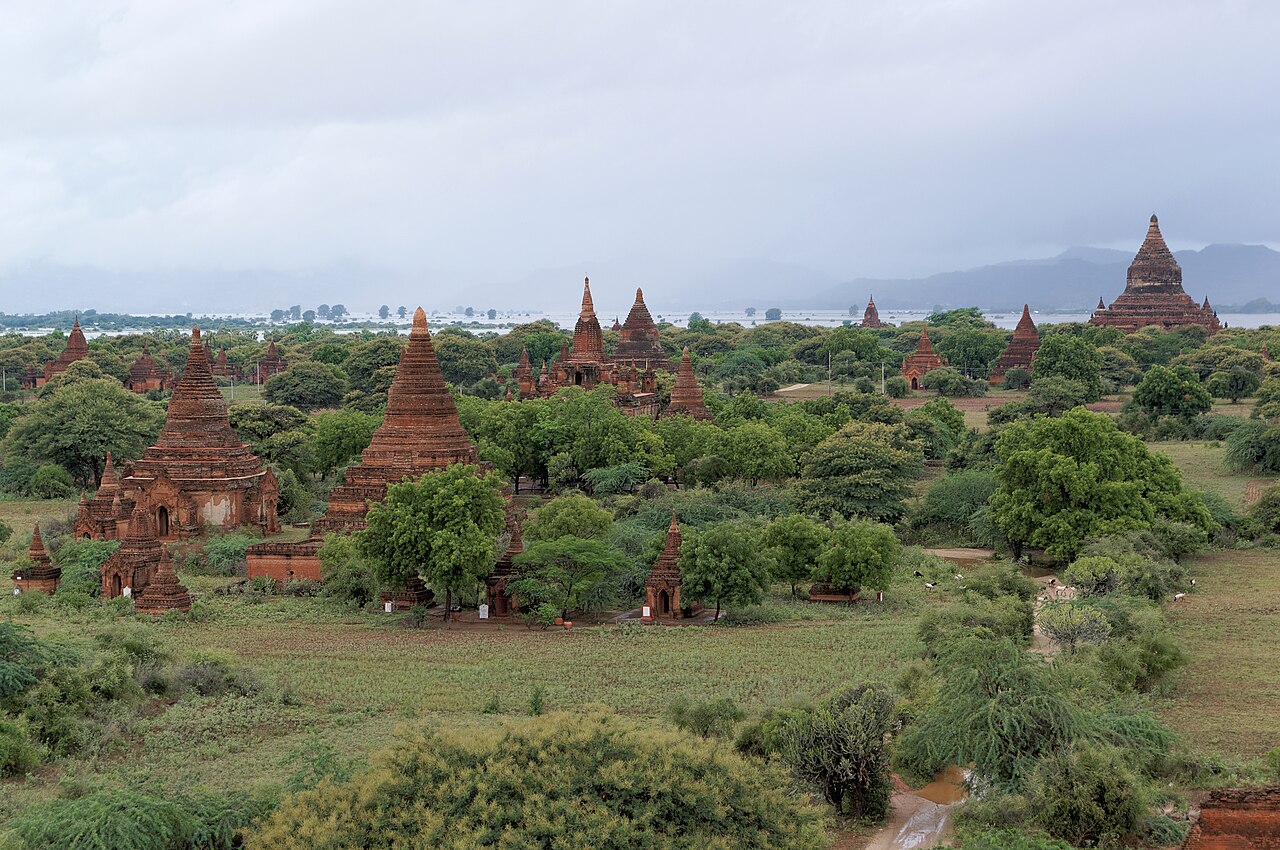
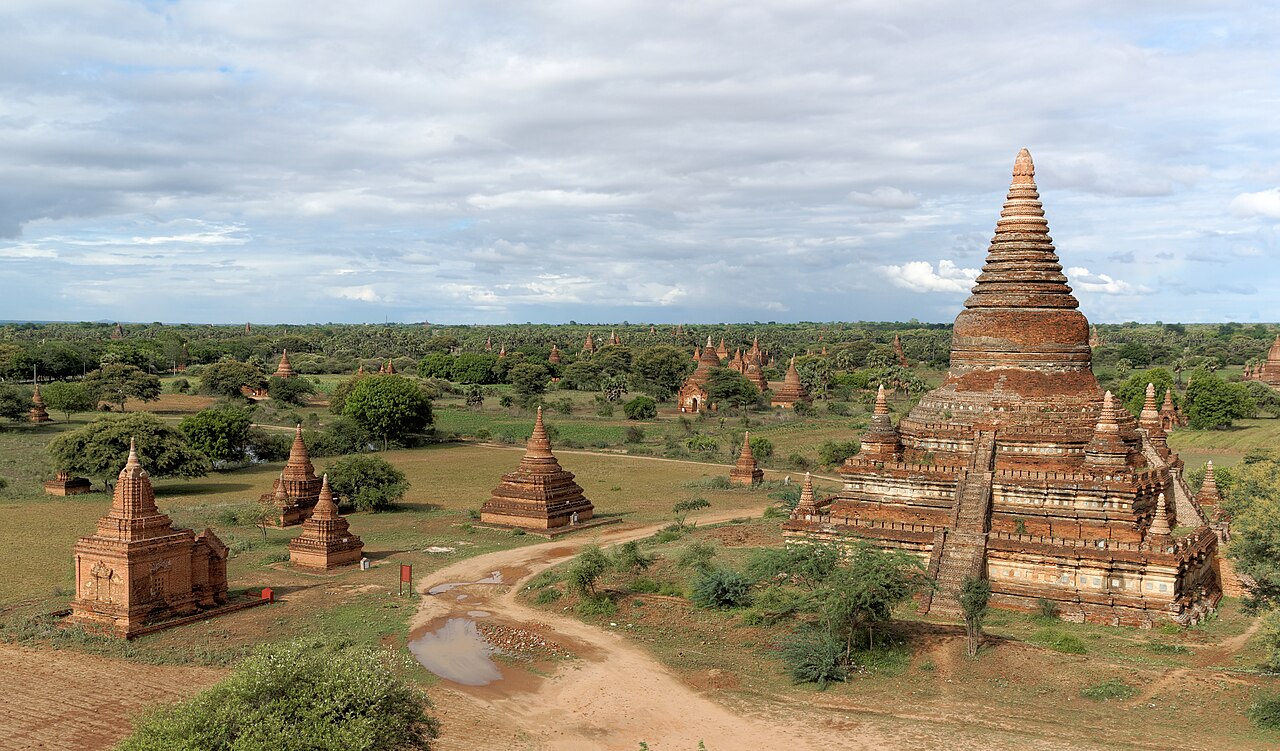
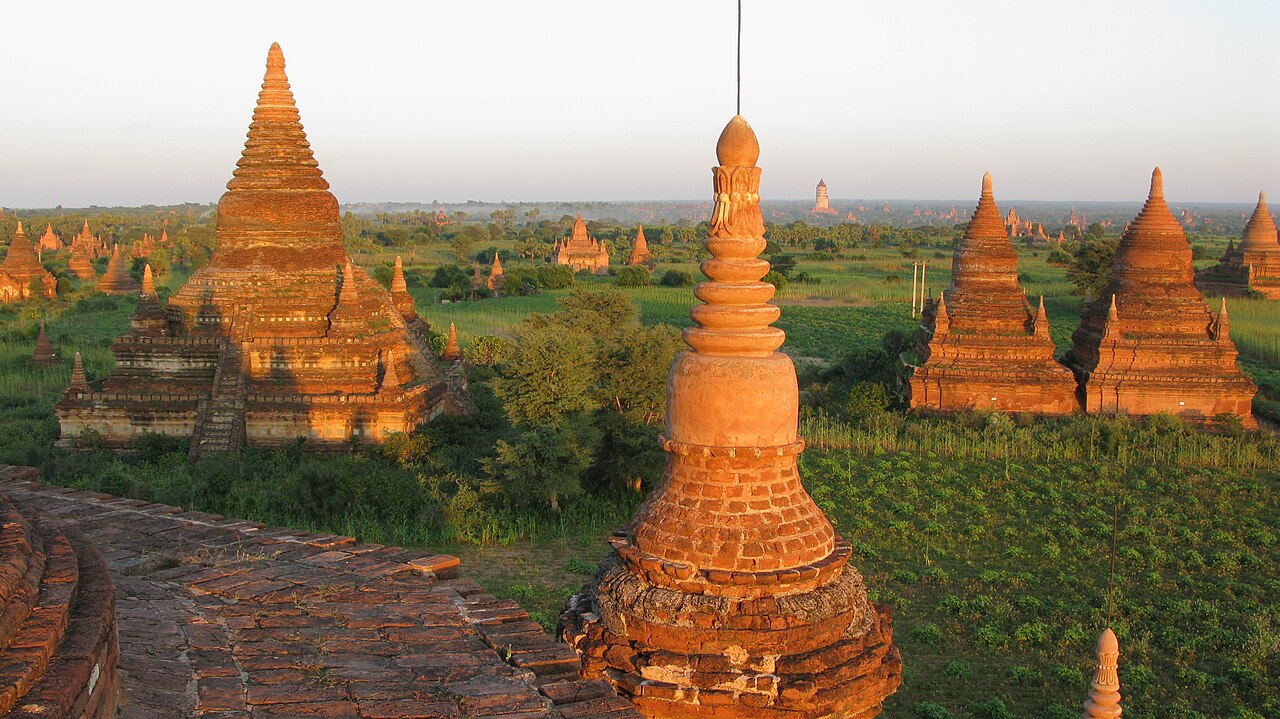
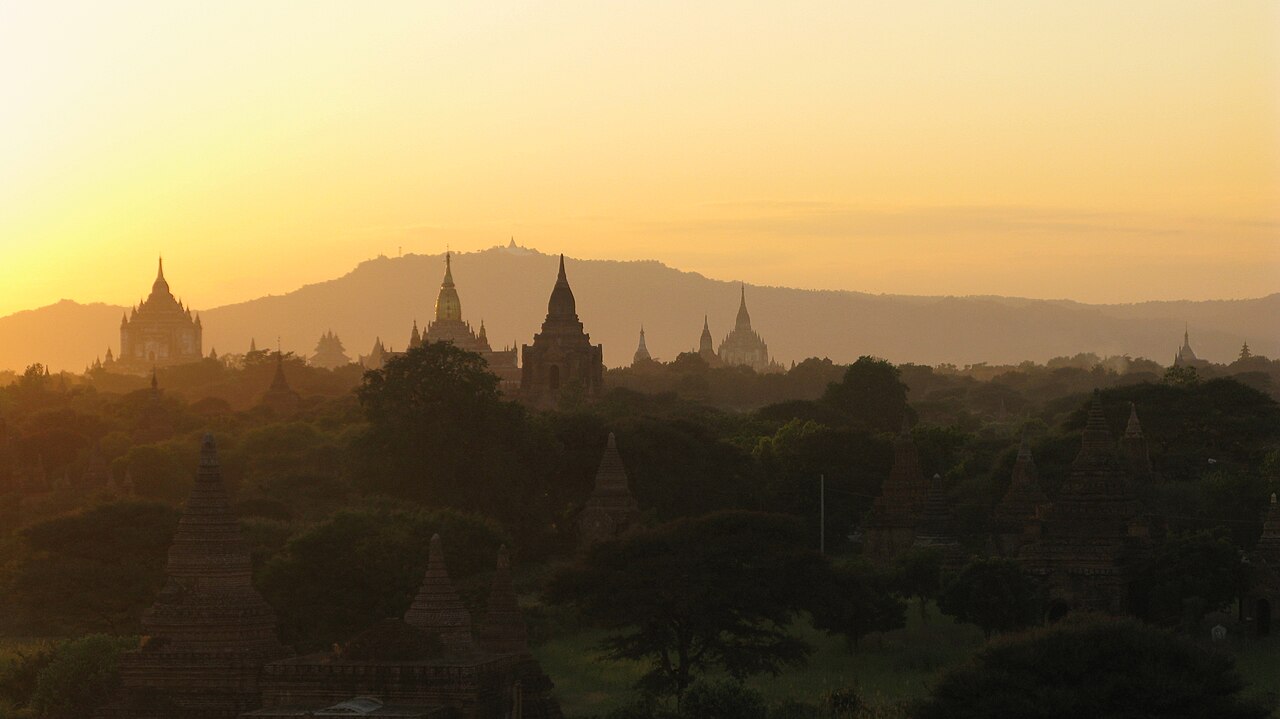
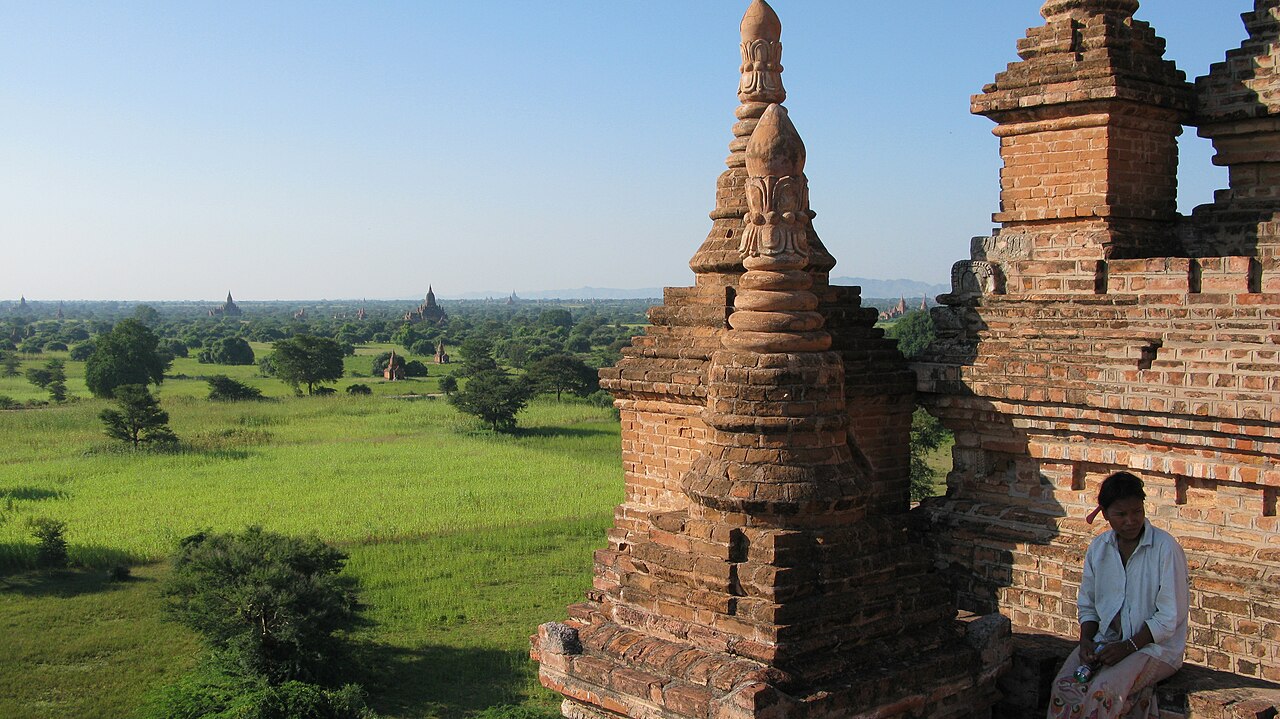
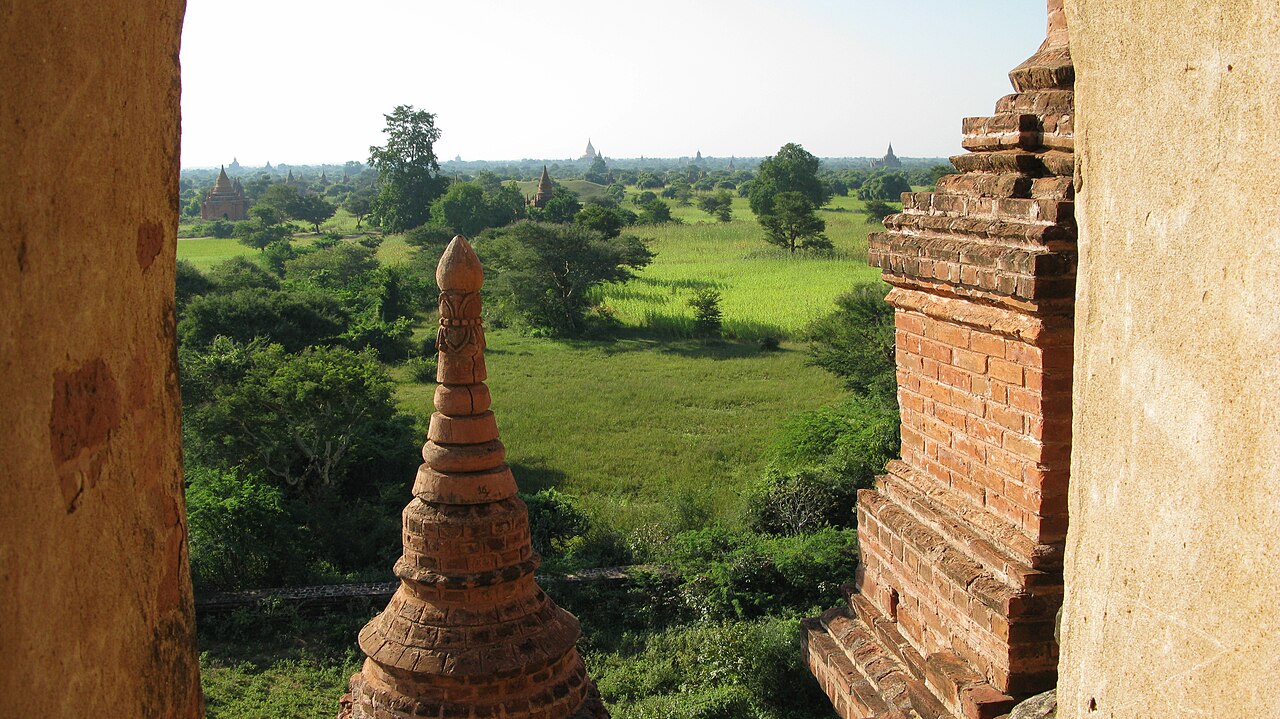
Bagan (pronounced bə-GAN; Burmese: ပုဂံ, formerly Pagan) is an ancient city and UNESCO World Heritage Site in Myanmar’s Mandalay Region. Between the 9th and 13th centuries, it was the capital of the Pagan Kingdom—the first realm to bring together the areas that later formed modern Myanmar. At its peak, from the 11th to 13th centuries, over 10,000 Buddhist temples, pagodas, and monasteries were built across the Bagan plains; more than 2,200 of these structures still stand today. The Bagan Archaeological Zone now draws much of the country’s growing tourism.
The name “Bagan” comes from the modern Burmese pronunciation of the old word *Pugan*, which itself derives from Old Burmese *Pukam*. Its classical Pali name is *Arimaddanapura* (“the City that Tramples on Enemies”). Other Pali names reflect the region’s dry climate: *Tattadesa* (“parched land”) and *Tampadīpa* (“bronzed country”). Burmese chronicles also list the classical names *Thiri Pyissaya* (Pali: *Siripaccaya*) and *Tampawaddy* (Pali: *Tampavatī*).
According to royal chronicles, Bagan was founded in the 2nd century CE and fortified in 849 by King Pyinbya, the 34th successor of the city’s early founder. Western scholars, however, believe it was founded in the mid-to-late 9th century by the Mranma (Burmans), who had recently moved into the Irrawaddy valley from the Nanzhao Kingdom. It remained one of several competing Pyu city-states until the late 10th century, when the Burman settlement grew in power and prestige.
From 1044 to 1287, Bagan served as the political, economic, and cultural heart of the Bagan Empire. Over 250 years, its rulers and wealthy subjects erected more than 10,000 religious monuments—roughly 1,000 stupas, 10,000 small temples, and 3,000 monasteries—across 104 square kilometers of the Bagan plains. The city expanded and became a cosmopolitan hub for religious and secular learning, specializing in Pali grammar and philosophical-psychological (abhidhamma) studies, as well as works on prosody, phonology, grammar, astrology, alchemy, medicine, and law. Monks and students came from as far as India, Sri Lanka, and the Khmer Empire.
Religion dominated Bagan’s culture, but it was fluid, syncretic, and by later standards unorthodox. It continued earlier Pyu trends, where Theravada Buddhism coexisted with Mahayana Buddhism, Tantric Buddhism, various Hindu schools (Shaivite and Vaishnava), and native animist (nat) traditions. Although royal patronage of Theravada Buddhism from the mid-11th century gradually gave it primacy, other traditions thrived throughout the Pagan period to a degree not seen later.
Bagan’s basic layout took shape by the late 11th century, during its first major building phase. A main strip about 9 kilometers long emerged along the east bank of the Irrawaddy, with the walled core (“Old Bagan”) at its center. Construction in the 11th century was spread across this area and appears relatively decentralized. Hudson, Nyein Lwin, and Win Maung suggest that the spread of monuments north and south of Old Bagan may reflect village-level building, possibly encouraged by the elite in Old Bagan.
The peak of monument construction occurred between roughly 1150 and 1200. Most of Bagan’s largest buildings date from this period, and the total volume of building materials used also reached its highest point. Building clustered around Old Bagan but also extended up and down the main strip, with some expansion eastward, away from the Irrawaddy.
By the 13th century, the area around Old Bagan was densely packed with monuments, and new clusters appeared to the east. These clusters—such as the monastic area of Minnanthu—were roughly equidistant from any part of the original 11th-century strip. Construction in the 13th century saw a significant rise in monasteries and smaller associated monuments. Michael Aung-Thwin suggests that the smaller sizes may indicate “dwindling economic resources” and that clustering around monasteries may reflect growing monastic influence. Hudson, Nyein Lwin, and Win Maung also propose a broadening of donor activity: the religious merit from endowing a monument became more widely accessible, and more private individuals funded small structures, possibly at the village level.
Bagan and its countryside offered ample employment. The massive temple-building program stimulated professions like brickmaking, masonry, metalworking, carpentry, woodcarving, and ceramics. Finished temples required ongoing maintenance, sustaining demand for artisans and unskilled labor. Accountants, bankers, and scribes managed temple properties. Workers, especially artisans, were well paid, drawing many people to Bagan. Contemporary inscriptions show that “people of many linguistic and cultural backgrounds lived and worked” there during this period. Bagan’s rise also coincided with political and economic decline in several other regions.
- Founded
- mid-to-late 9th century (scholarly consensus); 2nd century CE (chronicles)
- Location
- Mandalay Region, Myanmar
- UNESCO status
- World Heritage Site
Lore & Background
Western scholarship holds it was founded in the mid-to-late 9th century by the Mranma (Burmans) entering the Irrawaddy valley from the Nanzhao Kingdom. It was among competing Pyu city-states until the late 10th century, when the Burman settlement grew in authority. The city became a cosmopolitan hub for religious and secular studies, attracting monks and students from India, Sri Lanka, and the Khmer Empire.
Reader's Guide
Bagan's significance lies in its role as the capital of the first unified Burmese kingdom and its extraordinary concentration of Buddhist architecture. The city's culture was dominated by a fluid, syncretic religion where Theravada Buddhism coexisted with Mahayana, Tantric Buddhism, Hindu schools, and native animist traditions. The city survived as a pilgrimage destination, with only a few dozen temples regularly maintained. The Bagan Archaeological Zone is a main attraction for Myanmar's tourism industry.
Did You Know?
- Bagan's classical Pali name Arimaddanapura means 'the City that Tramples on Enemies'.
Gallery
Frequently Asked Questions
Who is Bagan?
Bagan is not a person but an ancient city in Myanmar's Mandalay Region. It served as the capital of the Pagan Kingdom and is today recognized as a UNESCO World Heritage Site.
What role did Bagan play in history?
From roughly the 9th through the 13th centuries, Bagan functioned as the seat of the first kingdom to unify the territories that would eventually form modern Myanmar. Its most visible legacy is the vast landscape of Buddhist temples built during that era.
How does Bagan's story end?
The Pagan Kingdom's dominance as a capital came to an end around the 13th century, but the city itself never truly disappeared. Today it survives as a living heritage site and a major destination for visitors and pilgrims alike.
Why is Bagan important?
Bagan is significant because it was the first political center to bring together the disparate regions of what is now Myanmar under a single kingdom. Its thousands of surviving temples also make it one of the densest concentrations of Buddhist architecture in the world.
When was Bagan founded?
Most modern scholars place the city's founding in the mid-to-late 9th century based on archaeological and textual evidence. Older Burmese chronicles, however, trace its origins back as far as the 2nd century CE.
More in Miscellaneous Cities 1-22
Spotted an error? Know more?
This is a living reference — every entry is fact-audited, and reader corrections feed straight into our audit queue. Suggest an edit · See this site's audit record