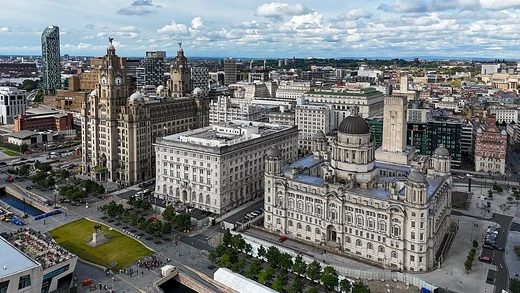
Amarah
City in southeastern Iraq, seat of Maysan Province.

Dr. Alexey Yakovlev · CC BY-SA 2.0
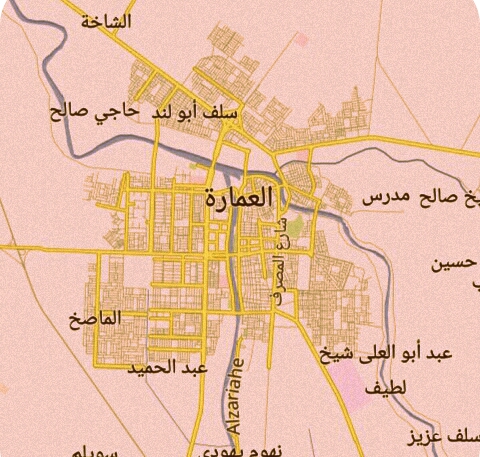
Amarah (Arabic: ٱلْعَمَارَة, romanized: al-ʿAmārah), also called Amara, sits on a low ridge beside the Tigris River in southeastern Iraq, about 50 km (31 mi) from the Iranian border and south of Baghdad. It marks the northern edge of the marshlands between the Tigris and Euphrates. The city had roughly 340,000 residents in 2002 and about 720,000 by 2024. It serves as the capital of Maysan Province and is a key trading hub for the surrounding farmland, known for woven goods and silverware. The main agricultural products from northern Amarah include winter cereals like wheat and barley, along with livestock such as sheep and horses.
The city was established in the 1860s as an Ottoman military outpost, intended to control the feuding Banu Lam and Al Bu Muhammad tribes. In 1915, British forces captured Amarah. Before the 1958 revolution, the city was marked by a feudal system where local estate-holders ran private militias. Abdul Rahim al-Rahmani opened Amarah’s first bookstore in 1922 and its first cinema in 1950. During the eight-year Iran–Iraq War, the eastern parts of the province saw several battles, including Iran’s Operation Before the Dawn. Because the Baghdad-Basra highway cut through the province, Iran targeted the area for its strategic value to Iraq.
After the Persian Gulf War, Amarah became a site of the 1991 uprisings against Saddam Hussein. Many insurgents from across Iraq retreated to safe havens near Amarah; many were killed and buried in a mass grave outside the city. Saddam also drained the surrounding marshes and built dams to cut off the water supply. Throughout the 1990s, the town’s population swelled with refugees from the marshes. Saddam sometimes withheld services from the city as punishment for its role in the uprising. The city also supported Moqtada al-Sadr, whose father had been killed by Saddam. In May 1999, Ba’ath party militias and Special Republican Guard units operated in the region, but local resistance forces reportedly pushed them back.
During the 2003 invasion of Iraq, Amarah was a final center of resistance to Saddam. British forces soon occupied the city and set up two camps. After twelve years, local residents hired diggers to unearth bodies from the mass grave. In June 2003, citizens of Amarah attacked British patrols south of the city in Majar al-Kabir, killing six soldiers in each of two separate attacks. The British bases then faced frequent mortar attacks. After the British handed power to the Iraqi government, a power struggle erupted between Shi’ite loyalists of the Mahdi Army and the Badr Brigades. Several assassinations occurred between the rival factions. According to Sheik Abdul Kareem al-Muhamadawi, the latest dispute began after Qassim al-Tamimi, the chief of investigations for the provincial police and a Badr Organization member, was killed in a bombing. Badr fighters blamed the Mahdi Army. After the brother of Sheikh Fadel al-Bahadli, the Mahdi Army commander in the province, was captured, the Mahdi Army seized at least three police stations and other state facilities on October 20, 2006, resulting in at least 22 deaths, including three children.
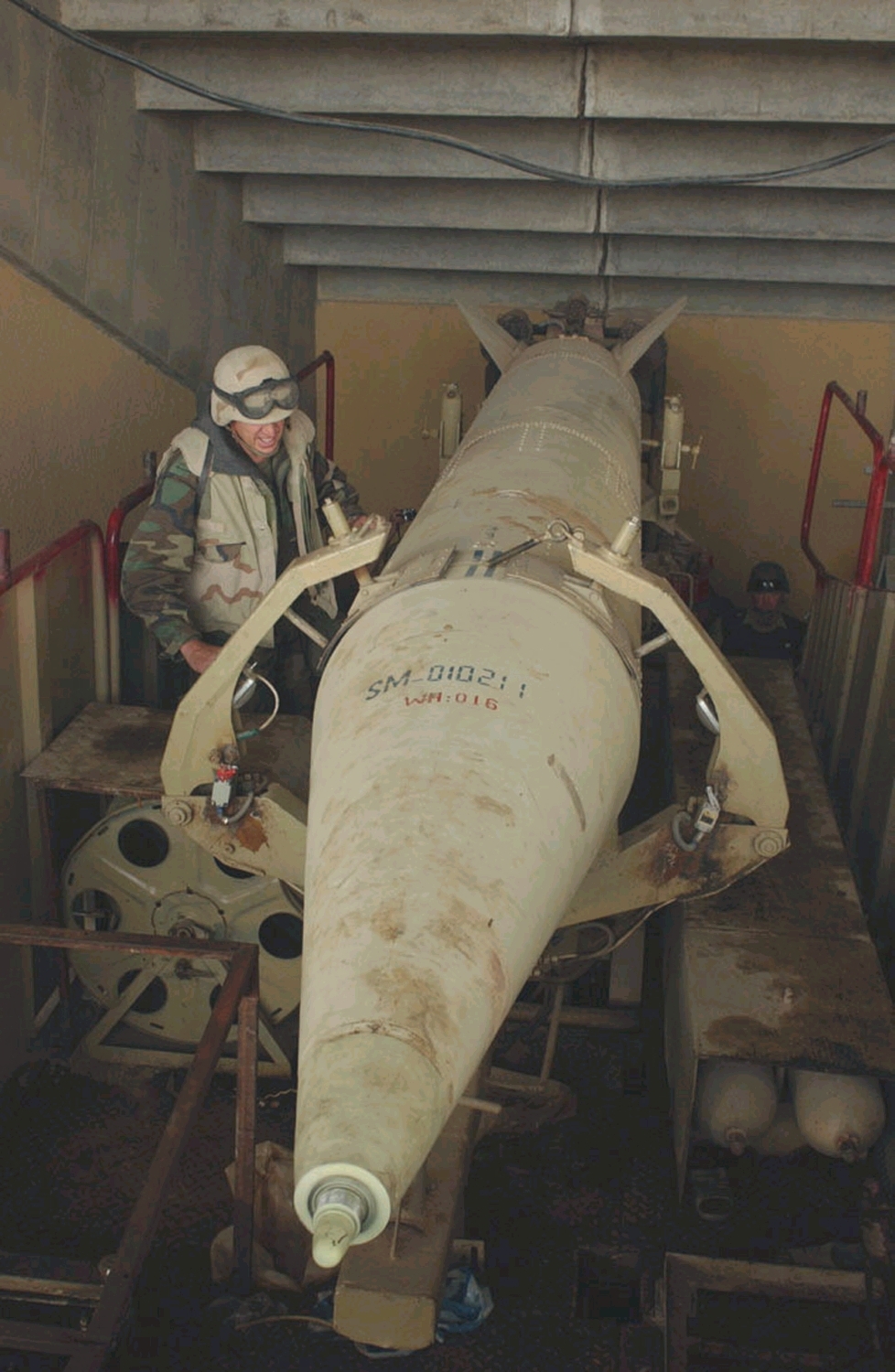
On June 18, 2008, the Iraqi Army launched a major operation in Amarah, code-named Promise of Peace (Bashir Al Salem in Arabic), to wrest the city from militias loyal to Muqtada al-Sadr and reduce the flow of weapons and Shiite militants from nearby Iran. This followed similar operations in Basra, Sadr City, and Mosul. During this period, the 4th Brigade of the US Army’s 1st Cavalry Division built two large operating bases in the province and several smaller outposts. Specifically, the 2nd Battalion of the 7th Cavalry Regiment covered Amarah and surrounding towns, establishing FOB Garryowen just west of the city. Throughout 2008 and 2009, over 2,000 US troops from the 1st Cavalry Division worked with the Iraqi Army, police, and Border Enforcement Brigade to defeat Shia extremism and stop arms smuggling across the Iranian border. Working with British investigators and Iraqi police, US troops also detained 11 of 17 individuals wanted for the 2003 murder of British soldiers in Majar al-Kabir; all 11 faced murder charges in a Baghdad court.
Provincial elections in January 2009 shifted the balance of power in Amarah and Maysan Province. In an election seen as credible and legitimate, Maysan voters broke the six-year grip of Sadrist parties on the Provincial Council, resulting in an even split between Sadrist and Islamic Dawa Party affiliates. In May 2009, the council appointed a Dawa Party member as governor, replacing the radical Sadrist leadership that had held power for years.
Notable people include Masoud El Amaratly, a mustarjil folk singer who lived in the city when he was scouted in 1925, and Lihadh Al-Gazali, a professor of clinical genetics born in Amarah in 1950.
Amarah has a hot desert climate (Köppen BWh), with extremely hot, dry summers and cool, wetter winters. On July 31, 2020, a temperature of 53.0 °C (127.4 °F) was recorded.
- Founded
- 1860s
- Province
- Maysan
- Known for
- woven goods, silverware, winter cereals, sheep, horses
- Climate
- hot desert climate (Köppen BWh)
Lore & Background
The city was founded in the 1860s as an Ottoman military outpost from which the empire tried to control the warring Banu Lam and Al Bu Muhammad tribes. During the eight-year Iran–Iraq War, the eastern parts of the province became the site of several battles, notably Operation Before the Dawn launched by Iran. After the Persian Gulf War, Amarah was one of many sites during the 1991 uprisings in Iraq against Saddam Hussein. Following the uprising, a mass grave was discovered outside the city, primarily containing Shiite rebels and army deserters killed by government forces. The draining of the Mesopotamian Marshes was a larger-scale project affecting areas south of Amarah, not specifically the marshes surrounding the city, and the dams were primarily on the Tigris and Euphrates rivers upstream. Throughout the 1990s, the town's population swelled with refugees from the marshes. In 2003, it was occupied by British forces. After the British handed power over to the Iraqi government, a power struggle erupted between Shi'ite loyalists of the Mahdi Army and Badr Brigades.
Reader's Guide
Amarah's significance lies in its strategic location near the Iranian border and its role as a center of resistance and conflict across multiple eras of modern Iraqi history. Founded as an Ottoman outpost to control local tribes, it later became a site of British occupation, a feudal stronghold, and a flashpoint during the Iran–Iraq War, the 1991 uprisings, and the Iraq War. Amarah remains a key agricultural and trading hub, producing woven goods, silverware, and staple crops.
Did You Know?
- Amarah was founded in the 1860s as an Ottoman military outpost to control the Banu Lam and Al Bu Muhammad tribes.
The Garrison in Isolation
The force holding CIMIC House was a modest, composite garrison drawn from several regiments. Two troops of A Squadron, Queen's Royal Lancers, fewer than ninety soldiers of Y Company, 1st Battalion, the Princess of Wales's Royal Regiment (reinforced by a substantial contingent of Territorial Army personnel from the 52nd Lowland Regiment who had mobilised to serve alongside the QRL and PWRR battle groups), and sixty Royal Welch Fusiliers made up the defenders. All belonged to the 1st Mechanised Brigade deployed under Operation TELIC IV. Their position was made especially precarious by geography: the compound sat roughly twenty miles from the main Battle Group at Abu Naji, meaning every resupply depended on convoys threading through hostile territory. The building itself had a loaded history, having previously served as the residence of the Ba'ath Party governor of Maysan province before being repurposed as the British Army-led Multi-National Division (South-East) hub for Civil-Military Co-operation activities in Al Amarah.
Twenty-Three Days Under Fire
Over the ensuing twenty-three days the garrison absorbed eighty-six separate ground assaults, scaling from small section-strength probes to company-level waves of more than a hundred fighters. During the peak window between 5 and 25 August the tempo was so intense that armoured supply convoys could no longer reach the compound. Yet despite the ferocity, not a single infantry wave penetrated within thirty metres of the British defensive lines. Y Company, 1 PWRR, based at CIMIC House, recorded the highest attack count of any company across the entire Iraqi theatre of operations.
Command and Firepower Under Pressure
Commanding officer Major Justin Featherstone was granted explicit permission by his superior to withdraw the garrison if conditions on the ground warranted it. He declined to pull his men from their posts. For a six-day interval, Captain Charlie Curry assumed command while Featherstone was on rest and recuperation. The defenders answered with overwhelming volume: thirty-three thousand rounds were discharged, supported by fire from Challenger 2 tanks, Warrior armoured vehicles, and 81 mm high-explosive mortar shells. Reinforcement came from B Company and C Company of 1 PWRR at Camp Abu Naji, whose armoured infantry fought numerous street-level engagements with Mahdi Army fighters throughout Al Amarah, while Territorial Army elements including a Warrior AFV from B Company, Black Watch, snipers from 1st Battalion, 22nd Cheshire Regiment, and Royal Yeomanry squadrons added to the defensive screen.
Cost, Consequence, and Historical Standing
The human toll on the British side was, in terms of fatalities, singular but deeply tragic. Private Chris Rayment was the only soldier killed; his death resulted when a traffic barrier fell on his head after its linkage was snagged by a Snatch Land Rover entering the camp under heavy enemy fire during a convoy. Six other British soldiers sustained serious injuries. British estimates placed Mahdi Army casualties at more than two hundred dead, a figure that left the militia a severely depleted force in Al Amarah, incapable of mounting large-scale attacks against coalition positions for the remainder of the occupation. In Sergeant Dan Mill's memoir Sniper One, the defence was characterised as the longest continuous action the British Army had fought since the Korean War, and as the lengthiest defensive stand since the Second World War.
Gallery

Frequently Asked Questions
What is Amarah?
Amarah is a city in south-eastern Iraq perched on a low ridge beside the Tigris River, sitting at the northern edge of the Tigris-Euphrates marshlands. It acts as the provincial capital of Maysan and lies roughly 150 km from the closest stretch of the Iran–Iraq border.
When and why was Amarah founded?
The settlement traces its origins to the 1860s, when the Ottoman Empire established it as a military outpost. It gradually expanded from that garrison base into a permanent civilian and commercial town.
What is Amarah known for?
The city is a well-known trading hub for the surrounding farmland, with local industries centered on woven textiles, silverware, winter cereals, sheep, and horses. Its position near the river and marshlands has long supported agriculture and livestock trade.
What is the climate like in Amarah?
Amarah sits in a hot desert climate zone (Köppen BWh), so residents deal with extremely high summer temperatures and very little annual rainfall. Winters are comparatively mild but still arid.
What province does Amarah serve as the capital of?
Amarah is the administrative seat of Maysan Province in southeastern Iraq. As the provincial capital, it houses the regional government offices and serves as the main urban center for the area.
More in Miscellaneous Cities 1-22
Spotted an error? Know more?
This is a living reference — every entry is fact-audited, and reader corrections feed straight into our audit queue. Suggest an edit · See this site's audit record