Sodalite
A royal blue gemstone with a zeolite cage structure.
Last updated
Sodalite's crystal structure is cubic, with a framework of aluminosilicate cages that contain sodium cations and chloride anions between them.[1] Under ultraviolet light, most sodalite shows an orange fluorescence, while the hackmanite variety can change color intensity when exposed to light or kept in darkness.[2]
Key facts and history
The framework forms a zeolite cage structure with two cavities per unit cell.[3] Significant deposits of fine material are restricted to a few locales including Bancroft, Ontario, and Mont-Saint-Hilaire, Quebec.[4] The first description of sodalite dates to 1811, based on material from the Ilimaussaq complex in West Greenland.[5] Linus Pauling conducted the initial structural study of sodalite in 1930.[1]
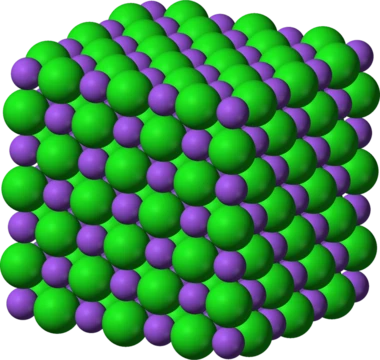
Within the unit cell, one chloride ion sits at the corners and another at the center.[6] In natural sodalite, the cages mostly contain chloride anions, but these can be replaced by sulfate, sulfide, or hydroxide, among others.[7] Only after 1891, when large high-quality deposits were found in Ontario, Canada, did sodalite become significant as an ornamental stone.[8]
What the research sources say
The Open Library record for ISBN 052166215X lists "Igneous Rocks: A Classification and Glossary of Terms" as a 252-page book published by Cambridge University Press on May 13, 2002.[9]
References
- Wikipedia, "Sodalite" (CC BY-SA 4.0), which cites: Linus Pauling, "The Structure of Sodalite and Helvite", Zeitschrift für Kristallographie, 1930, p. 213–225 (original not read by us) en.wikipedia.org
- Wikipedia, "Sodalite" (CC BY-SA 4.0), which cites: Bettonville, "Rock Roles: Facts, Properties, and Lore of Gemstones", Lulu.com }}{{self-published inline, July 2022, p. 98 (we also read that source) en.wikipedia.org
- Wikipedia, "Sodalite" (CC BY-SA 4.0), which cites: P. Smith, "A new structural type of metaborate anion", Zeitschrift für Kristallographie, 1961, p. 460–463; Linus Pauling, "The Structure of Sodalite and Helvite", Zeitschrift für Kristallographie, 1930, p. 213–225; W. Depmeier, "Revised crystal data for the aluminate sodalite ]", Journal of Applied Crystallography, 1979 (original not read by us) en.wikipedia.org
- Wikipedia, "Sodalite" (CC BY-SA 4.0), which cites: Ice River deposit on Mindat (original not read by us) en.wikipedia.org
- Wikipedia, "Sodalite" (CC BY-SA 4.0), which cites: Mindat with locations (original not read by us) en.wikipedia.org
- Wikipedia, "Sodalite" (CC BY-SA 4.0), which cites: P. Smith, "A new structural type of metaborate anion", Zeitschrift für Kristallographie, 1961, p. 460–463; Pokropivny, "'C 8 phase': Supercubane, tetrahedral, BC-8 or carbon sodalite?", Physica Status Solidi B, September 2012, p. 1704–1708 (original not read by us) en.wikipedia.org
- Wikipedia, "Sodalite" (CC BY-SA 4.0), which cites: Hassan, "The crystal structures of sodalite-group minerals", Acta Crystallographica Section B, 1984, p. 6–13 (original not read by us) en.wikipedia.org
- Wikipedia, "Sodalite" (CC BY-SA 4.0), which cites: "The Chinchorro culture: a comparative perspective, the archaeology of the earliest human mummification", UNESCO Publishing, 2015, p. 162 (original not read by us) en.wikipedia.org
- Open Library record, ISBN 052166215X ("Igneous Rocks: A Classification and Glossary of Terms"). CC0 (metadata); book content not read. openlibrary.org
Each numbered sentence above was checked against the source it cites before publication. Sentences citing Wikipedia adapt text from the English Wikipedia article Sodalite (contributors), used under CC BY-SA 4.0; this entry is available under the same licence. Other sources were used for facts only; no text or images are copied from them.
Also in the Codexery
More in Minerals & Crystals
Sources
Compiled from Wikipedia and the sources listed below. Text from Wikipedia is available under CC BY-SA 4.0; this entry is adapted from it.
- Wikipedia: Sodalite (CC BY-SA 4.0).
- Word definitions: the , each quoted from its Wikipedia article.
Spotted an error? Know more?
Reader corrections go straight into our review queue. Suggest an edit · How this site is sourced