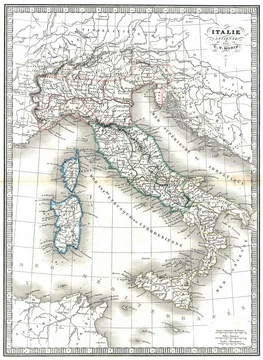
Battle of Vittorio Veneto
Italian victory that ended the war on the Italian Front.
Last updated
The Battle of Vittorio Veneto was fought from 24 October to 4 November 1918 near Vittorio Veneto on the Italian Front during World War I. The Italian victory marked the end of the war on the Italian Front and contributed to the dissolution of the Austro-Hungarian Empire, leading to the end of the First World War just one week later. The battle resulted in the capture of over 5,000 artillery pieces and 448,000 Austro-Hungarian troops.
Background
After the disastrous Battle of Caporetto in late 1917, which cost the Italian Army over 300,000 casualties and forced a retreat, General Armando Diaz replaced Luigi Cadorna as supreme commander. Diaz reorganized his forces, using defense in depth and mobile reserves to halt the enemy and stabilize the front along the Piave River. The Austro-Hungarian attempt to break this line in June 1918, known as the Battle of the Piave River, failed badly, costing them over 118,000 casualties.
A further blow came on 1 November, when Hungary’s new government recalled all troops from the Kingdom of Hungary. Following that battle, Diaz waited to strike until success was certain. His plan called for three of five Italian armies, positioned from Monte Grappa to the Adriatic, to cross the Piave toward Vittorio Veneto and split the opposing Austrian forces. The Allies fielded 57 infantry divisions: 52 Italian, three British, two French, and the 332nd US Infantry Regiment, plus supporting units.
The Austro-Hungarians had 46 infantry and six cavalry divisions, but both armies were weakened by influenza and malaria, and the Austrians had only 6,030 guns to the Allies’ 7,700.
Prelude
As night fell on 23 October, leading elements of Lord Cavan's Tenth Army were to force a crossing at a point with a number of islands. Cavan decided to seize the largest, the Grave di Papadopoli, in preparation for the full-scale assault on the far bank. Two battalions from the British 7th Division were to occupy the northern half of Papadopoli, while the Italian 11th Corps took the southern half. The British troops relied on boats propelled by the 18th Pontieri under Captain Odini of the Italian engineers.
On the misty night of the 23rd, the Italians rowed the British forces across with calm assurance and skill. The HAC used only bayonets until the alarm was raised and soon seized their half of the island. The Italian assault on the south of Papadopoli was driven off by heavy machine-gun fire, but the Austrians surrendered the island by the end of the night.
Battle
In the early hours of 24 October, the anniversary of the beginning of the Battle of Caporetto, Comando Supremo launched the splintering attack on Monte Grappa to draw in Austro-Hungarian reserves. At 03:00 the right wing of the Italian Fourth Army began a barrage, and at 05:00 the rest of the artillery joined in. The flooding of the Piave prevented two of the three central armies from advancing simultaneously with the third, but the latter, under Earl Cavan, after seizing Papadopoli Island, won a foothold on the left bank on 27 October.
By evening the Allies were over-extended and vulnerable to a counter-attack, but the Italian Tenth Army maintained its ground and established a bridgehead 2.5 miles deep and 5 miles broad. The British captured 3,520 prisoners and 54 guns. Svetozar Boroević von Bojna ordered a counter-attack on the Italian bridgeheads, but his troops refused to obey orders, and the counter-attack failed. From 24 to 31 October alone, the Italian artillery fired 2,446,000 shells.
On 28 October, a group of Czechs declared Bohemia's independence from Austria-Hungary, and the next day another group proclaimed South Slav independence. On 31 October, the Hungarian Parliament proclaimed withdrawal from the union, officially dissolving the Austro-Hungarian state. On 28 October, the Austro-Hungarian high command ordered a general retreat. On 29 October, the Italian Eighth Army pushed on towards Vittorio Veneto, which its advance guard entered on the morning of the 30th.
The Italian Third Army forced a crossing of the lower Piave, and reserves including the 332nd US Infantry Regiment poured over the river.
Aftermath
On November 3, 1918, Italian forces took Trento, and the navy landed at Trieste. That same day, Italy and Austria-Hungary signed the Armistice of Villa Giusti, set to take effect the following day. Austrian General Viktor Weber Edler von Webenau requested an immediate halt to fighting and a stop to any Italian advance. Italian General Badoglio refused, threatening to break off talks and continue the war.
Weber made the request again. Even before the ceasefire order, the Imperial Army was already falling apart and retreating in chaos. Italian troops kept moving forward until 3 p.m. on November 4. By the end of the month, all of Tyrol, including Innsbruck, was occupied.
The armistice required Austria-Hungary to give up all land taken since August 1914, plus South Tyrol, Tarvisio, the Isonzo Valley, Gorizia, Trieste, Istria, western Carniola, and Dalmatia. German forces had to leave Austria-Hungary within 15 days or be interned, and the Allies could use Austria-Hungary’s internal communications. German troops entered Tyrol to block this, but Austrian authorities protested under the armistice terms. Apart from a blown-up bridge near Brixen, no fighting occurred.
The Germans pulled back as Italian forces arrived, leaving Franzensfeste on November 9 and Gossensass on November 10. By late November, 20,000–22,000 Italian soldiers occupied North Tyrol.
Did You Know?
- The city's name was officially changed to Vittorio Veneto in July 1923, about nine months after Benito Mussolini and his National Fascist Party had ascended to power.
- German chief-of-staff Erich Ludendorff wrote that the battle prompted the collapse of the Austro-Hungarian monarchy, 'dragging Germany in its fall'.
- German historian Ernst Nolte contended that Vittorio Veneto was 'an encounter which had merely given the coup de grace to the abandoned army of an already crumbling state.'
More in Military History of Italy During World War I
Sources
Compiled from Wikipedia and the sources listed below. Text from Wikipedia is available under CC BY-SA 4.0; this entry is adapted from it.
- Wikipedia: Battle of Vittorio Veneto (CC BY-SA 4.0).
Spotted an error? Know more?
Reader corrections go straight into our review queue. Suggest an edit · How this site is sourced