Battle of Asiago
Austro-Hungarian offensive in Trentino, May–June 1916.
Last updated
The Battle of Asiago, also called the Südtirol Offensive or Battle of the Plateaux, began on 15 May 1916 with an Austro-Hungarian attack in the Vicentine Alps on the Italian Front. It is sometimes wrongly nicknamed Strafexpedition, a term of popular origin not found in official Austrian documentation. The battle is commemorated by the Asiago War Memorial in northeast Italy.
Background
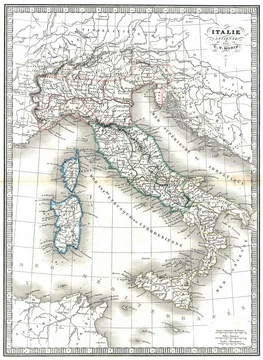
General Conrad von Hötzendorf, the Austro-Hungarian commander-in-chief, had long advocated an offensive on the Italian western front to cripple Italy, which he considered guilty of betraying the Triple Alliance. Earlier studies of the frontier had been made for a possible invasion, but the mountainous terrain and limited Italian advances in 1915 had narrowed the viable routes to the valleys of Valsugana and Val Lagarina and the plateaus of Lavarone, Folgaria and Asiago.
The original plan envisioned an advance from Trent to Venice, isolating the Italian 2nd, 3rd and 4th Armies. Preparations began in December 1915, when Hötzendorf asked his German counterpart, General Erich von Falkenhayn, to shift divisions from the Eastern Front to the Tyrol in exchange for German units. Germany refused, not yet being at war with Italy and not wanting to reduce offensive capability against Russia and France. Hötzendorf then proceeded alone, assigning the 11th Army under Count Viktor Dankl and the 3rd Army under Hermann Kövess to carry out the attack.
Italian intelligence had gathered reports of a large impending offensive in Trentino for about a month, but Cadorna dismissed them, believing nothing could happen there.
Battle
On 15 May 1916, 2,000 Austro-Hungarian guns opened a heavy barrage, and infantry attacked along a 50 km front. The Italian wings held, but the centre gave way, and the Austro-Hungarians broke through, threatening the Venetian plain. Cadorna rushed reinforcements to the First Army and formed a new Fifth Army under Pietro Frugoni. By 20 May the Austro-Hungarians reached the Asiago plateau, and Asiago fell on 28 May, but they were exhausted, low on munitions and had weak supply lines, failing to break into the lowlands.
On 4 June the Russians unexpectedly advanced in Galicia, forcing Hötzendorf to withdraw half his divisions from Trentino, ending the offensive. Italian forces in the region grew to 400,000. The battle had political consequences: the Salandra Cabinet fell, and Paolo Boselli became prime minister.
More in Military History of Italy During World War I
Sources
Compiled from Wikipedia and the sources listed below. Text from Wikipedia is available under CC BY-SA 4.0; this entry is adapted from it.
- Wikipedia: Battle of Asiago (CC BY-SA 4.0).
Spotted an error? Know more?
Reader corrections go straight into our review queue. Suggest an edit · How this site is sourced