Battle of Monte Piana
A two-year stalemate on a Dolomite summit.
Last updated
The Battle of Monte Piana was a prolonged series of clashes on the summit of Monte Piana in the Sexten Dolomites, fought between Italian and Austro-Hungarian forces from 1915 to 1917.
Background
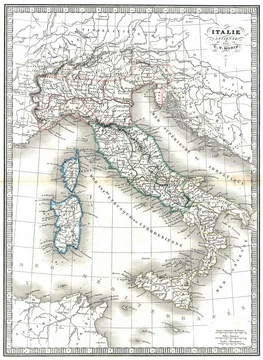
Italy, though a member of the Triple Alliance with Austria-Hungary and Germany, did not enter the war in August 1914, claiming none of its allies had been directly attacked. A long-standing rivalry with Austria-Hungary dated to the Congress of Vienna of 1815, when cities with an Italian majority were ceded to Austria. The borders established after the Third Italian War of Independence generally favored the Austrians, placing them in elevated positions along the mountainous frontier.
On Monte Piana, however, the ancient border between Tyrol and the Republic of Venice, marked by memorial stones on the summit plateau, placed almost the entire plateau in Italian territory, forming a wedge pointed toward Dobbiaco. The Austrians countered by fortifying Rautkofel as a strong artillery position, supplemented by batteries on Col di Specie and Torre dei Scarperi, which could cover the entire Monte Piana plateau. At the outbreak of war, Monte Piana sat at a strategic crossroads: its capture would allow Italian troops to enter Dobbiaco and then advance toward Brunico or Lienz.
The mountain's flat top became a crucial node of the eastern Dolomite front, threatening the vital Austrian railway in Val Pusteria.
The Battle on Monte Piana
On the evening of May 23, a phone call to the post office in Dürrensee announced Italy’s declaration of war on Austria-Hungary. Under cover of darkness, Austrian guards left their positions on Monte Piana’s northern ridge, pulling back to defensive lines and wrecking the roads. The next morning, Italian Alpine troops followed suit, torching the Piano-Hütte and digging trenches along the southern edge, with a platoon advancing to the Carducci pyramid as their forward post.
Around 8:30 a.m. on May 24, two Alpini from the 67th company became the first Italian fatalities on the Cadore front, struck by a grenade from an Austrian battery on Birkenkofel. Off-duty Alpine soldiers then swept through local hotels hunting for spies, but in the Grand Hotel’s cabin they found only a thousand bottles of fine European wine, which they bought with a month’s pay plus officers’ contributions. On May 27, the Austrians hauled a howitzer to Passo Grande dei Rondoi and opened fire on Monte Piana.
The Italian line, stretching from the Carducci pyramid to the cliff at Vallon dei Castrati, was held by Alpine troops who ran regular patrols toward Piz Popena and Höhlensteintal. On June 1, sappers burned the Rienza barracks and used jelly to block the path from Carbonin to Forcella dei Castrati. Austrian field marshal Ludwig Goiginger, commanding the Pustertal division, saw the mountain’s strategic value and called for reinforcements, ordering an initial strike on the night of June 6–7.
1916
Clashes resumed on 1 April with Italian attacks to conquer the 1979 quota of Monte Fumo. An infantry unit attacked around 08:00, capturing 33 Austrians and occupying the saddle north-east of Monte Fumo and the Costabella ridge. Enemy artillery pounded the Italian-held hilltop for days, prompting an Italian attack on the height from which the Austrians fired. The Austrians also prepared to regain Monte Fumo, leading to a terrible clash with high losses: 60% for the Austrians and 40% for the Italians.
The next morning, 350 Austrians continued the attack, retaking Costabella and costing the Italians 70 wounded and 140 missing. For the rest of spring, Italian commands gave up advancing but disturbed Austrian troop and material transit by bombarding Dobbiaco and San Candido. A section of 305mm howitzers was placed in a favorable position; work required a few hundred men for three months, and in the second half of May 1916 the first shots fell on San Candido.
Throughout 1916, positions were progressively strengthened, especially on the Austrian side, which transformed the entire northern summit into a network of defensive works including covered trenches, connecting tunnels, and caves for dormitories and kitchens. The Italians, with larger forces but disadvantaged positions, continued a slow advance on the northern plateau, conquering the so-called 'alpine ditch' in August.
1917
Throughout the winter and autumn of 1917, no substantial events occurred, but the war of attrition continued with bombings, patrol clashes, and attempted infiltrations. Tension was high as both sides dug tunnels for land mines, working feverishly to excavate and to detect enemy digging. Toward spring, Colonel Von Kramer of the 61st Mountain Brigade considered total conquest of the southern summit indispensable, while Major General Von Steinhart was skeptical.
The operational plan proposed building a tunnel for mines beneath Italian positions around the Carducci pyramid. Work continued through spring and summer; when the tunnel was nearly complete, the order came to stop, as the Austrians believed the Italian mine operation had been suspended—which it had. The Austrian attack on Monte Piana on 22 October 1917, though extremely violent, aimed only to distract Italian troops and hold back reserves in Cadore, preventing their movement toward the larger attack at Kobarid.
By early September, the Austrian garrison's situation worsened as Italians, covered by artillery, advanced cautiously toward enemy positions. A massive operation, code-named Herbst operation, was approved, coinciding with the great offensive in the upper Isonzo.
More in Military History of Italy During World War I
Sources
Compiled from Wikipedia and the sources listed below. Text from Wikipedia is available under CC BY-SA 4.0; this entry is adapted from it.
- Wikipedia: Battle of Monte Piana (CC BY-SA 4.0).
Spotted an error? Know more?
Reader corrections go straight into our review queue. Suggest an edit · How this site is sourced