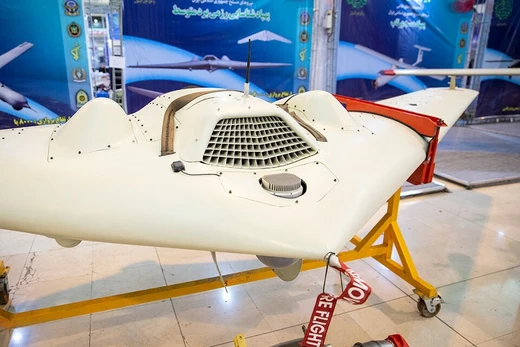
LAPAN LSU-03
Indonesian tactical UAV with extended range and payload capacity.
Last updated
The LAPAN LSU-03 (LAPAN Surveillance UAV-03) is a tactical unmanned aerial vehicle built by Indonesia’s National Institute of Aeronautics and Space (LAPAN). It is an upgraded version of the LAPAN LSU-02, with a maximum range of 600 kilometers—roughly 133 percent of the LSU-02’s 450 kilometers—and a much larger payload capacity.
Development began after the LSU-02 proved successful. The first flight of a pre-production model, which had a theoretical range of 350 kilometers and could carry 10 kilograms of payload, took place on 25 January 2014 to test stability. This model cruises at 100 kph and reaches a top speed of 150 kph, powered by a 100cc two-cylinder piston engine driving a 24x12 pusher propeller, using 7 liters of Pertamax Plus fuel and a Lippo battery.
Between 2015 and 2016, LAPAN created a higher-performance variant called the LSU-03 NG (Next Generation). While the earlier version offered 350 kilometers of range and 10 kilograms of payload, the NG version achieves 600 kilometers and 24 kilograms of payload, improvements attributed to weight reduction. The NG model uses Glass Fiber Reinforced Polymer (GFRP) with plywood supports in a semi-monocoque structure, the same material technology found on the LAPAN LSU-05 drone.
The LSU-03’s payload includes a FLIR camera, a Lippo battery, and other electronics. It can be controlled by radio or autonomously via a mission planner from a ground control station. It also features anti-jamming technology: if the signal is jammed, the UAV automatically returns to its takeoff point.
In November 2015, the LSU-03 flew a photographic mission from Pameungpeuk to Pelabuhan Ratu and back, setting a new MURI record for the longest UAV range at 340 kilometers in 3 hours and 39 minutes. The previous record, held by the LSU-02, was 200 kilometers in 2 hours and 37 minutes.
More in Military Drones of Asia, Europe and the Americas
Sources
Compiled from Wikipedia and the sources listed below. Text from Wikipedia is available under CC BY-SA 4.0; this entry is adapted from it.
- Wikipedia: LAPAN LSU-03 (CC BY-SA 4.0).
Spotted an error? Know more?
Reader corrections go straight into our review queue. Suggest an edit · How this site is sourced