GIDS Shahpar-II
Pakistani UCAV with autonomous takeoff, landing, and precision strike capability.
Last updated
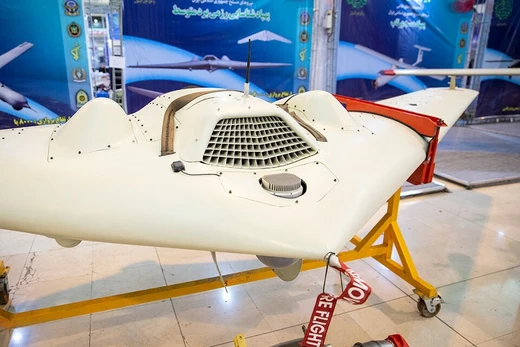
The GIDS Shahpar-II is an unmanned combat aerial vehicle (UCAV) produced by Pakistan’s Global Industrial Defence Solutions (GIDS). It has entered production after completing testing and qualification. The aircraft is a development of the earlier GIDS Shahpar.
The airframe uses a pusher engine with canard foreplanes ahead of the wings. According to an engineer from AERO, one of the seven companies in the GIDS consortium, the only components not made in Pakistan are the engine and tires. The sensor suite—a multi-sensor turret called the Zumr-II (EO/IR)—is built at an AERO facility near Islamabad. The drone can take off and land autonomously on a runway or land using a parachute.
Its payloads support reconnaissance and day/night surveillance. The avionics can geo-reference and geo-point ground targets. The hardware meets military standard Environmental Specification 810F. Ground equipment handles mission planning, simulation, mission management, control, and crew debriefing.
An upgraded version, the Shahpar-2 Block II, offers a higher service ceiling and longer flight time. On 24 August 2024, one Shahpar-II crashed in Bhakkar district, Punjab, due to a technical error; the exact cause remains under investigation. Reuters reported that Pakistani sources confirmed the drone’s use during the 2025 India-Pakistan conflict.
Development
The Shahpar-II was first publicly displayed on 23 March 2021 during the Pakistan Day parade. On 28 November 2021, at EDEX 2021, GIDS revealed operational specifications and a promotional video showing the drone’s locating, tracking, and targeting abilities for surveillance and ground attack. The Zumr-II turret was introduced as a lighter, improved version of the Zumr-I (EP) turret. The targeting and surveillance turret is installed as an internal payload, and the drone can also accept targeting systems from foreign suppliers.
It can carry SAR, COMINT, and ELINT payloads. Internally, the drone has a hardpoint for a 50 kg payload (the Zumr-I weighs 36.5 kg, the Zumr-II 49 kg). Two external hardpoints can each carry 60 kg of laser-guided weapons or air-to-ground missiles. The promotional video showed the Shahpar-II firing the Barq laser-guided air-to-surface missile at moving and stationary targets with high accuracy.
Frequently Asked Questions
What are the Shahpar-II's key flight and payload specs?
The airframe is 8 m long with a 9.45 m wingspan and a max takeoff weight of 1,075 kg. It can carry 53 kg internally or 190 kg on external hardpoints, and delivers up to 20 hours of endurance in surveillance mode or 12 hours when armed.
What combat role does the Shahpar-II perform?
It operates as a precision-strike UCAV with autonomous takeoff, landing, and targeting capability. Its service ceiling reaches 23,000 ft in a surveillance configuration and 21,000 ft when carrying weapons.
More in Military Drones of Asia, Europe and the Americas
Sources
Compiled from Wikipedia and the sources listed below. Text from Wikipedia is available under CC BY-SA 4.0; this entry is adapted from it.
- Wikipedia: GIDS Shahpar-II (CC BY-SA 4.0).
Spotted an error? Know more?
Reader corrections go straight into our review queue. Suggest an edit · How this site is sourced