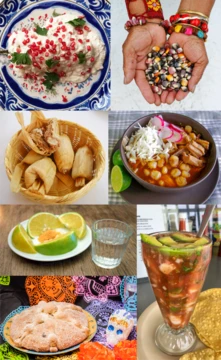
Chiles en nogada
A Mexican national dish of stuffed chiles with walnut sauce.

Chiles en nogada is a Mexican dish consisting of poblano chiles stuffed with picadillo, topped with a walnut-based cream sauce called nogada, pomegranate seeds, and parsley. It is widely considered a national dish of Mexico and is typically served at room temperature. The dish is made in Central Mexico during August and the first half of September, when pomegranates are in season, and its colors—green chile, white sauce, red pomegranate—match those of the flag of Mexico, with Independence Day falling within that season.
Quick Facts
- Country
- Mexico (1821)
- Region
- Puebla
- Course
- Main
- Served
- Room temperature
- Main Ingredient
- poblano chile, picadillo, walnuts, cream, pomegranate
Facts from the source article.
Lore & Background
The traditional chile en nogada is from Puebla and is tied to Mexican independence, as it is said they were prepared for the first time to entertain the future emperor Agustín de Iturbide when he came to the city after the signing of the Treaty of Córdoba. This dish is a source of pride for the inhabitants of the state of Puebla. Some Mexican historians think the inventors of this dish were the Monjas Clarisas, although others think they were the Madres Contemplativas Agustinas of the convent of Santa Mónica, Puebla.
Reader's Guide
Chiles en nogada holds significance as a national dish of Mexico, deeply connected to the country's independence celebrations. Its preparation is seasonal, limited to August and the first half of September when pomegranates are ripe, and its tricolor appearance deliberately echoes the Mexican flag. The dish is traditionally associated with Puebla, where it is said to have been created for Agustín de Iturbide after the Treaty of Córdoba. The picadillo filling typically includes panochera apple, sweet-milk pear, and criollo peach, while the nogada sauce is made from walnuts of the cultivar nogal de Castilla, though pecans may substitute. The identity of its original creators remains disputed between two religious orders: the Monjas Clarisas and the Madres Contemplativas Agustinas. As a source of local pride, the dish continues to be served at room temperature and represents a culinary symbol of Mexican heritage.
Did You Know?
- The colors of chiles en nogada—green chile, white sauce, red pomegranate—are the colors of the flag of Mexico.
- The walnut sauce is called nogada, from the Spanish word 'nogal' meaning walnut tree.
- Some historians attribute the dish's invention to the Monjas Clarisas, while others credit the Madres Contemplativas Agustinas of the convent of Santa Mónica, Puebla.
More in Mexican cuisine 1-24
Spotted an error? Know more?
Reader corrections go straight into our review queue. Suggest an edit · How this site is sourced