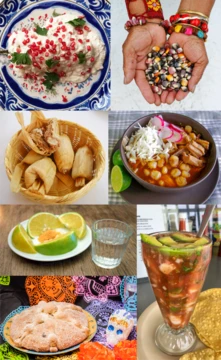
Aztec cuisine
Cuisine of the Aztec Empire before European contact.

Before the Spanish arrived in 1519, the people of the Aztec Empire and the Nahua communities in the Valley of Mexico had their own distinct food traditions. Maize was the absolute foundation of their diet, as central to their culture as wheat was in Europe or rice in East Asia—without it, a meal simply wasn’t considered a meal. This crop came in many varieties, differing in color, texture, size, and prestige, and was eaten as tortillas, tamales, or a thick gruel called ātōlli. Salt and chili peppers were the other non-negotiable ingredients; in fact, fasting meant going without these two.
Beans, squash, amaranth, and chia rounded out the everyday diet. Cooking maize in an alkaline solution—nixtamalization—greatly boosted its nutritional value. For drinks, water, maize gruels, and pulque (the fermented juice of the maguey plant) were common. The elite, however, avoided pulque, considering it a commoner’s drink, and instead favored cacao-based beverages, which were among the most luxurious items available. These were flavored with chili, honey, and a wide array of spices and herbs, and were reserved for rulers, warriors, and nobles.
The Aztecs ate a wide range of animals: fish, wild game like pocket gophers, green iguanas, axolotls, a type of crayfish called acocil, and many insects, larvae, and insect eggs. They also domesticated turkeys, ducks, and dogs for food, and occasionally ate larger wild animals like deer, though none of these were major staples. Mushrooms and fungi were part of the diet too, including corn smut, a parasitic fungus that grows on ears of corn. Squash was very popular in many varieties, and its seeds—fresh, dried, or roasted—were especially prized. Tomatoes, though different from modern ones, were often mixed with chili in sauces or used as tamale filling.
Eating could carry deep sacred meaning, most strikingly in ritual cannibalism. The Aztecs believed that gods needed human flesh and blood to sustain themselves and the world, so consuming a sacrificed human was an act of sanctification, bringing the eater closer to the divine. Certain warriors, after death, were thought to become butterflies or hummingbirds that could return to the living world to feed on nectar—showing just how central eating was to their worldview.
- Region
- Valley of Mexico
- Era
- Prior to 1519
- Staple crop
- Maize (corn)
- Common drinks
- Water, maize gruels, pulque
- Prestige drink
- Cacao
- Major protein sources
- Beans, fish, wild game, insects, domesticated turkey, duck, dog
- Key process
- Nixtamalization
Lore & Background
The most important staple was corn, eaten as tortillas, tamales, or ātōlli gruel. Nixtamalization—cooking maize in alkaline solutions—raised its nutritional value. Beans, squash, amaranth, and chia completed the diet. Salt and chili peppers were constants; fasting meant abstaining from both. Water, maize gruels, and pulque (fermented maguey juice) were common drinks, while the elite preferred cacao flavored with chili, honey, and spices.
Reader's Guide
Aztec cuisine was deeply tied to culture and religion. Eating could take on sacred meaning, as in ritual cannibalism, where consuming human flesh was believed to sanctify individuals and bring them closer to gods. Meals typically occurred twice daily, though laborers might eat three times. Feasts—both domestic and public—were elaborate, involving tobacco, flowers, chocolate, and hallucinogenic mushrooms. Table manners imitated warrior movements, and offerings to the god Tlaltecuhtli preceded meals. Public feasts followed the 260-day ritual calendar, with ceremonies honoring deities like Xipe Totec and Mixcoatl involving hunts and amaranth-seed adornments. The cuisine's legacy lies in its foundational ingredients and techniques, such as nixtamalization, which remain influential in modern Mexican cooking.
Did You Know?
- Aztec fasting was defined as abstaining from salt and chili peppers.
- The elite preferred cacao drinks over pulque, which was considered a commoner's beverage.
- Hallucinogenic mushrooms were not typically consumed at feasts for shared visions; their use was restricted to priests and specific ceremonies.
Mesoamerican Foundations and the Forging of a Shared Table
The culinary traditions that would become Mexican cuisine did not emerge from a single culture or a single moment in time. Their deepest roots stretch back to the earliest agricultural communities of Mesoamerica, where the Olmec and Maya first domesticated maize and developed the transformative process of nixtamalization, laying the groundwork for foodways that would endure for millennia. Over the centuries, successive waves of peoples—including the Teotihuacanos, Toltec, Huastec, Zapotec, Mixtec, Otomi, Purépecha, Totonac, Mazatec, Mazahua, and Nahua—each carried their own cooking methods into the region, layering technique upon technique. The Mexica, upon forming the multi-ethnic Triple Alliance that would become the Aztec Empire, wove these diverse culinary traditions together into a unified food culture. This was not a simple adoption of one tradition over another but a genuine infusion of many peoples' knowledge into a shared table, creating a cuisine whose complexity mirrors the layered history of Mesoamerica itself.
Maize as the Structural Heart of the Kitchen
Maize remains the single most important grain across nearly every region of Mexico, even after the introduction of wheat and rice. The traditional process begins with drying the kernels, subjecting them to nixtamalization, and grinding the result into a pliable dough known as masa. From that one substance, an extraordinary range of foods emerges: atole and pozole as beverages, tamales and sopes as prepared dishes, and countless other preparations. Yet the most ubiquitous expression of maize is the tortilla, which accompanies virtually every meal in the country. While maize tortillas dominate most of Mexico, regional variations exist—wheat flour in the north, and plantain, yuca, or wild greens in Oaxaca. The Aztecs themselves prized chocolate, which originated in Mexico and continues to play a vital role in the nation's cookery. Maize is not merely an ingredient here; it is the structural foundation upon which an entire culinary civilization was built.
Chile Peppers and the Architecture of Flavor
Chile peppers occupy a position in Mexican food that is almost impossible to overstate. Indigenous to the region and in use for thousands of years, chiles were regarded in the Mesoamerican period as a staple on par with corn and beans. In the sixteenth century, Bartolomé de las Casas observed that indigenous people did not consider themselves to have eaten a meal without chiles. That conviction persists: most Mexicans feel their national identity would be diminished without chiles and the vast array of sauces and salsas built from them. Crucially, Mexican cuisine employs the widest variety of chiles, and they are valued as much for their distinct flavors as for their heat. Many dishes are defined not by their protein or vegetable base but by the chile sauce that coats them—entomatada, adobados, pipians, and moles all derive their identity from the peppers in their sauces. Even pozole is classified as white, green, or red depending on which chile sauce is used. A savory dish without chile typically receives a hot sauce, and chile is sprinkled over fresh fruit and sweets alike.
Conquest, Synthesis, and Living Heritage
The Spanish Conquest of the Aztec Empire and the broader Mesoamerican world set in motion a culinary transformation that reshaped the kitchen for centuries. Spaniards brought domesticated animal meats—beef, pork, chicken, goat, and sheep—along with dairy products, rice, sugar, olive oil, and a range of new fruits and vegetables. Cooking styles and recipes continued to arrive throughout the colonial period and from Spanish immigrants who kept coming even after independence. The influence is especially visible in Mexican sweets such as alfajores, alfeniques, borrachitos, and churros. African culinary contributions also entered during this era, carried through the Atlantic slave trade and the Manila-Acapulco Galleons. Yet the indigenous foundation never disappeared; it absorbed and integrated these new elements. Today, traditional Mexican cuisine stands as a recognized pillar of national culture and social life, illustrated by the use of mole for special occasions and holidays, particularly in the south and central regions. In 2010, UNESCO inscribed it on the Representative List of the Intangible Cultural Heritage of Humanity, affirming that this layered, centuries-old food tradition belongs to the world.
Frequently Asked Questions
What is Aztec cuisine?
Aztec cuisine refers to the food traditions of the Nahua peoples and the Aztec Empire in the Valley of Mexico before Spanish contact in 1519. It was organized around maize, salt, and chili peppers as the three non-negotiable pillars of every meal.
What role does maize play in Aztec cuisine?
Maize was the absolute center of the diet, functioning the way wheat does in European cooking or rice in East Asian cooking. It appeared in many forms—tortillas, tamales, and a thick gruel known as ātōlli—and came in dozens of varieties distinguished by color, size, and social prestige.
What drinks were typical in Aztec cuisine?
Everyday beverages included plain water, various maize-based gruels, and pulque, a fermented agave drink. Cacao held a special prestige status as the elite drink, setting it apart from the common fare.
What proteins were used in Aztec cuisine?
Since there were no domesticated cattle or pigs, cooks relied on beans, fish, wild game, and insects for protein. Domesticated animals like turkey, duck, and even dog also contributed to the protein supply.
Why is Aztec cuisine important to Mexican food today?
It established the foundational triad of maize, salt, and chili that still defines Mexican cooking centuries later. Nearly every modern Mexican dish traces its structural logic back to the pre-1519 traditions of the Valley of Mexico.
More in Mexican cuisine 1-24
Spotted an error? Know more?
Reader corrections go straight into our review queue. Suggest an edit · How this site is sourced