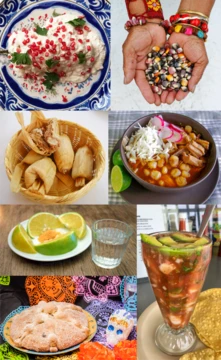
Cacahuazintle
Heirloom white dent maize prized for pozole and nixtamalization.

Cacahuazintle, also known as cacahuacintle, is an old heirloom variety of white dent maize originating in Toluca, Mexico. Its name derives from Náhuatl, meaning 'cacao-like corn,' and it has been prized for centuries for its use in nixtamalization and traditional Mexican cuisine.
- Type
- Heirloom maize variety
- Origin
- Toluca, Mexico
- Primary cultivation
- Mexican states of México and Morelos
- Known for
- Used in pozole and nixtamalization
- Production 2020
- 23,706 tons
- Registration
- Registered by CONABIO
Lore & Background
Cacahuazintle corn has large ears with grains that are more white, round, and tender than typical field corn. The dried grains undergo nixtamalization—soaking and cooking in water with lime or wood ash, then rinsing—to remove the outer seed coat and alkali salts, producing fresh hominy that can be dried or ground into masa. This masa is used to make tortillas, tamales, atole, and pozole.
Historically, the primary use of cacahuazintle grain has been in the Mexican dish pozole. The Náhuatl name pozole means 'sparkling,' likely from the foam produced when cooking this corn. The grain can also be distilled into liquor; in Mexico, Abasolo Distillery and Winery produces a whiskey distilled from cacahuazintle corn, also known as pozolero.
Cacahuazintle is said to have been in use for a very long time and remains a prized variety for nixtamalization. It is difficult to find seed in the United States, but it can be found in a few places online. The grain is principally cultivated in the Mexican states of México and Morelos, with production reaching 23,706 tons in 2020.
Reader's Guide
Cacahuazintle holds significant cultural and culinary importance in Mexico as a traditional heirloom maize variety. Its primary legacy lies in its central role in nixtamalization, an ancient process that transforms the grain into hominy and masa, foundational ingredients for iconic dishes such as tortillas, tamales, atole, and especially pozole. The variety's large, tender grains and sweet flavor have made it a preferred choice for these preparations for centuries.
Beyond its culinary uses, cacahuazintle has modern applications, including distillation into whiskey by Abasolo Distillery and Winery, highlighting its versatility. Its registration by Mexico's National Commission for the Knowledge and Use of Biodiversity (CONABIO) underscores its recognized value for its sweet flavor, smooth texture, floury consistency, and large grain. Despite its historical and ongoing use, the variety remains relatively rare outside Mexico, with limited seed availability in the United States. Its cultivation is concentrated in the states of México and Morelos, where it continues to support local agriculture and traditional foodways, preserving a link to pre-Hispanic agricultural practices.
Did You Know?
- The Náhuatl name 'cacahuazintle' means 'cacao-like corn,' from 'cacahuatl' (cacao) and 'centli' (corn on the cob).
- When boiling cacahuazintle grains, they open and a loose foam appears, which may be the origin of the name 'pozole' meaning 'sparkling.'
- Cacahuazintle corn is also known as 'pozolero' and is used to distill whiskey by Abasolo Distillery and Winery in Mexico.
- In 2020, production of cacahuazintle reached 23,706 tons, primarily in the Mexican states of México and Morelos.
Origins & Botanical Identity
Cacahuazintle—sometimes spelled cacahuacintle and pronounced roughly /kakawa'sintle/ in Spanish—carries a name that traces back to the Náhuatl word cacahuacentli. That compound breaks down into cacahuatl, meaning cacao, and centli (or cintli), referring to corn on the cob, yielding a phrase that translates loosely as "pineapple-cocoa cob" or "cacao-like corn." The variety itself is an old heirloom strain of white dent maize whose roots stretch back to the highlands around Toluca, Mexico. What sets it apart visually and texturally from ordinary field corn is its notably large ear and its kernels, which tend to be whiter, rounder, and more tender than those of standard grain corn. These physical traits have made it a distinctive presence in Mexican agriculture for generations, and they are precisely the qualities—large grain, smooth texture, floury consistency, and a sweet flavor—that Mexico's National Commission for the Knowledge and Use of Biodiversity (CONABIO) cites when registering the variety.
Nixtamalization & the Pozole Connection
The traditional preparation of cacahuazintle begins with soaking or boiling the dried kernels in water seasoned with lime or wood ash. This ancient technique, known as nixtamalization, loosens the outer seed coat and draws out any residual alkali salts, after which the grains are rinsed thoroughly. The result is a fresh, wet hominy that can either be dried for later storage or ground into masa, the versatile flour base for tortillas, tamales, atole, and pozole. What makes cacahuazintle especially suited to this process is what happens during the boil: the kernels split open and release a loose, airy foam on the surface. That frothing quality is so characteristic that it likely gave the dish its very name. In Náhuatl, pozole (or pozolli) translates to "sparkling," a word that almost certainly refers to the shimmering foam produced when this particular corn is cooked. Historically, pozole has been the primary culinary destination for cacahuazintle grain, making the variety inseparable from one of Mexico's most iconic stews.
Modern Cultivation & the Pozolero Spirit
Today, cacahuazintle is grown principally in two Mexican states: México and Morelos. By 2020, national production of the variety had reached 23,706 tons, a figure that underscores how deeply embedded it remains in regional agriculture. Beyond the kitchen, the corn has found a second life in the distillery. Abasolo Distillery and Winery (Destilería y bodega Abasolo) in Mexico produces a whiskey made specifically from cacahuazintle grain, a spirit that goes by the alternate name pozolero. This distillation path highlights the versatility of a corn traditionally associated with stews and tortillas, extending its cultural footprint into the world of craft liquor. The variety's registration with CONABIO—citing its sweet flavor, smooth texture, floury consistency, and large grain—further signals that Mexican agricultural authorities view cacahuazintle not merely as a legacy crop but as a biodiverse asset worth preserving and promoting in both food and beverage production.
Heritage, Scarcity & the Search for Seed
Cacahuazintle is described as a variety that has been in use for a very long time and still is, making it one of the older maize strains still actively cultivated in Mexico. Its long-standing reputation as a prized corn for nixtamalization speaks to a culinary tradition stretching back well before the modern era. Yet for growers and home cooks outside Mexico—particularly in the United States—obtaining viable seed remains a genuine challenge. The variety is difficult to source domestically, available only through a handful of online retailers. This scarcity contrasts sharply with the crop's prominence within its native range, where it thrives in the states of México and Morelos and continues to anchor traditional dishes. The tension between its deep cultural roots and its limited availability abroad makes cacahuazintle a small but meaningful symbol of Mexican agricultural heritage, a living heirloom whose kernels carry both a Náhuatl etymology and an ancient preparation method in every batch of masa or bowl of pozole.
Frequently Asked Questions
What is Cacahuazintle?
Cacahuazintle is a centuries-old heirloom variety of white dent maize native to Mexico. Its name comes from Náhuatl and roughly translates to 'cacao-like corn,' a nod to its distinctive character among traditional corn types.
Where does Cacahuazintle come from?
The variety originated in Toluca, Mexico, and is still primarily cultivated in the states of México and Morelos. It has been formally registered by CONABIO, the country's biodiversity conservation agency.
What is Cacahuazintle used for in traditional Mexican cooking?
It is especially valued for nixtamalization, the alkaline treatment that turns raw corn into masa. It also serves as a go-to grain for making pozole, one of Mexico's most iconic stews.
Why is Cacahuazintle considered special to Mexican food culture?
As a pre-Hispanic heirloom strain, it keeps a direct line to ancient Mesoamerican agriculture and cooking methods. Its particular traits make it better suited to nixtamalization than many modern commercial maize varieties, which is why it remains a staple in traditional kitchens.
How much Cacahuazintle is produced in Mexico?
In 2020, total production was recorded at roughly 23,706 tons across its main growing regions. While culturally significant, it still accounts for a small slice of Mexico's overall maize output compared to industrial hybrids.
More in Mexican cuisine 1-24
Spotted an error? Know more?
Reader corrections go straight into our review queue. Suggest an edit · How this site is sourced