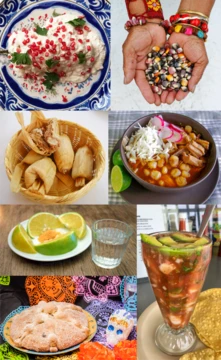
Chile relleno
Stuffed chile dish from Puebla, Mexico.

The chile relleno, which translates to "stuffed chile," is a Mexican dish that comes from Puebla. A description from 1858 notes it as a green chile pepper filled with minced meat and coated in eggs. While the poblano pepper from Puebla is most common, New Mexico chile, pasilla, or jalapeño peppers are also used. Fillings often include melted cheese like queso Chihuahua or queso Oaxaca, or picadillo meat made from diced pork, raisins, and nuts seasoned with cinnamon (canela). The pepper may be covered in an egg white batter, simply coated in corn masa flour and fried, or served without any batter. It is frequently served in a tomato sauce, though other sauces are possible.
Regional versions in Mexico sometimes use rehydrated dry chiles such as anchos or pasillas. In the United States, chiles rellenos are typically filled with asadero or Monterey Jack cheese, but cheddar, other cheeses, or ground meat are also common. Variations include chiles en nogada, pecan-encrusted, crab-filled, inside a burrito, in a casserole form, or stuffed with tuna, squash blossoms, mushrooms, or shrimp. A 1914 recipe appears in a San Francisco restaurant guidebook under the name "chili reinas." While the jalapeño popper is a popular American appetizer, it is not considered a canonical variation of chile relleno in Mexican cuisine. In Guatemala, pimiento peppers are stuffed with shredded pork and vegetables, then covered in egg batter and fried, served with tomato sauce or inside a bread bun.
Quick Facts
- Country
- Mexico
- Course
- First or main
- Served
- Hot
- Main Ingredient
- Poblano pepper, egg, cheese
- Variations
- New Mexico chile, pasilla, meat
Facts from the source article.
Lore & Background
The chile relleno originated in the city of Puebla, Mexico. In 1858, it was described as a green chile pepper stuffed with minced meat and coated with eggs. The most common pepper used is the poblano pepper, though New Mexico chile, pasilla, or jalapeño peppers are also popular. It is typically stuffed with melted cheese such as queso Chihuahua or queso Oaxaca, or with picadillo meat made of diced pork, raisins, and nuts seasoned with cinnamon (canela). The dish is covered in an egg white batter, simply corn masa flour and fried, or without any batter at all. Although often served in a tomato sauce, the sauces can vary.
Regional versions in Mexico use rehydrated dry chiles such as anchos or pasillas. In the United States, chiles rellenos are usually filled with asadero or Monterey Jack cheese, but can also be found with cheddar or other cheeses, as well as ground or minced meat. Variations include chiles en nogada, pecan-encrusted, crab-filled, inside a 'chile relleno burrito', in a casserole form, tuna-filled, squash blossom-stuffed, mushroom-stuffed, and shrimp-stuffed. A recipe from 1914 (as 'chili reinas') is published in a period guidebook to San Francisco restaurants. The jalapeño popper is a distinct American appetizer and is not considered a canonical variation of chile relleno in Mexican cuisine.
In Guatemala, the pimiento pepper is stuffed with shredded pork and vegetables. Like the Mexican version, it is covered with egg batter and fried. It is served with tomato sauce or inside a bread bun.
Reader's Guide
The chile relleno is a significant dish in Mexican cuisine, originating in Puebla and documented as early as 1858. Its legacy lies in its adaptability across regions and cultures. In Mexico, it uses local peppers and fillings, while in the United States, it has evolved into numerous variations including casseroles, burritos, and the jalapeño popper. The dish also appears in Guatemalan cuisine with a pimiento pepper and shredded pork. The 1914 San Francisco guidebook reference indicates its early presence in the United States. The chile relleno's versatility—from batter types to fillings and sauces—has allowed it to persist as a staple in Mexican and Mexican-American cooking, influencing other dishes and appearing in both traditional and innovative forms. Its inclusion in a historical guidebook and its many regional adaptations underscore its enduring popularity and cultural significance.
More in Mexican cuisine 1-24
Spotted an error? Know more?
Reader corrections go straight into our review queue. Suggest an edit · How this site is sourced