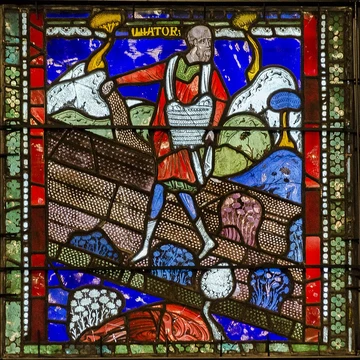
Medieval commune
Sworn urban alliances for mutual defense and self-governance.

Medieval communes were sworn allegiances of mutual defense among citizens of a town or city, aimed at physical protection and preservation of traditional freedoms. They first appeared in the late 11th and early 12th centuries and became widespread, with notable development in central-northern Italy, where they evolved into partially democratic city-states, and in Germany, where they became free cities independent of local nobility.
The commune movement had earlier roots, emerging from the 10th century as peasants moved to walled population centers due to agricultural advances and competition. In Italy, Provence, and Septimania, surviving Roman cities remained administrative hubs for dioceses or distant royal representatives. In the Low Countries and Rhineland, new towns grew around long-distance trade, often on fortified sites of counts, bishops, or abbots. Townspeople sought physical protection from lawless nobles and bandits, but also aimed to secure liberties—freedom to regulate their own affairs and protection from arbitrary taxation by local lords. This involved a long struggle to obtain charters, often purchased at high cost from kings or emperors who hoped to use towns as allies for centralizing power. When autonomy was won through violent uprising, the commune was sometimes called a conspiracy.
The commune spread from northern Italy in the 11th century to France, Germany, Spain, and elsewhere in the early 12th. In France, by 1300, one in four urban communities had mayors or consuls, with executive power often held by an elected mayor or first consul and an advisory body, though elections were usually restricted to wealthy merchants. In Spain, urban communities governed through open councils of property-owners, with larger towns delegating authority to town councillors and law officers. Later, selection shifted from election to sortition to resolve factional conflict. Seafaring towns in Cantabria formed an organization similar to the Hanseatic league, and in the 1470s a Holy Brotherhood coordinated law enforcement across municipalities. In eastern Europe, the splintering of Kievan Rus’ allowed the formation of veche communes such as the Novgorod Republic. The English state was already centralized, so communal movements there mainly appeared in parishes, guilds, and monasteries. Rural communes also formed in France and England to protect villagers’ c
- born
- Late 11th–early 12th centuries (first recorded)
- died
- Evolved beyond Middle Ages; some persisted into early modern period
- field
- Urban governance and mutual defense
- nationality
- Western Europe (Italy, France, Germany, Spain, Low Countries, etc.)
- known_for
- Sworn oaths of mutual defense; self-governing urban corporations; partial democracy in Italian city-states
Lore & Background
Medieval communes were sworn associations of mutual defense among citizens of a town or city, protecting both physical security and traditional freedoms. They first appeared in the late 11th and early 12th centuries, becoming widespread thereafter. The movement was strongest in central-northern Italy, where communes evolved into partially democratic city-states, and in Germany, where they became free cities independent of local nobility. A commune formed when all participating members gathered in a public ceremony and swore an oath to defend one another and maintain internal peace. The walled city offered protection from direct assault but required corporate oversight; outside the walls, travelers faced lawless nobles, so each city had to provide its own security. While most communes were urban, rural communes also existed in France and England to protect villagers’ common interests. The commune movement began in the 10th century, with earlier examples such as Forlì (possibly 889), and gained momentum in 11th-century northern Italy, the most urbanized region in Europe at the time. It spread to France, Germany, Spain, and elsewhere in the early 12th century. In France, by 1300 one in four urban communities were administered by mayors and councils in the north, or consuls in the south, with executive power often held by an elected mayor or first consul, advised by a body of sworn councilors. Elections were typically restricted to wealthy local merchants. In Spain, towns governed themselves through open councils of property-owners, delegating authority to town councillors and law officers who managed the town and surrounding lands as a single unit. Later, selection shifted from election to sortition to reduce factional conflict. In Cantabria, seafaring towns formed an organization similar to the Hanseatic League, and in the 1470s the Holy Brotherhood coordinated law enforcement across municipalities to protect trade.
Reader's Guide
Medieval communes represent a significant shift in medieval social order, breaking the traditional three orders of nobles, clergy, and peasants. By forming sworn associations for mutual defense and self-governance, townspeople—often merchants and artisans—created new political entities that could negotiate charters from kings or emperors, purchase freedoms, and regulate their own affairs. The commune movement contributed to the rise of urban autonomy, the development of partial democracy in Italian city-states, and the formation of free cities in Germany. Rural communes also emerged, notably in alpine regions, leading to entities like the Old Swiss Confederacy. The legacy of communes includes the concept of collective civic rights, the foundation for later municipal governments, and a model of non-noble political organization that challenged feudal hierarchies. Their influence persisted into the early modern period, particularly in regions where central authority remained weak.
Did You Know?
- The English and French word 'commune' comes from Medieval Latin 'communia', ultimately from Proto-Indo-European *mey- ('to change, exchange').
- When autonomy was won through violent uprising, the commune was often called 'conspiratio' (a conspiracy).
- In medieval Spain, urban communities governed themselves through a 'concejo abierto' or open council of property-owners.
More in Medieval Europe 1-24
Spotted an error? Know more?
This is a living reference — every entry is fact-audited, and reader corrections feed straight into our audit queue. Suggest an edit · See this site's audit record