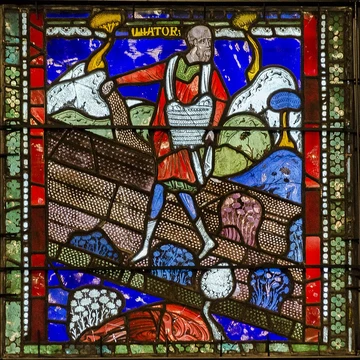
Late Middle Ages
Crisis and transformation in 14th–15th century Europe.

The late Middle Ages covers European history from 1300 to 1500 AD, sitting between the High Middle Ages and the start of early modern Europe (including the Renaissance). Around 1350, a long stretch of growth and prosperity broke down. A string of famines and plagues—most notably the Great Famine of 1315–1317 and the Black Death—cut the population by about half. This population drop sparked social unrest and constant warfare. In France and England, major peasant revolts broke out, like the Jacquerie and the Peasants' Revolt, alongside the Hundred Years' War, a conflict that dragged on for more than a century. The Catholic Church’s unity also cracked temporarily during the Western Schism. Together, these troubles are often called the crisis of the late Middle Ages.
Even with these crises, the 14th century saw real progress in the arts and sciences. A renewed interest in ancient Greek and Roman texts, which had begun in the High Middle Ages, helped launch the Italian Renaissance. Latin texts had already been absorbed through contact with Arabs during the Crusades, starting before the 12th-century Renaissance, but the fall of Constantinople to the Ottoman Turks made many important Greek texts available when Byzantine scholars fled west, especially to Italy. Alongside this influx of classical ideas, the invention and rapid spread of printing made the printed word more accessible and learning more democratic. These two developments later fueled the Reformation. Toward the end of the period, the Age of Discovery began. The Ottoman Empire’s expansion blocked trade routes to the East, forcing Europeans to look for new paths. This led to Christopher Columbus’s Spanish expedition to the Americas in 1492 and Vasco da Gama’s voyage to Africa and India in 1498. These discoveries boosted European economies and power.
These changes have led many scholars to see this period as the end of the Middle Ages and the start of modern history and early modern Europe. But this division is somewhat artificial, since ancient learning never fully disappeared from European society. There was developmental continuity from the ancient age (through classical antiquity) into the modern age. Some historians, especially in Italy, avoid the term “late Middle Ages” altogether, instead seeing the High Middle Ages transition directly into the Renaissance and the modern era.
The term “late Middle Ages” is one of three periods of the Middle Ages, alongside the early and High Middle Ages. Leonardo Bruni first used this three-part division in his *History of the Florentine People* (1442). Flavio Biondo used a similar framework in *Decades of History from the Deterioration of the Roman Empire* (1439–1453). The three-part periodization became standard after German historian Christoph Cellarius published *Universal History Divided into an Ancient, Medieval, and New Period* (1683). For 18th-century historians studying the 14th and 15th centuries, the Renaissance—with its rediscovery of ancient learning and the rise of individualism—was the central theme. This rediscovery was centered in Italy, where, as Jacob Burckhardt put it, “Man became a spiritual individual and recognized himself as such.” Later, this idea was challenged, with some arguing the 12th century was a greater cultural peak. As economic and demographic methods entered historical study, the late Middle Ages came to be seen more as a period of recession and crisis. Belgian historian Henri Pirenne kept the early, High, and late Middle Ages subdivision around World War I. But it was Dutch historian Johan Huizinga who popularized the pessimistic view of the late Middle Ages in *The Autumn of the Middle Ages* (1919). Huizinga, focusing on France and the Low Countries rather than Italy, emphasized despair and decline over rebirth. Modern historiography has reached a middle ground between innovation and crisis. It is now widely accepted that conditions differed greatly north and south of the Alps, and Italian historians often avoid the term “late Middle Ages.” The term “Renaissance” is still useful for describing certain intellectual, cultural, or artistic developments, but not as the defining feature of an entire European epoch. Instead, the period from the early 14th century up to—and sometimes including—the 16th century is seen as marked by demographic and economic decline followed by recovery, the end of Western religious unity and the rise of the nation-state, and the expansion of European influence worldwide.
The boundaries of Christian Europe were still being set in the 14th and 15th centuries. The Grand Duchy of Moscow began pushing back the Mongols, the Iberian kingdoms finished the Reconquista and looked outward, while the Balkans fell under Ottoman dominance. Meanwhile, the rest of Europe was locked in nearly constant international or internal conflict. This prolonged instability, along with the decline of feudalism, growing royal bureaucracies, and the printing press’s role in standardizing vernacular languages, gradually led to stronger central authority and the emergence of the nation-state.
- Major Figures
- Leonardo Bruni, Flavio Biondo, Christoph Cellarius
Verified Timeline
Lore & Background
Around 1350, centuries of prosperity and growth in Europe came to a halt. A series of famines and plagues, including the Great Famine of 1315–1317 and the Black Death, reduced the population to around half of what it had been before the calamities. Along with depopulation came social unrest and endemic warfare. France and England experienced serious peasant uprisings, such as the Jacquerie and the Peasants' Revolt, as well as over a century of intermittent conflict, the Hundred Years' War. To add to the many problems of the period, the unity of the Catholic Church was temporarily shattered by the Western Schism. Collectively, those events are sometimes called the crisis of the late Middle Ages. Despite the crises, the 14th century was also a time of great progress in the arts and sciences. Following a renewed interest in ancient Greek and Roman texts that took root in the High Middle Ages, the Italian Renaissance began. The absorption of Latin texts had started before the Renaissance of the 12th century through contact with Arabs during the Crusades, but the availability of important Greek texts accelerated with the fall of Constantinople to the Ottoman Turks, when many Byzantine scholars had to seek refuge in the West, particularly Italy. Combined with this influx of classical ideas was the invention and rapid spread of printing, which facilitated the dissemination of the printed word and democratized learning. These two developments would later contribute to the Reformation. Toward the end of the period, the Age of Discovery began. The expansion of the Ottoman Empire cut off trading possibilities with the East. Europeans were forced to seek new trading routes, leading to the Spanish expedition under Christopher Columbus to the Americas in 1492 and Vasco da Gama's voyage to Africa and India in 1498. Their discoveries strengthened the economy and power of European nations.
Reader's Guide
The late Middle Ages saw the limits of Christian Europe still being defined in the 14th and 15th centuries. While the Grand Duchy of Moscow was beginning to repel the Mongols, and the Iberian kingdoms were completing the Reconquista of the peninsula and turning their attention outward, the Balkans fell under the dominance of the Ottoman Empire. Meanwhile, the remaining nations of the continent were locked in almost constant international or internal conflict. This prolonged instability, along with the decline of feudalism, growing royal bureaucracies, and the printing press's role in standardizing vernacular languages, gradually led to the consolidation of central authority and the emergence of the nation state. The financial demands of war necessitated higher levels of taxation, resulting in the emergence of representative bodies – most notably the English Parliament. The growth of secular authority was further aided by the decline of the papacy with the Western Schism and the coming of the Protestant Reformation. In Northern Europe, after the failed union of Sweden and Norway of 1319–1365, the pan-Scandinavian Kalmar Union, that also included Denmark, was instituted in 1397. The Swedes were reluctant members of the union from the start. In an attempt to subdue the Swedes, King Christian II of Denmark had large numbers of the Swedish aristocracy killed in the Stockholm Bloodbath of 1520. Yet this measure only led to further hostilities, and Sweden broke away for good in 1523. Norway, on the other hand, became an inferior party of the union and remained united with Denmark until 1814. Iceland benefited from its relative isolation and was the last Scandinavian country to be struck by the Black Death. Meanwhile, the Norse colony in Greenland died out, probably under extreme weather conditions in the 15th century. These conditions might have been the effect of the Little Ice Age. In Northwest Europe, the death of Alexander III of Scotland in 1286 threw the country into a succession crisis, and the English king, Edward I, was brought in to arbitrate. Edward claimed overlordship over Scotland, leading to the Wars of Scottish Independence. The English were eventually defeated, and the Scots were able to develop a stronger state under the Stewarts. From 1337, England's attention was largely directed towards France in the Hundred Years' War. Henry V's victory at the Battle of Agincourt in 1415 briefly paved the way for a unification of the two kingdoms, but his son Henry VI soon squandered all previous gains. The loss of France led to discontent at home. Soon after the end of the war in 1453, the dynastic struggles of the Wars of the Roses (c. 1455–1485) began, involving the rival dynasties of the House of Lancaster and House of York. The war ended in the accession of Henry VII of the House of Tudor, who continued the work started by the Yorkist kings of building a strong, centralized monarchy. While England's attention was thus directed elsewhere, the Hiberno-Norman lords in Ireland were becoming gradually more assimilated into Irish society, and the island was allowed to develop virtual independence under English overlordship. In Western Europe, the French House of Valois, which followed the House of Capet in 1328, was at its outset marginalized in its own country, first by the English invading forces of the Hundred Years' War and later by the powerful Duchy of Burgundy. The emergence of Joan of Arc as a military leader changed the course of war in favor of the French, and the initiative was carried further by King Louis XI. Meanwhile, Charles the Bold, Duke of Burgundy, met resistance in his attempts to consolidate his possessions, particularly from the Swiss Confederation formed in 1291. When Charles was killed in the Burgundian Wars at the Battle of Nancy in 1477, the Duchy of Burgundy was reclaimed by France. At the same time, the County of Burgundy and the wealthy Burgundian Netherlands came into the Holy Roman Empire under Habsburg control, setting up conflict for centuries to come. In Central Europe, Bohemia prospered in the 14th century, and the Golden Bull of 1356 made the king of Bohemia the first among the imperial electors, but the Hussite revolution threw the country into crisis. The Holy Roman Empire passed to the House of Habsburg in 1438, where it remained until its dissolution in 1806. Yet in spite of the extensive territories held by the Habsburgs, the Empire itself remained fragmented, and much real power and influence lay with the individual principalities. In addition, financial institutions, such as the Hanseatic League and the Fugger family, held great power.
Did You Know?
- Leonardo Bruni was the first historian to use the tripartite periodization of history in his History of the Florentine People (1442).
- The Great Famine of 1315–1317 and the Black Death reduced the European population to around half of what it had been before the calamities.
- The Norse colony in Greenland died out, probably under extreme weather conditions in the 15th century, possibly due to the Little Ice Age.
- King Christian II of Denmark had large numbers of the Swedish aristocracy killed in the Stockholm Bloodbath of 1520.
- The Golden Bull of 1356 made the king of Bohemia the first among the imperial electors.
The Black Death and Demographic Collapse
The Late Middle Ages opened with a wave of catastrophe that reshaped European civilization. Famine, plague, and prolonged warfare combined to slash the continent's population to a degree that had no real parallel in its history. The most devastating blow came between 1347 and 1350, when the Black Death swept through the continent and claimed roughly one-third of all Europeans. This was not an isolated disaster but part of a broader pattern of hardship that defined the era. The demographic shock reverberated through every layer of society, from the manorial villages that had organized peasant life since the High Middle Ages to the centralized nation-states that kings had been building. The loss of so many lives disrupted the social and economic structures that had stabilized after the population growth and agricultural innovations of the earlier medieval centuries. What had been a period of expanding trade, rising crop yields, and flourishing intellectual life under the Medieval Warm Period now gave way to contraction and crisis, fundamentally altering the trajectory of European civilization.
Political Fracture and Religious Crisis
The political and spiritual landscape of the Late Middle Ages was defined by fragmentation and conflict. Within the Catholic Church, the Western Schism split Christendom along institutional lines, while controversy and accusations of heresy further eroded the unity that had been a defining ideal since the early centuries of the faith. Outside the church, interstate wars, civil strife, and peasant revolts tore through the kingdoms that had been consolidating under centralized royal authority. The kings who had become heads of nation-states during the High Middle Ages, reducing crime and violence but simultaneously making the dream of a unified Christendom more distant, now faced challenges from below as well as from rival powers. The Carolingian model of a single western empire had long since succumbed to internal civil wars and external invasions from Vikings, Magyars, and Saracens, and the Late Middle Ages saw a similar pattern of fragmentation replay at the level of individual kingdoms. The result was an era in which no single political or religious authority could claim to speak for all of Europe.
Cultural Achievements Carried into the Late Medieval World
The intellectual and artistic flowering that reached its peak at the close of the High Middle Ages continued to shape the cultural life of the Late period. The scholastic philosophy that joined faith to reason, exemplified by the theology of Thomas Aquinas, provided a framework for thought that persisted well into the later centuries. The visual and literary arts produced works of enduring power: the paintings of Giotto, the poetry of Dante and Chaucer, and the Gothic architecture of great cathedrals such as Chartres all emerged at the boundary between the High and Late Middle Ages. Marco Polo's travels opened European minds to the vastness of the wider world. These achievements did not exist in isolation; they grew out of the university system founded during the High Middle Ages and the broader tradition of Christian intellectual life that had been building since the monasteries first spread across Europe. Even as the Late Middle Ages brought plague and political chaos, this cultural inheritance remained a vital thread connecting the medieval world to what would follow.
The Long Transition into Modernity
The end of the medieval period was not a single dramatic rupture but a gradual shading into the modern era, a process so intertwined that historians adopted the term "Early Modernity" to describe this transitional stage. The Renaissance, the Reformation, the European wars of religion, and the Age of Discovery collectively marked the passage from the medieval to the modern world, yet none of these events arrived in isolation. The conquest of Constantinople by the Turks in 1453, Christopher Columbus's first voyage to the Americas in 1492, and the Reformation in 1517 are all sometimes cited as endpoints, depending on the national context. English historians often point to the Battle of Bosworth Field in 1485. The very concept of a "Middle Ages" was a later invention: Petrarch in the 1330s called the post-Roman centuries "dark" compared to classical antiquity, Leonardo Bruni first applied tripartite periodisation in 1442, and Christoph Cellarius made the three-part scheme standard in the 17th century. Medieval writers themselves had no sense of living in a "middle" age; they called their own time "modern" and saw it as the last before the end of the world.
Frequently Asked Questions
What is the Late Middle Ages?
The Late Middle Ages refers to roughly two centuries of European history spanning from 1300 to 1500 AD. It sits between the High Middle Ages and the onset of the Renaissance, serving as a turbulent bridge into the early modern era.
What are the Late Middle Ages's key events?
The era is defined by a cluster of devastating crises—the Black Death, the Hundred Years' War, and the Western Schism—alongside cultural breakthroughs like the Italian Renaissance and the spread of printing technology.
How does the Late Middle Ages's story end?
The period closes around 1500 as Europe begins its transition into the early modern age, with the Renaissance taking full hold and the Age of Discovery on the horizon.
What is the Late Middle Ages's impact on population?
Famines and plagues, especially the Black Death, slashed Europe's population by an estimated thirty to sixty percent, though scholars still debate the exact figures.
Why is the Late Middle Ages important?
It represents the crucible in which medieval society was shattered and rebuilt, producing the intellectual groundwork—through figures like Burckhardt and Huizinga—that scholars use to understand the shift into modernity.
More in Medieval Europe 1-24
Related in Medieval Europe
Links follow this subject's own source article.
Spotted an error? Know more?
This is a living reference — every entry is fact-audited, and reader corrections feed straight into our audit queue. Suggest an edit · See this site's audit record