
Khanate of Kazan
Tatar successor state of the Golden Horde, conquered by Russia.

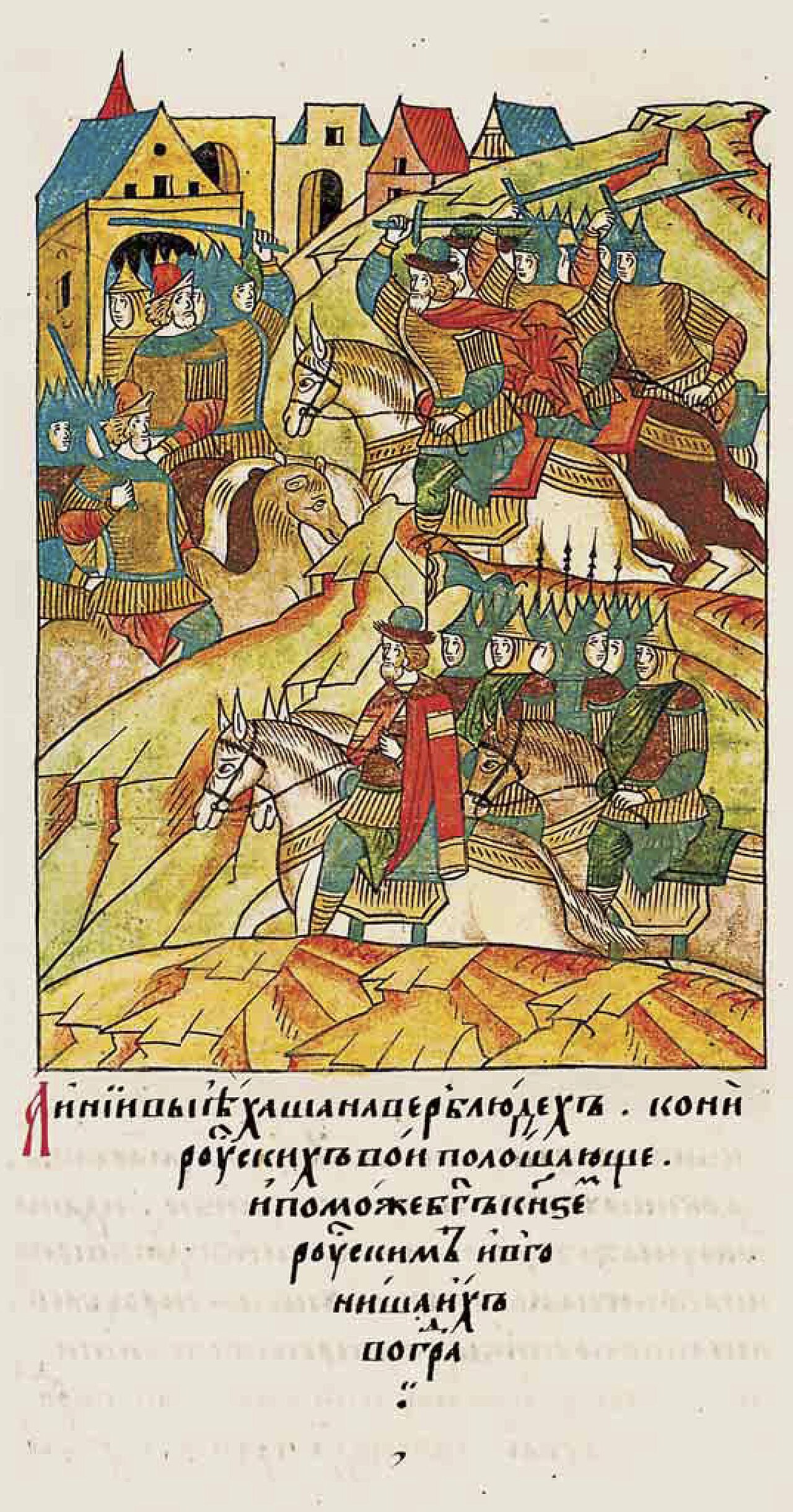
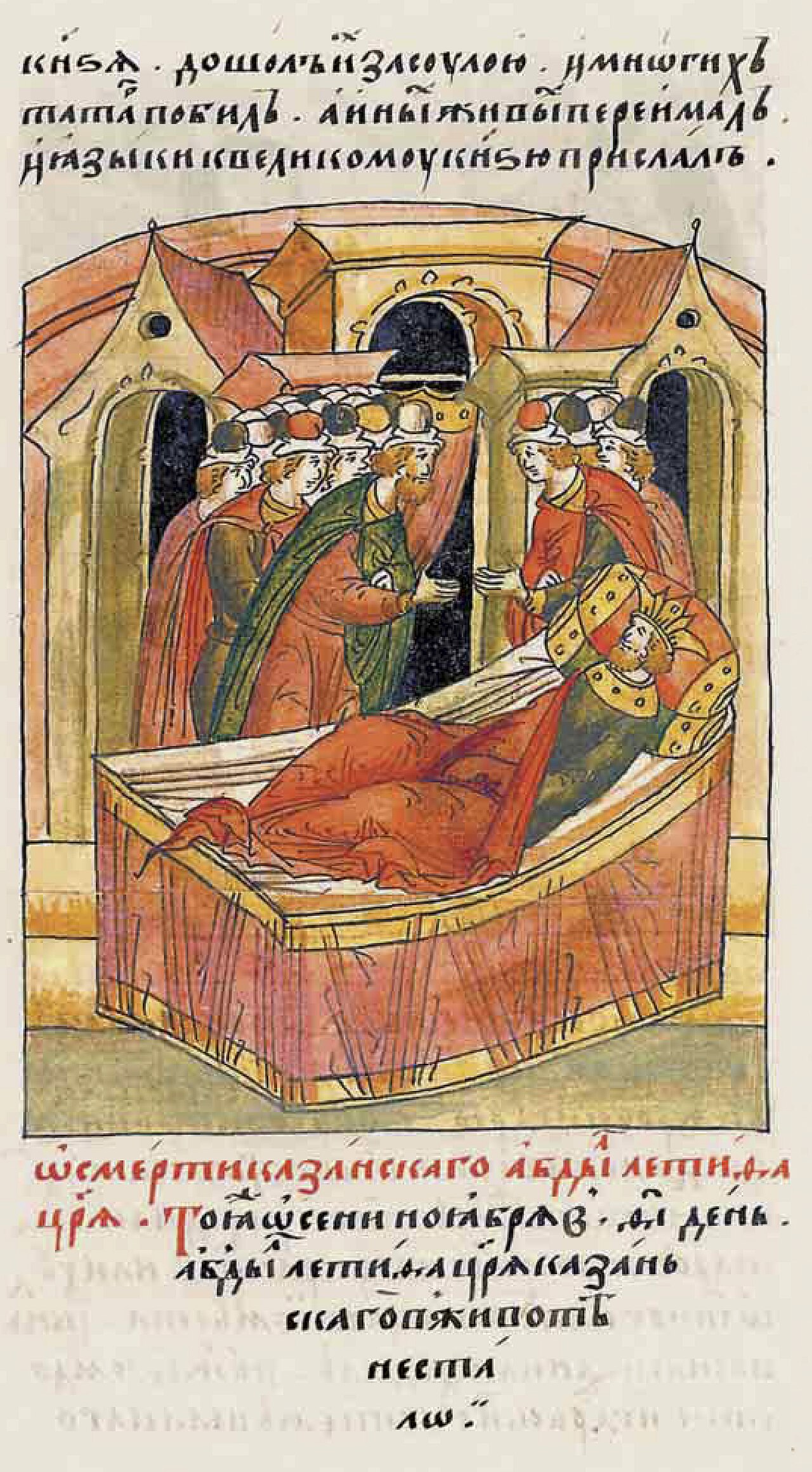
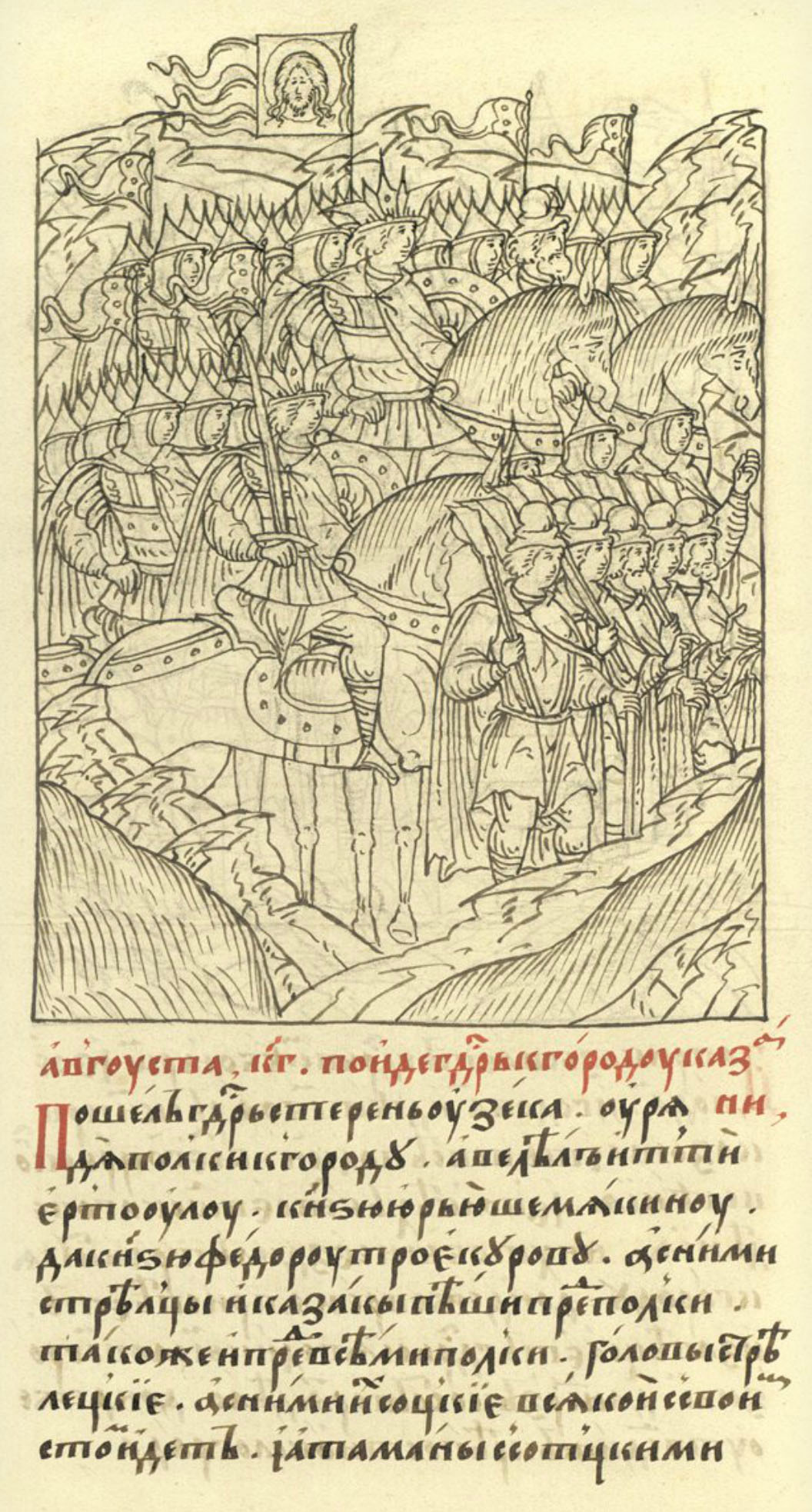
Anonymous Russian manuscript illuminators, 1560-1570s Facial Chronicle (Illustra · Public domain
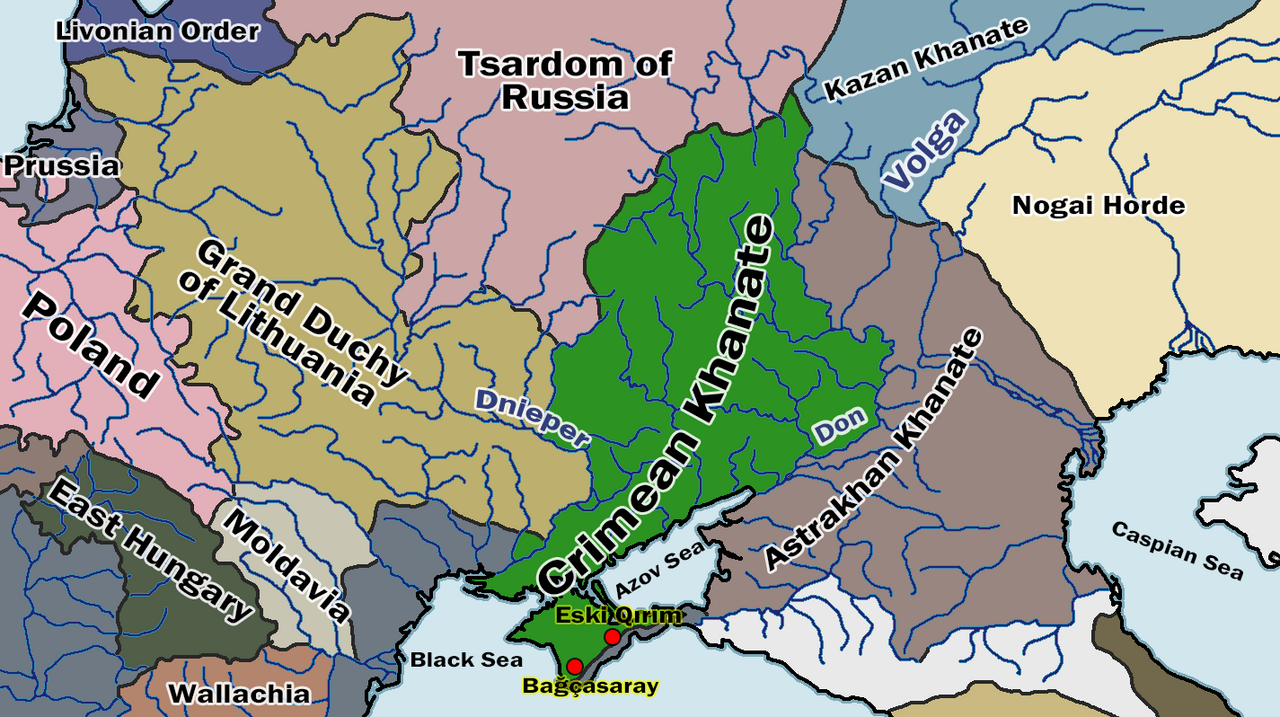
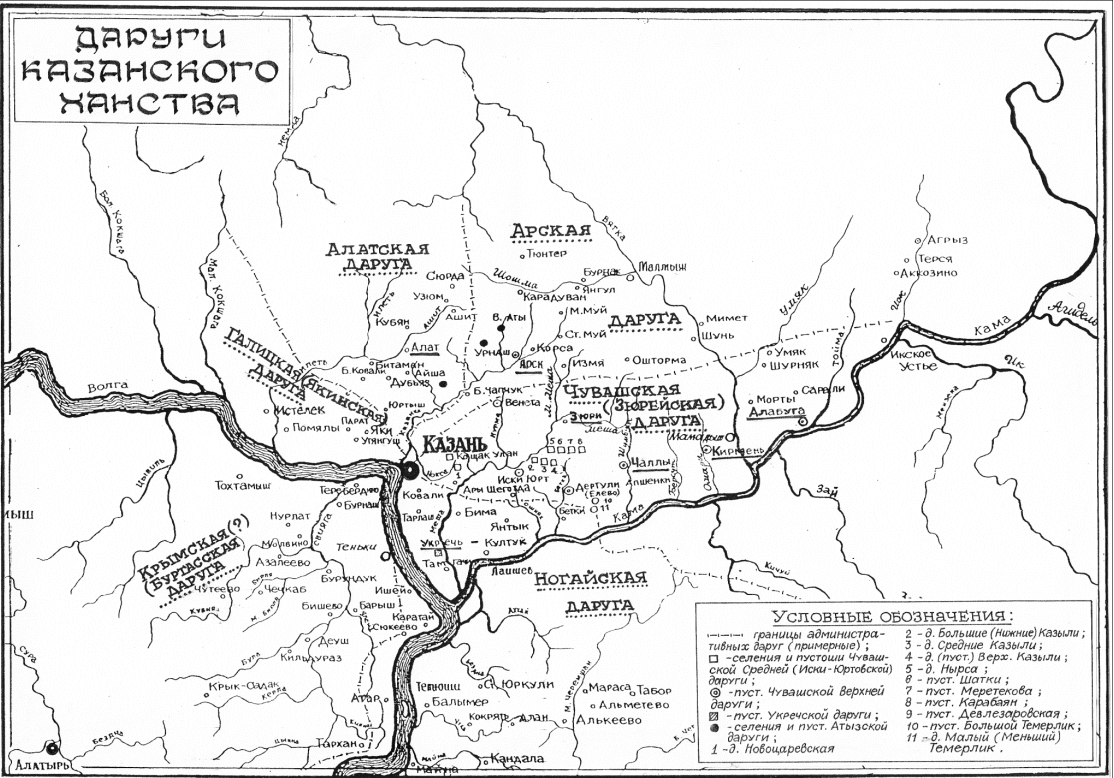
The Khanate of Kazan was a Tatar state that emerged from the disintegration of the Mongol Golden Horde, occupying the lands of former Volga Bulgaria from its founding until its conquest by the Tsardom of Russia. Its capital was Kazan, and its territory covered modern Tatarstan, Mari El, Chuvashia, Mordovia, and parts of Udmurtia and Bashkortostan. The state’s main rivers—the Volga, Kama, and Vyatka—served as vital trade routes. The population was predominantly Kazan Tatars, many of whom identified simply as Muslims or “the people of Kazan,” with Islam as the state religion. The feudal nobility included ethnic Bulgars, while the court and bodyguard were composed of steppe Tatars such as Kipchaks and later Nogais. Four leading noble families—Arghin, Barin, Qipchaq, and Shirin—hailed from the Golden Horde. Subject peoples included the Chuvash, Mari, Mordvins, Mishar Tatars, Udmurts, Bashkirs, and some Komi tribes. The southern steppe region was home to nomadic Nogais, who often raided settled populations. The khanate’s official written language was Old Tatar, while at least five languages were in use, including Chuvash, Mari, Mordvin, and Bashkir. The khanate was founded by Ulugh Muhammad, who assumed the title of khan and usurped the throne around 1437 or 1438. Throughout its 115-year history, the throne changed hands 19 times among fifteen reigning khans, often elected by nobility and citizens. After a period of Muscovite dominance beginning in 1487, Kazan broke free in 1521 by allying with the Crimean Khanate and Nogai Horde. Internal strife between pro-Moscow and pro-Crimean factions led to repeated revolts and Russian campaigns, culminating in the khanate’s fall.
- Capital
- Kazan
- State religion
- Islam
- Successor state of
- Golden Horde
- Conquered by
- Tsardom of Russia
Lore & Background
The Khanate of Kazan encompassed the former territories of Volga Bulgaria, with its capital at the city of Kazan. Its geography was defined by the Volga, Kama, and Vyatka rivers, which served as major trade routes. The majority of the population were Kazan Tatars, though many identified simply as Muslims or as "the people of Kazan." Islam was the state religion. The local feudal nobility were ethnic Bulgars, while the court and bodyguard of the khans consisted of steppe Tatars, including Kipchaks and later Nogais. Subject peoples included the Chuvash, Mari, Mordvins, Mishar Tatars, Udmurts, and Bashkirs, with some Komi tribes also incorporated. Most of the khanate was forested, with only the southern part adjoining the steppe, where nomadic Nogais often raided agricultural populations. At least five languages were used, with the Tatar language (including its Middle and Western dialects) being the primary state language, while Chuvash, Mari, Mordvin, and Bashkir languages were also spoken. The khanate was prone to civil turmoil, with khans replaced nineteen times over its existence, often elected by nobility and citizens from the Gengizides. It was one of the successor states of the Golden Horde and ended when conquered by the Tsardom of Russia.
Reader's Guide
The Khanate of Kazan was a Tatar state that controlled the territory of former Volga Bulgaria, with its capital at Kazan. It emerged as one of the successor states of the Golden Horde, covering what is now Tatarstan, Mari El, Chuvashia, Mordovia, and parts of Udmurtia and Bashkortostan. The major rivers—the Volga, Kama, and Vyatka—served as key trade routes. The population was predominantly Kazan Tatars, who often identified simply as Muslims or “the people of Kazan,” and Islam was the state religion. The feudal nobility included ethnic Bulgars, while the court and bodyguard were composed of steppe Tatars, including Kipchaks and later Nogais. Subject peoples included the Chuvash, Mari, Mordvins, Mishar Tatars, Udmurts, and Bashkirs, with some Komi tribes also incorporated. Most of the territory was forested, with southern steppes inhabited by nomadic Nogais who sometimes recognized the khan’s rule but often raided settled populations. Tatar Cossack troops defended against these raids. At least five languages were used, with Tatar (in Middle and Western dialects) being the state language, while Chuvash, Mari, Mordvin, and Bashkir were also spoken. The khanate was founded by Ulugh Muhammad around 1437 or 1438, who assumed the khan title with local noble support. Its history was marked by frequent civil turmoil: khans were replaced nineteen times in 115 years, often elected by nobility or citizens. After a period of Moscow dominance beginning in 1487, when Ivan III installed a puppet ruler, the khanate regained independence in 1521 through an alliance with the Crimean Khanate and Nogai Horde. The final decade saw repeated Moscow campaigns, with pro-Moscow and pro-Crimean factions struggling for control. No single document of the khanate survived the Russian conquest, and early colonial records were later destroyed during the Time of Troubles.
Did You Know?
- The Khanate of Kazan was one of the successor states to the Mongol Golden Horde.
- No single document from the Khanate of Kazan survived the Russian conquest.
Tribal Governance and the Authority of the Khan
The Khanate of Kazan exemplified the political model shared across steppe polities: a realm governed by a khan, drawing its organizational logic from tribal kinship rather than bureaucratic administration. In such systems, a ruler's legitimacy rested not on hereditary law codes or territorial charters but on the active loyalty and military support of warrior subjects who formed the backbone of the state. Power was sustained through a network of subordinate groups who paid tribute, which in turn funded the khan's court and campaigns. This arrangement placed the Khanate of Kazan in the same political category as kinship-based chiefdoms and feudal monarchies found across Eurasia, even though its internal dynamics were shaped by the particular rhythms of steppe life. The title of khan—sometimes held by a khatun or khanum—signified a personal bond of obligation between ruler and followers, a relationship that could shift with the tides of loyalty and battlefield success.
Mongol and Turkic Lineages
The Khanate of Kazan occupies a distinctive position in the taxonomy of steppe states because it is catalogued among both the Mongol khanates and the Turkic khanates. This dual listing reflects the broader reality that many Eurasian steppe polities blended Mongolic and Turkic traditions over centuries of interaction. Khanates of this type were typically nomadic societies situated on the vast grasslands stretching across the continent, and their political structures evolved from the tribal confederations that preceded them. In the Mongol tradition, the Khanate of Kazan appears in the same lineage as the Golden Horde, the Crimean Khanate, and the Astrakhan Khanate—states that trace their institutional DNA back to the appanages Genghis Khan carved out for his descendants. In the Turkic tradition, it stands alongside earlier entities such as the Khazar Khaganate and the Uyghur Khaganate, suggesting a continuity of steppe political culture that transcended any single ethnic label.
A Layered Hierarchy of Steppe Power
Within the broader architecture of steppe governance, the Khanate of Kazan represented a mid-tier polity in a layered system of authority. At the apex stood the khaganate—a large nomadic state that maintained subjugation over numerous smaller khanates, with the khagan's title translating roughly as 'Khan of the Khans' and carrying a status comparable to that of an emperor. Below this supreme tier, individual khanates like Kazan operated as autonomous or semi-autonomous units, each ruled by its own khan and sustained by the tribute of its subordinate groups. The political equivalence between these steppe states and the kinship-based chiefdoms or feudal monarchies of settled civilizations meant that, despite their nomadic character, they functioned as recognizable sovereign entities in the eyes of neighboring powers. The Khanate of Kazan thus existed within a nested hierarchy where loyalty flowed upward through multiple levels of tribute and obligation, and where the balance of power could shift as smaller khanates rose or fell.
The Khanate as a Political Category
The very term 'khanate' carries a specific political meaning that helps situate the Khanate of Kazan within the wider world of pre-modern statecraft. A khanate, by definition, was a polity ruled by a khan, khatun, or khanum, and it was typically organized along tribal lines rather than through the administrative apparatus of a centralized bureaucracy. This set it apart from the larger khaganate, which encompassed and subjugated multiple khanates under a single supreme ruler. The Khanate of Kazan, as one instance of this political form, shared its structural DNA with dozens of other steppe states—from the Chagatai Khanate stretching from the Amu Darya to the Altai Mountains, to the Dzungar Khanate covering parts of modern Xinjiang and Mongolia. What united these diverse polities was not ethnicity or geography but a common governance logic: power derived from warrior loyalty, revenue collected through tribute, and legitimacy sustained by the ongoing consent of the tribal communities that composed the state.
Gallery
Frequently Asked Questions
What territory did the Khanate of Kazan control?
Its domain stretched across the former lands of Volga Bulgaria, covering what are now Tatarstan, Mari El, Chuvashia, Mordovia, and parts of Udmurtia and Bashkortostan. The Volga, Kama, and Vyatka rivers formed the geographic backbone of the realm.
What was the Khanate of Kazan's religious and cultural identity?
Islam served as the state religion, setting it apart from its Orthodox Christian neighbor to the west. As a Tatar polity it carried forward Turkic-Mongol traditions inherited from the Golden Horde while developing its own court and urban culture around Kazan.
More in Medieval And Early Modern Asian Empires 1-23
Spotted an error? Know more?
This is a living reference — every entry is fact-audited, and reader corrections feed straight into our audit queue. Suggest an edit · See this site's audit record