
Kediri kingdom
Hindu-Buddhist Javanese kingdom known for classical literature.

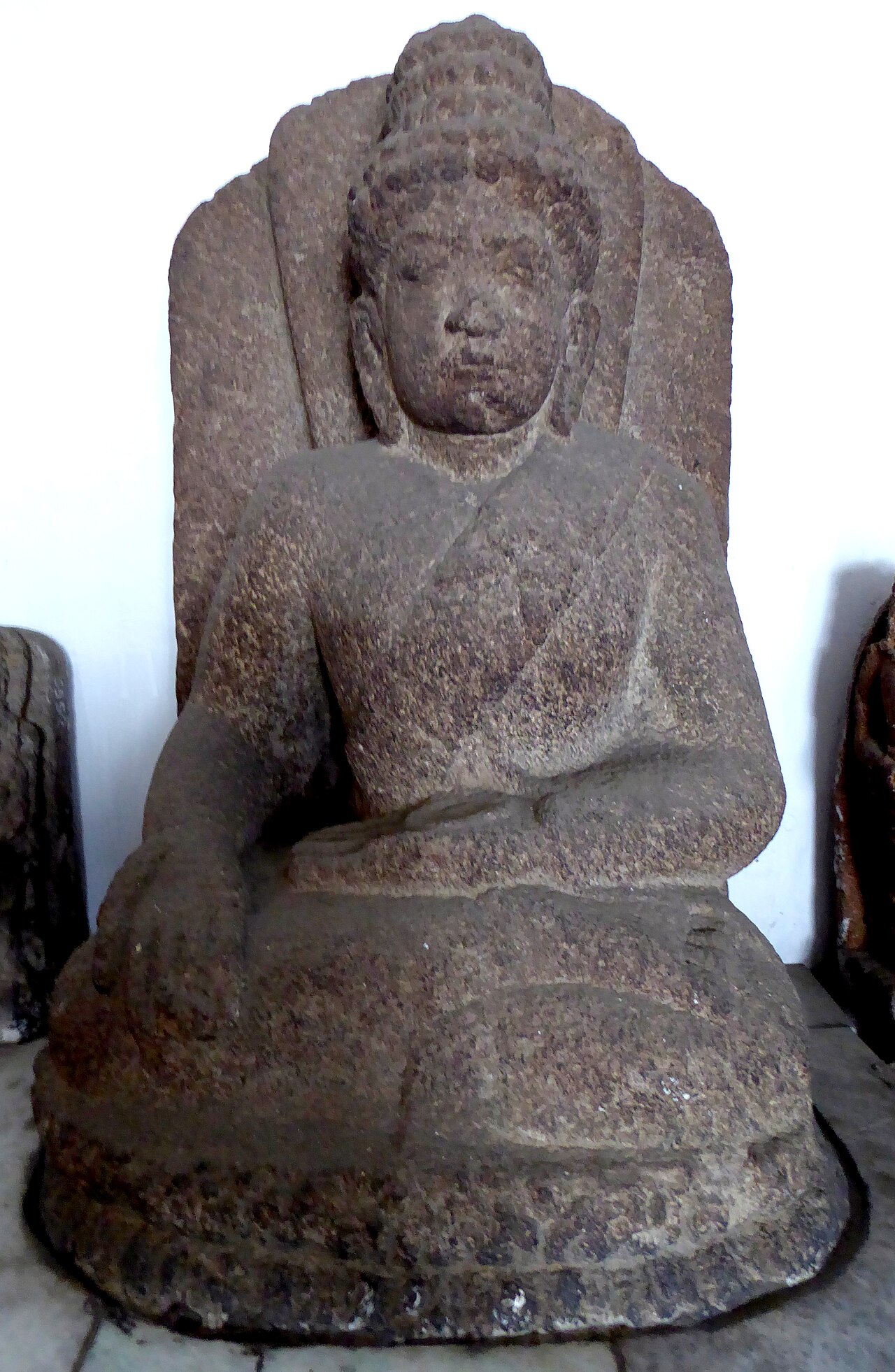
Photo Dharma from Sadao, Thailand · CC BY 2.0
The Kediri Kingdom, also referred to as Kadiri or Panjalu, emerged in 1042 as a successor to Airlangga’s Kahuripan kingdom, continuing the Isyana Dynasty in East Java. Its capital, Dahanapura (abbreviated as Daha), meaning “city of fire,” was established in the western Brantas River valley, near the present-day city of Kediri. The kingdom’s founding followed Airlangga’s division of his realm into two halves—Janggala and Panjalu (Kediri)—after which he abdicated to become an ascetic. The name Panjalu, derived from the Old Javanese word *jalu* (male) with a prefix meaning “one who is male,” signified a fertile and independent region. Similarly, the name Kediri (or Kadhiri) comes from a term meaning being able to stand alone, self-sufficient, or independent, a concept reinforced in inscriptions such as the Ceker inscription (1185 AD) and the Kamulan inscription (1194 AD), which refer to the ruler reigning in “bhumi Kadhiri.” The kingdom was also known as Gelang-gelang during the brief second dynasty under Jayakatwang (1292–1293). Although few archaeological remains survive, the Kediri era was a golden age for classical Javanese literature, producing works like Mpu Sedah’s *Kakawin Bharatayuddha*, Mpu Panuluh’s *Gatotkacasraya*, and Mpu Dharmaja’s *Smaradhana*. The kingdom’s early rulers included Çri Samaravijaya (1042–1051), possibly the first king, followed by Çri Jyitêndrakara (1051–1112), who left the Mataji inscription. Later, Çri Bamesvara reigned from 1112 to 1135, using a skull with a crescent moon as his royal seal, a symbol of Shiva. Jayabhaya (1135–1159) succeeded him, adopting the formal name Çri Maharaja çri Dharmmeçwara Madhusudanawataranindita Suhrtsingha Parakrama Digjayottunggadewa and using the Narasinghavatara as his royal seal.
- Capital
- Dahanapura (Daha)
- Religion
- Hindu-Buddhist
- Location
- East Java
- Known for
- Classical Javanese literature, including Kakawin Bharatayuddha
Lore & Background
The kingdom, also known as Panjalu (Pangjalu) and Kadiri (Kadhiri), was centered in the ancient city of Dahanapura, located in the western Brantas River valley near modern Kediri city. The name Daha, an abbreviation of Dahanapura meaning "city of fire," appears in the Pamwatan inscription of 1042. The term Panjalu derives from the word *jalu* (male) with a prefix meaning "one who is male," signifying a fertile and independent area, while Kadiri in Old Javanese means "being able to stand alone" or "self-sufficient." During the brief second dynasty under Jayakatwang, the kingdom was also called Gelang-gelang or Gegelang. The kingdom's territory was defined by three land types: *Anupa* (fertile soil near springs), *Sadarana* (mixed fertility), and *Janggala* (infertile wilderness). The kingdom succeeded Airlangga’s Kahuripan after he divided it in 1042, with the Bengawan River marking the boundary between Panjalu and Janggala. The first king was Çri Samaravijaya, followed by Çri Jyitêndrakara, who left the Mataji inscription. Çri Bamesvara used a skull with a crescent moon as his royal seal, a Shiva symbol. Jayabhaya’s reign saw the Narasinghavatara emblem. The era flourished in classical literature, producing works such as Mpu Sedah’s *Kakawin Bharatayuddha*, Mpu Panuluh’s *Gatotkacasraya*, and Mpu Dharmaja’s *Smaradhana*.
Reader's Guide
The Kediri Kingdom, also known as Panjalu or Daha, emerged in 1042 when King Airlangga divided his Kahuripan realm into two halves, Janggala and Panjalu, before abdicating to become an ascetic. Centered on the ancient city of Dahanapura in the Brantas River valley, the kingdom saw significant development in classical literature despite a lack of archaeological remains. Notable literary works from this era include Mpu Sedah’s *Kakawin Bharatayuddha*, Mpu Panuluh’s *Gatotkacasraya*, and Mpu Dharmaja’s *Smaradhana*. The kingdom’s name, Kadiri or Kediri, derives from an Old Javanese word meaning to stand alone or be independent, while Panjalu similarly signifies a fertile and independent area. The kingdom’s capital, Daha, was an abbreviation of Dahanapura, meaning “city of fire,” and this name persisted into the later Majapahit period as the seat of a rival court. The first recorded king was Çri Samaravijaya, followed by Çri Jyitêndrakara, who left the Mataji inscription. Under Çri Bamesvara, the royal seal featured a skull with a crescent moon, a Shiva symbol. Jayabhaya, who reigned next, used a seal depicting Narasinghavatara. The kingdom was also known as Gelang-gelang under the short-lived second dynasty of Jayakatwang. Chinese chronicles from 1178 refer to it as Pu-chia-lung. The community classified land into three types: fertile *anupa*, mixed *sadarana*, and infertile *janggala* wilderness.
Did You Know?
- The name Dahanapura means 'city of fire,' as recorded in Airlangga's 1042 Pamwatan inscription.
- The kingdom's name Panjalu appears in the 1178 Chinese chronicle Ling wai tai ta as 'Pu-chia-lung.'
- King Jayabhaya's reign (1135–1159) is considered the golden age of Old Javanese literature, with Mpu Sedah's Kakawin Bharatayuddha written in 1135.
- During King Gandra's reign, an inscription documents the title Senapati Sarwwajala, a navy general, indicating Kediri had a navy.
- The kingdom's capital Daha continued to be used in the later Majapahit period as the seat of the rival court of Trowulan.
Founding & the Twin-Kingdom Structure
The Kediri kingdom emerged from the deliberate division of Airlangga's Kahuripan realm in 1042. Rather than passing a unified throne to a single heir, Airlangga split his domain into two territories—Janggala and Panjalu—before abdicating to pursue an ascetic life. He passed away seven years after this act. The boundary between the two new regions was later identified as the Bengawan River, according to the Marimbong Inscription of 1264. The Wurare inscription, carved at the base of a Mahaksobhya statue during the Singhasari period, records that the priest Aryya Bharada oversaw this territorial division. The Nagarakretagama (Canto 68) poetically references the moment Java 'went into two halves,' naming the Illustrious Panjalu-Protector seated in Daha. This founding established a twin-kingdom structure that would define the region's political identity for centuries, with Panjalu (later Kediri) and Janggala operating as parallel entities. The succession began with Çri Samaravijaya, who had previously served as crown prince under Airlangga, taking the throne in 1042, followed by Çri Jyitêndrakara Parakrama Bhakta, the first ruler to leave verifiable historical records through the Mataji inscription of 1051.
A Golden Age of Classical Literature
Despite the near-total absence of archaeological remains from its capital Dahanapura, the Kediri era stands as one of the most remarkable periods of Javanese literary production. The classical kakawin tradition reached extraordinary heights during these roughly two centuries. Mpu Sedah composed the Kakawin Bharatayuddha, a Javanese rendering of the Mahabharata, in 1135 under the patronage of King Jayabhaya. His brother Mpu Panuluh completed and perfected that work, and went on to author the Hariwangsa and the Gatotkacasraya. Mpu Dharmaja contributed the Smaradhana to this rich corpus. These works were not mere entertainments; they embedded royal ideology, Hindu-Buddhist cosmology, and courtly values into epic narrative form. The kingdom's capital, believed to have sat in the western Brantas River valley near present-day Kediri city and its surrounding regency, served as the cultural hearth from which these compositions radiated. The literary output of this period remains a cornerstone of Javanese literary heritage, testifying to a court culture that prioritized poetic and philosophical expression alongside political governance.
Names, Etymology & Regional Identity
The kingdom bore multiple names across its history, each carrying distinct cultural weight. Panjalu (more precisely Pangjalu) was the earlier and more frequently used designation in royal inscriptions, and it appears in the 1178 Chinese chronicle Ling wai tai ta as 'Pu-chia-lung.' The term derives from 'jalu' (male) with the prefix 'pang,' signifying a fertile, self-sufficient territory—a deliberate contrast to Janggala, which denoted infertile wilderness. The name Kadhiri, drawn from Old Javanese, carries the meaning of standing alone, being independent, and possessing one's own personality. This semantic field is confirmed in inscriptions such as the Ceker inscription (1185 AD) and the Kamulan inscription (1194 AD), both of which reference 'bhūmi kaḍiri' as the sovereign's domain. The capital itself, Dahanapura, translates as 'city of fire,' a name already recorded in Airlangga's 1042 Pamwatan inscription. During Jayakatwang's brief revival of the dynasty in the late thirteenth century, the realm was called Gelang-gelang or Gegelang. The name Daha persisted into the Majapahit era as the seat of the rival Trowulan court, while a city of similar name also exists in Andhra Pradesh, India.
Royal Seals & Hindu-Buddhist Symbolism
The Kediri kings expressed their divine legitimacy through carefully chosen royal seals, or lanchana, each encoding specific Hindu theological references. Under Çri Bamesvara, who ruled from 1112 to 1135 and left at least ten inscriptions documenting East Java's development, the lanchana was the chandrakapala—a skull crowned by a crescent moon, a potent symbol of the deity Shiva. His successor Jayabhaya (1135–1159), whose full stylized name invoked multiple divine epithets including Dharmmeçwara and Parakrama Digjayottunggadewa, adopted the Narasinghavatara as his seal: the avatar of Vishnu depicted as a human with a lion's head tearing the stomach of the giant king Hiranyakasipu. This shift from Shaivite to Vaishnavite iconography reflects the kingdom's broader Hindu-Buddhist religious landscape. The first king to leave verifiable records, Çri Jyitêndrakara Parakrama Bhakta (1051–1112), established the Mataji inscription. The kingdom's religious identity was thus not monolithic but layered, with successive rulers aligning themselves to different aspects of the Hindu pantheon while maintaining the broader syncretic framework that characterized Javanese court culture.
Gallery



Frequently Asked Questions
Where was the Kediri Kingdom's capital located?
The kingdom was centered at Dahanapura (commonly shortened to Daha), an ancient city believed to have sat in the western Brantas River valley near present-day Kediri in East Java. Despite its historical prominence, very few archaeological remains of the capital have been identified to this day.
What is the Kediri Kingdom most famous for?
The period is celebrated primarily for its flourishing of classical Old Javanese literature, including works such as Mpu Sedah's Kakawin Bharatayuddha. This literary output marks the Kediri era as a high point in the island's poetic and courtly tradition.
What religion did the Kediri Kingdom practice?
The kingdom followed a syncretic Hindu-Buddhist tradition, blending elements of both faiths in its court culture and literary output. This religious blend was characteristic of Javanese polities during the classical period.
More in Medieval And Early Modern Asian Empires 1-23
Spotted an error? Know more?
This is a living reference — every entry is fact-audited, and reader corrections feed straight into our audit queue. Suggest an edit · See this site's audit record