
Insulin (medication)
Pharmaceutical hormone used to treat high blood glucose and diabetes.

Wikimedia Commons · CC BY 4.0
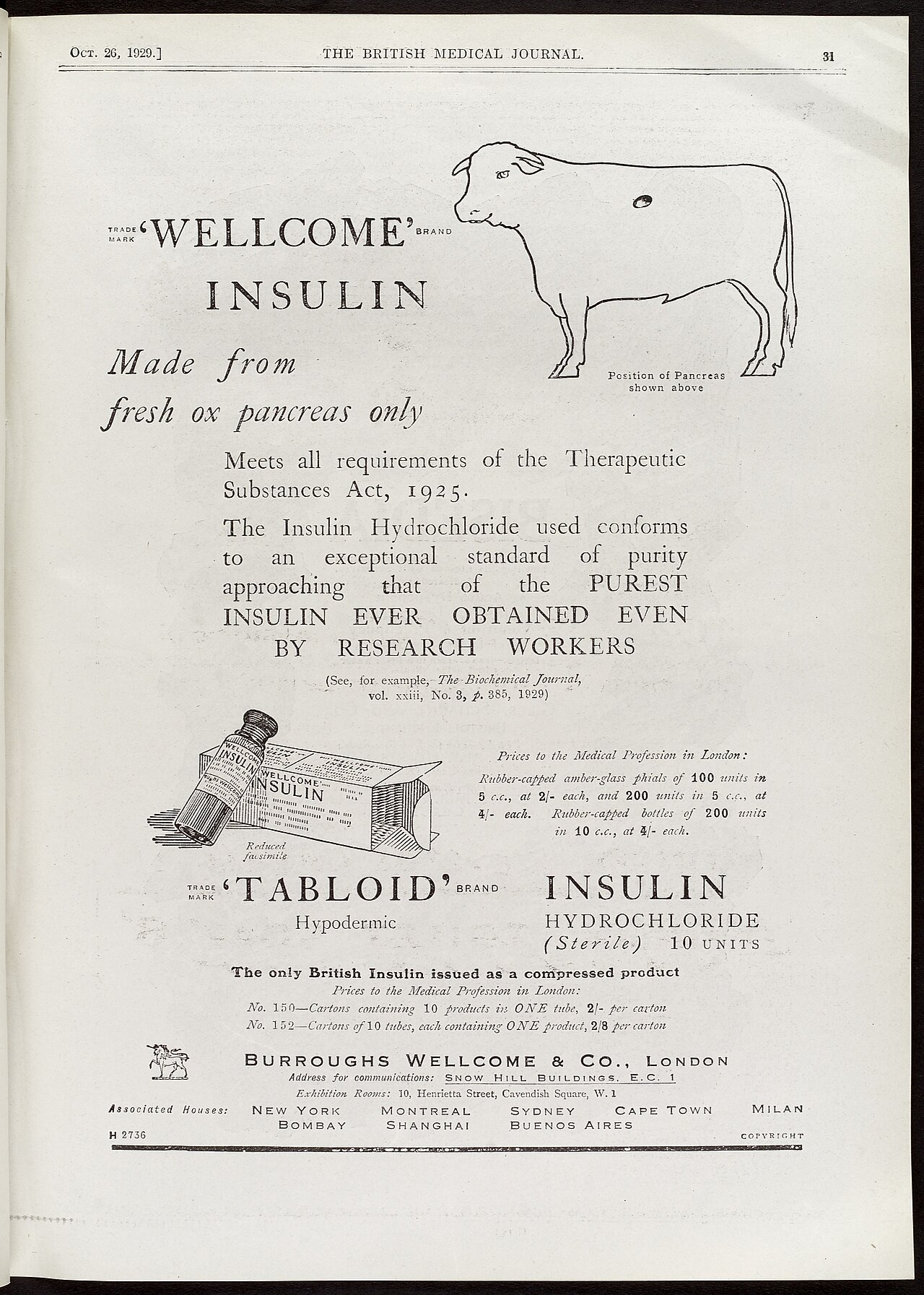
Insulin as a medication is a pharmaceutical preparation of the protein hormone insulin, used primarily to lower high blood glucose levels. It is a critical treatment for type 1 diabetes, type 2 diabetes, and gestational diabetes, as well as for acute diabetic complications like diabetic ketoacidosis and hyperosmolar hyperglycemic states. Additionally, it is administered alongside glucose to manage hyperkalemia, or elevated blood potassium. The medication is most commonly injected under the skin, though some formulations can be given into a vein or muscle. Insulin preparations vary by duration of action, broadly categorized as short-acting (such as regular insulin), intermediate-acting (such as neutral protamine Hagedorn, or NPH, insulin), and longer-acting (such as insulin glargine). While the term "insulin" often refers to all such preparations, strictly speaking, insulin is identical to the naturally occurring human hormone, whereas insulin analogues have slightly modified molecular structures that alter their timing and effect. Insulin is included on the World Health Organization's List of Essential Medicines. Historically, insulin was derived from the pancreases of pigs or cows. Today, human versions are produced either by chemically modifying porcine insulin or through recombinant DNA technology, most commonly using bacteria like *E. coli* or yeast like *Saccharomyces cerevisiae*. The medication has notable side effects, including hypoglycemia (low blood sugar), hypokalemia (low blood potassium), and allergic reactions. Allergies, affecting about two percent of users, are often due to preservatives such as zinc, protamine, or meta-cresol rather than the insulin itself, and can be managed by switching to a different preparation or through desensitization. Repeated injections at the same site without rotation can cause skin changes like lipohypertrophy or firm nodules known as amyloidomas. Early routine use of insulin for long-term conditions like type 2 diabetes can offer benefits, but often requires gradual dose increases and raises the risk of severe hypoglycemia, which can make patients and doctors hesitant to initiate therapy. Behavioral obstacles, such as lack of motivation or time constraints, also contribute to delays in starting or intensifying insulin treatment.
- type
- Medication
- common_forms
- Short-acting (regular), intermediate-acting (NPH), long-acting (glargine)
- sources
- Porcine, bovine, recombinant human (E. coli, Saccharomyces cerevisiae)
- regulatory_status
- World Health Organization's List of Essential Medicines
- prescription_rank_2023
- 157th most prescribed in the US (over 3 million prescriptions)
Lore & Background
Insulin as a medication is a pharmaceutical preparation of the protein hormone insulin, used primarily to lower high blood glucose in conditions such as type 1 diabetes, type 2 diabetes, gestational diabetes, and diabetic emergencies like ketoacidosis and hyperosmolar hyperglycemic states. It is also administered alongside glucose to treat hyperkalemia. The medication is typically injected under the skin, though some forms can be given intravenously or intramuscularly. There are several types of insulin, broadly categorized by duration of action: short-acting (e.g., regular insulin), intermediate-acting (e.g., NPH insulin), and longer-acting (e.g., insulin glargine). While all are often called insulin, strictly speaking, insulin is identical to the natural hormone, whereas insulin analogues have slightly altered molecules to modify their action time. Insulin can be derived from the pancreas of pigs or cows; human versions are produced either by modifying porcine insulin or via recombinant technology using *E. coli* or *Saccharomyces cerevisiae*. Side effects include hypoglycemia, hypokalemia, and allergic reactions, most of which are due to added preservatives like zinc, protamine, or meta-cresol rather than the insulin itself. Repeated injections without rotating sites can cause lipohypertrophy or amyloidomas. The medication is on the World Health Organization's List of Essential Medicines and, in 2023, was the 157th most prescribed drug in the United States, with over three million prescriptions.
Reader's Guide
Insulin's significance lies in its life-saving role for millions with diabetes. It is a cornerstone of modern medicine, listed on the World Health Organization's Essential Medicines list. However, clinical experience has shown conflicting evidence on whether synthetic insulins are less allergenic, and the International Diabetes Federation states there is no overwhelming evidence to prefer one species over another. Early initiation of insulin therapy in type 2 diabetes offers benefits but also challenges, including gradual dose increases and risk of severe hypoglycemia, leading to hesitation among patients and doctors. Insulin's mechanisms are highly conserved across species, and its discovery transformed diabetes from a fatal diagnosis to a manageable chronic condition.
Did You Know?
- Insulin can be made from the pancreas of pigs or cows, or via recombinant technology using E. coli or Saccharomyces cerevisiae.
- Allergy to insulin affects about 2% of people, most reactions due to preservatives like zinc, protamine, or meta-cresol rather than insulin itself.
- Repeated injection without site rotation can cause lipohypertrophy and amyloidomas, which appear as firm nodules under the skin.
Two Diseases, Two Treatment Philosophies
Type 1 diabetes is an autoimmune condition in which the body destroys the insulin-producing beta cells of the pancreas. Without this hormone, cells cannot pull glucose from the bloodstream, and chronic hyperglycemia sets in, eventually damaging the kidneys, nerves, cardiovascular system, and other organs. The only treatment is regular insulin injections. Type 2 diabetes, far more common, follows a different trajectory: cells develop resistance to insulin, forcing the pancreas to overproduce the hormone. When that compensation finally breaks down, blood sugar climbs and the disease manifests. Treatment here is layered—dietary shifts toward low glycemic index foods, physical activity to restore insulin sensitivity, and medications that either boost insulin secretion, enhance organ-level insulin response, slow gastrointestinal glucose absorption, or promote glucose loss through urine. The choice of agent depends on the diabetes type, the patient's age, and individual circumstances, making treatment deeply personalized rather than one-size-fits-all.
The Insulin Spectrum: From Rapid to Ultra-Long Acting
Insulin preparations are distinguished primarily by how quickly they peak and how long they remain active in the body. Rapid-acting analogs such as insulin lispro (Humalog), insulin aspart (Novolog), and insulin glulisine (Apidra) reach their peak in roughly one hour before being metabolized. Short-acting options like regular insulin (Humulin R, Novolin R) and prompt insulin zinc (Semilente) peak between two and four hours. Intermediate-acting forms, including isophane insulin (NPH) and insulin zinc (Lente), peak between four and ten hours. Long-acting insulins—extended insulin zinc (Ultralente), insulin glargine (Lantus), insulin detemir (Levemir), and insulin degludec (Tresiba)—deliver roughly twenty-four hours of coverage, often without a pronounced peak. Degludec is sometimes set apart as ultra-long acting because its duration stretches to approximately forty-two hours. In acute care, insulin can be given intravenously, while routine administration is subcutaneous via injection or pump. A systematic review found no clear superiority among detemir, glargine, degludec, or NPH for nocturnal hypoglycemia, A1c, cardiovascular events, quality of life, or mortality, and no meaningful differences between adults and children.
Beyond Insulin: The Mechanistic Arsenal
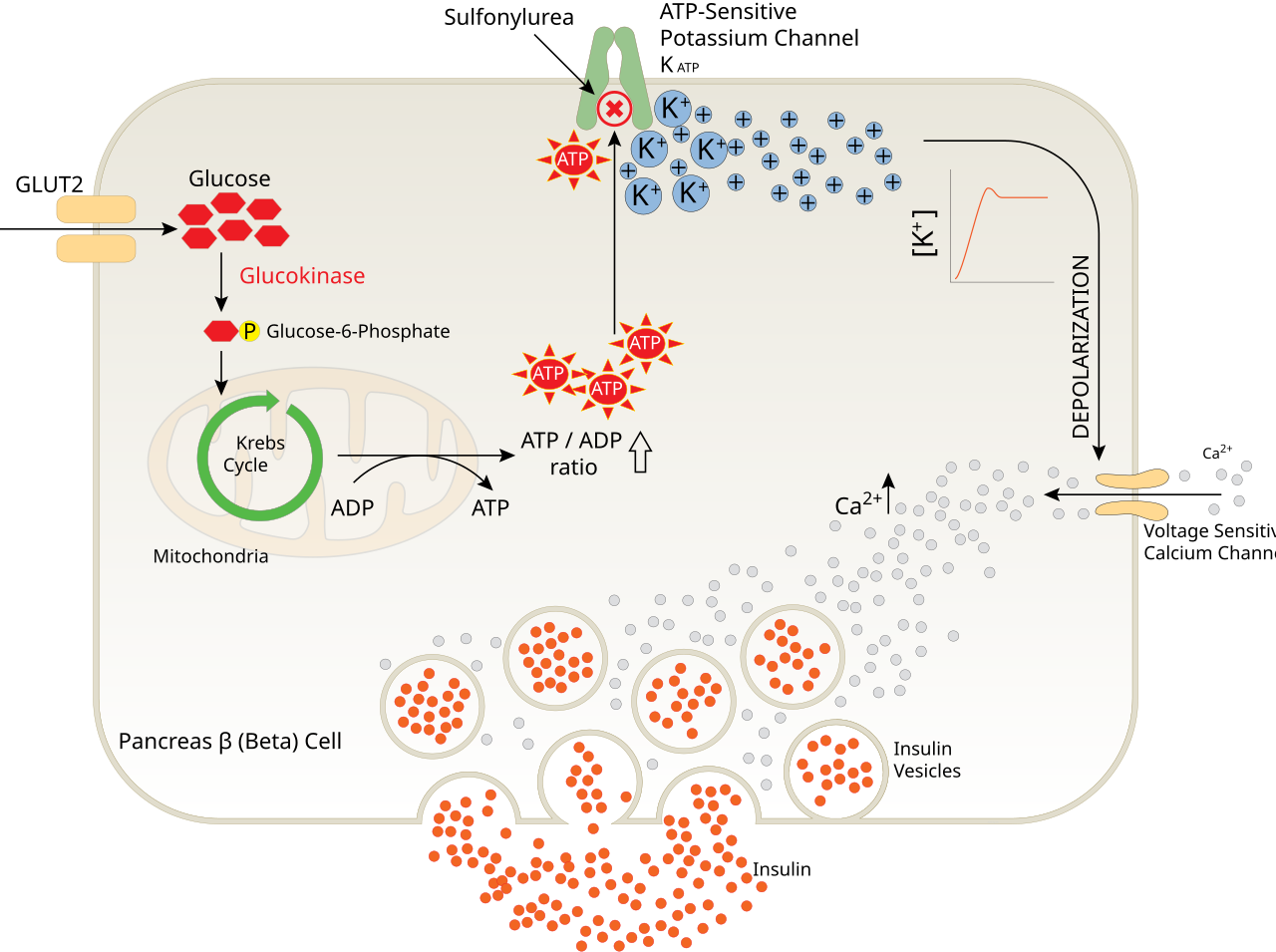
For type 2 diabetes, clinicians have a pharmacological toolkit that extends well beyond insulin. Four principal mechanisms guide drug selection. Insulin sensitizers boost the responsiveness of cellular insulin receptors, directly tackling the resistance that defines the condition. Beta-cell stimulants nudge the pancreas to secrete more insulin. Alpha-glucosidase inhibitors slow the enzymatic breakdown of carbohydrates in the gut, reducing the speed of glucose absorption, while alpha-amylase inhibitors target starch digestion more broadly. SGLT2 inhibitors block the sodium-glucose transport protein 2 in the renal tubules, preventing glucose reabsorption and increasing its excretion in urine. These agents are frequently combined. As of 2020, the FDA had approved twenty-three unique antihyperglycemic drug combinations. The first triple oral combination—metformin, saxagliptin, and dapagliflozin—received approval in 2019, followed in 2020 by a second triple of metformin, linagliptin, and empagliflozin. GLP-1 receptor agonists like liraglutide, exenatide, tirzepatide, and pramlintide are typically given by injection, though semaglutide is notable for being available both as an injectable and as the oral pill Rybelsus.
Metformin's Singular Role and the Safety Legacy
Among the many oral agents for type 2 diabetes, metformin occupies a singular first-line position. As a biguanide, it reduces hepatic glucose output and enhances peripheral glucose uptake by skeletal muscle, typically lowering A1C by 1.5 to 2.0 percent. Crucially, it is the only widely used oral diabetic drug that does not cause weight gain, making it especially attractive for pediatric and adolescent patients, where it has become the most commonly prescribed agent. It may be the best choice for patients who also have heart failure. However, caution is required in those with impaired liver or kidney function, and the drug must be temporarily stopped before any radiographic procedure involving intravenous iodinated contrast due to an elevated risk of lactic acidosis. This safety concern is not new: phenformin, used from the 1960s through the 1980s, and buformin were both withdrawn for the same lactic acidosis risk. In pregnancy, most oral anti-diabetic agents are contraindicated, and insulin becomes the preferred treatment. An inhaled insulin formulation was briefly licensed but has since been withdrawn, leaving subcutaneous and intravenous routes as the standard.
Gallery
More in Medications And Drugs 1-24
Spotted an error? Know more?
This is a living reference — every entry is fact-audited, and reader corrections feed straight into our audit queue. Suggest an edit · See this site's audit record