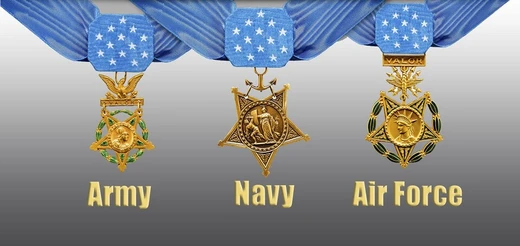
Squad Command System
Storm the beaches and sabotage the Reich in this classic World War II shooter.

U.S. Army photo by Pvt. Robert Palmer Jr · Public domain
Medal of Honor: Allied Assault is a 2002 first-person shooter game developed by 2015 and published by Electronic Arts. It was released for Windows and Mac OS X as the third game in the Medal of Honor video game series. The game uses the id Tech 3 engine, with modifications from Quake III Arena, to simulate infantry combat in the European and North African theaters during World War II.
Quick Facts
- First major appearance
- Medal of Honor: Allied Assault
- Key titles
- Allied Assault
Lore & Background
Lieutenant Mike Powell, the protagonist, is a skilled U.S. Army Ranger and later an agent of the Office of Strategic Services. Powell and a squad of Rangers are in German-occupied Arzew, Algeria, fighting on the North African front. The squad fight their way into the city, but an ambush kills all the team except Powell. Powell continues into a German base, where he rescues S.A.S. agent Major Jack Grillo and retrieves his equipment. The major and Lt. Powell split up, with Grillo securing transport, while Powell does sabotage in a motor pool. He links back up with Grillo, who has commandeered a jeep with a mounted machinegun. The two drive to a German airfield, where they successfully destroy the Fw 190 fighters and Stuka dive bombers grounded there. While Grillo distracts the German forces, Powell sneaks into a bunker, cuts off Axis radio contact and fights his way to a coastal lighthouse to signal the Allied fleet to begin Operation Torch, the invasion of North Africa. He escapes with Grillo in a German transport truck. For his conduct during the mission, which included saving another American POW, Lt. Powell gets awarded with the Distinguished Service Cross. Following the Allies' success in Africa, Powell and Grillo are sent to German-occupied Norway to infiltrate the city of Trondheim, where a Kriegsmarine U-boat is being outfitted with a prototype Naxos radar detector. Grillo makes it into the base first, but is killed in action by German guards while opening the front gate for Powell. Powell fights his way into the base, where he disguises himself as a German officer and infiltrates the loading dock. He goes to the lab where he destroys the Naxos prototype and gains access to a submarine intended to be fitted with the prototype and blows it up. He fights his way out of the base, where he is extracted by an Allied squad. After the mission Powell gets awarded with Norwegian War cross with Sword medal, for securing the U-boat manifest. Thanks to Powell's efforts, the German U-boat threat is neutralized, clearing the way for the Allied invasion of Europe, Operation Overlord. Powell, as a part of the 2nd Ranger Battalion, is sent to Charlie sector of Omaha Beach under Capt. Ramsay, where he and his fellow Rangers storm the bunkers, despite taking heavy casualties, and secure the beach.
Reader's Guide
In Allied Assault, the player takes on the role of Lt. Mike Powell of the United States Army Rangers who works for the Office of Strategic Services. Single-player missions include assaulting Nazi bases in Algiers and Norway, storming Omaha Beach on D-Day, and rescuing comrades behind enemy lines in occupied France. The game's levels are often compared to Steven Spielberg's 1998 film Saving Private Ryan; many of the levels are direct quotations of the scenery (or even complete sequences as in the Omaha Beach mission) in the film. Omaha Beach was re-created in Medal of Honor: Frontline for consoles. Multiplayer: Once a game server and type is selected the game starts in spectator mode and the player can choose between joining the allies or the axis then select the set of weapons. The game uses a point system, adding points for the number of kills and rounds, deducting points for suicides and addition of death points for getting killed. Multiplayer contains four different modes. Deathmatch in which every player has to kill everyone else and get the highest score, Team Deathmatch in which a team has to kill other teams and get the highest score, Round Based which is similar in gameplay to Deathmatch but counts the rounds instead of the score and "Objective" mode where a player must win the most rounds by completing missions.
Gameplay Mechanics and Engine Foundation
Medal of Honor: Allied Assault, released in 2002 by Electronic Arts, leverages the id Tech 3 engine with specific modifications borrowed from Heavy Metal: F.A.K.K.² to deliver its combat simulation. This technical foundation supports a first-person shooter experience set across the European and North African theaters of World War II. The single-player campaign places players in the boots of Lt. Mike Powell, a U.S. Army Ranger operating under the Office of Strategic Services. Missions range from assaulting Nazi strongholds in Algiers and Norway to the iconic storming of Omaha Beach on D-Day. Notably, several levels serve as direct homages to Steven Spielberg's 1998 film Saving Private Ryan, replicating specific scenery and even entire sequences like the beach landing with remarkable fidelity. This cinematic approach was so successful that the Omaha Beach mission was later re-created for consoles in Medal of Honor: Frontline.
Multiplayer Modes and Scoring Systems
The multiplayer component of Allied Assault offers a competitive environment where players first enter spectator mode before selecting allegiance to either the Allies or the Axis powers. Once sides are chosen, participants customize their loadouts with various weapons before engaging in combat. The game utilizes a dynamic point system that rewards kills and completed rounds while penalizing suicides and deaths. Four distinct gameplay modes cater to different tactical preferences: Deathmatch focuses on individual kill counts; Team Deathmatch emphasizes squad-based elimination; Round Based mode tracks victory through round completion rather than raw scores; and Objective mode requires players to secure mission-specific goals to win the most rounds. This variety ensures that both aggressive shooters and strategic planners can find engaging ways to compete within the World War II setting.
Narrative Arc Across Global Theaters
The story follows Lt. Mike Powell through a series of high-stakes operations beginning in German-occupied Algeria, where his squad is ambushed, leaving him as the sole survivor to rescue SAS agent Major Jack Grillo and sabotage enemy airfields. Their successful disruption of Axis radio communications signals the start of Operation Torch. Following this victory, Powell travels to Norway to infiltrate a U-boat base equipped with prototype Naxos radar detectors. After Grillo sacrifices himself to open the gate, Powell disguises himself as an officer, destroys the radar technology, and sinks a submarine, earning the Norwegian War Cross. The narrative then shifts to the D-Day invasion at Omaha Beach, where Powell leads Rangers through heavy casualties to secure the beachhead before pushing inland to support airborne troops against formidable anti-aircraft batteries.
Sabotage Missions and Final Confrontation
In the latter half of the campaign, Powell operates behind enemy lines in occupied France, teaming up with French Resistance member Manon Batiste. They execute sabotage missions that include raiding a command post to steal blueprints for the King Tiger tank and destroying two of these formidable armored vehicles. Powell's bravery continues as he hijacks a King Tiger to secure a vital bridge in Brest, providing crucial cover for his crew until reinforcements arrive. The saga culminates at Fort Schmerzen along the Siegfried Line, a facility secretly producing mustard gas despite being disguised as a prisoner-of-war camp. Disguised once more as a German officer, Powell destroys stockpiles of StG 44 rifles and communications outposts before hijacking a freight train to lead a Ranger assault on the fortress, effectively neutralizing the chemical threat.
Gallery
More in Combat & Mechanics
Related in Medal of Honor
Links follow this subject's own source article.
Elsewhere in Medal of Honor
Spotted an error? Know more?
Reader corrections go straight into our review queue. Suggest an edit · How this site is sourced