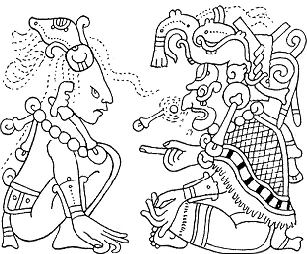
Kukulkan
Last updated
Kukulkan, also written as Kʼukʼulkan, is the feathered serpent god from Maya belief. This deity is linked to the Kʼicheʼ people's Qʼuqʼumatz and the Aztec Quetzalcoatl. Major temples honoring Kukulkan exist at Yucatán sites including Chichen Itza, Uxmal, and Mayapan.
Quick Facts
- Cult center
- Chichen Itza
Facts from the source article.
History
The cult of Kukulkan was the first Mesoamerican religion to transcend the old Classic Period linguistic and ethnic divisions, facilitating communication and peaceful trade among diverse peoples. Originally centred on Chichen Itza in Yucatán, it spread to the Guatemalan Highlands and northern Belize. References to the deity are confused by a historical individual bearing the god's name, likely a ruler or priest at Chichen Itza who appeared around the 10th century.
Earlier 9th-century texts at Chichen Itza never identified Kukulkan as human, and artistic depictions showed him as a Vision Serpent entwined around nobles or presiding over sacrifice scenes. The worship of Kukulkan was heavily influenced by the Quetzalcoatl religion of central Mexico, likely arriving via Putún Maya merchants from the Gulf Coast. Kukulkan headed a pantheon of mixed Maya and non-Maya deities, used to promote the Itza political and commercial agenda.
At Chichen Itza, Kukulkan ceased to be the Vision Serpent and came to symbolise the divinity of the territory. El Castillo, the pyramid at Chichen Itza, served as a temple to Kukulkan; during equinoxes, the sun's shadow creates the illusion of a serpent descending the pyramid.
Etymology
In Yucatec Maya, the name is Kʼukʼulkan, formed from kuk (feather) with the adjectival suffix -ul, giving kukul (feathered), combined with kan (snake). In Tzotzil it is Kʼukʼul-chon. In the Chol-Chʼortiʼ-Tzeltal family, it is Kukulchon. During the Classic Period, the deity was known as Waxaklahun Ubah Kan, the War Serpent, and has been identified as the Postclassic version of the Vision Serpent.
Modern folklore
Among the modern Yucatec Maya, stories about Kukulkan persist. In one tale, Kukulkan was a boy born as a snake who grew into the plumed serpent; his sister cared for him in a cave until he grew too large, flew into the sea causing an earthquake, and still causes earth tremors every July to let his sister know he lives.
Another story describes Kukulkan as a winged serpent that flew to the sun and tried to speak, but the sun burnt his tongue. Kukulkan travels ahead of the rain god Chaac, helping predict rains as his tail moves the winds and sweeps the earth. Among the Lacandon Maya, Kukulkan is an evil, monstrous snake, pet of the sun god, who destroys much of the world until she meets a boy, shares food, and constructs her own country.
In popular culture
In Star Trek: The Animated Series, an alien being appears as a winged serpent claiming to be Kukulkan. The 2002 video game Serious Sam: The Second Encounter features Kukulkan as a guardian of a time portal in Teotihuacan. In the 2006 film Apocalypto, the high priest prays to Kukulkan during human sacrifice.
The 2018 game Shadow of the Tomb Raider has an antagonist claiming to be an incarnation of Kukulkan. In the 2021 game Genshin Impact, Kukulkan is a name for a dragon prince. In the 2022 Marvel film Black Panther: Wakanda Forever, the king of Talokan, Namor, is referred to as Kʼukʼulkan by his subjects.
More in Maya Mythology and Religion
Sources
Compiled from Wikipedia and the sources listed below. Text from Wikipedia is available under CC BY-SA 4.0; this entry is adapted from it.
- Wikipedia: Kukulkan (CC BY-SA 4.0).
Spotted an error? Know more?
Reader corrections go straight into our review queue. Suggest an edit · How this site is sourced