
G. H. Hardy
English mathematician; mentor of Ramanujan; author of A Mathematician's Apology.

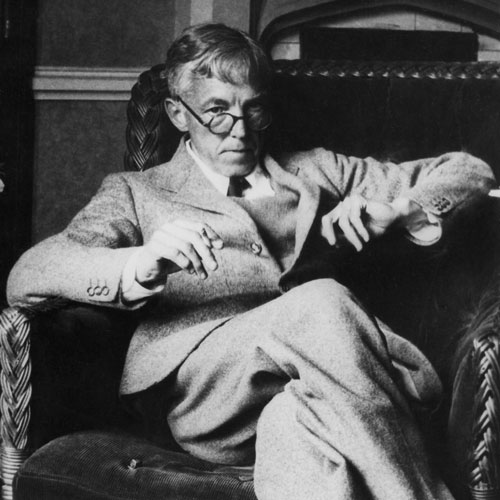
via Wikipedia: G. H. Hardy · see source
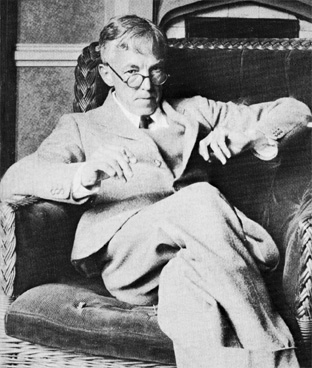
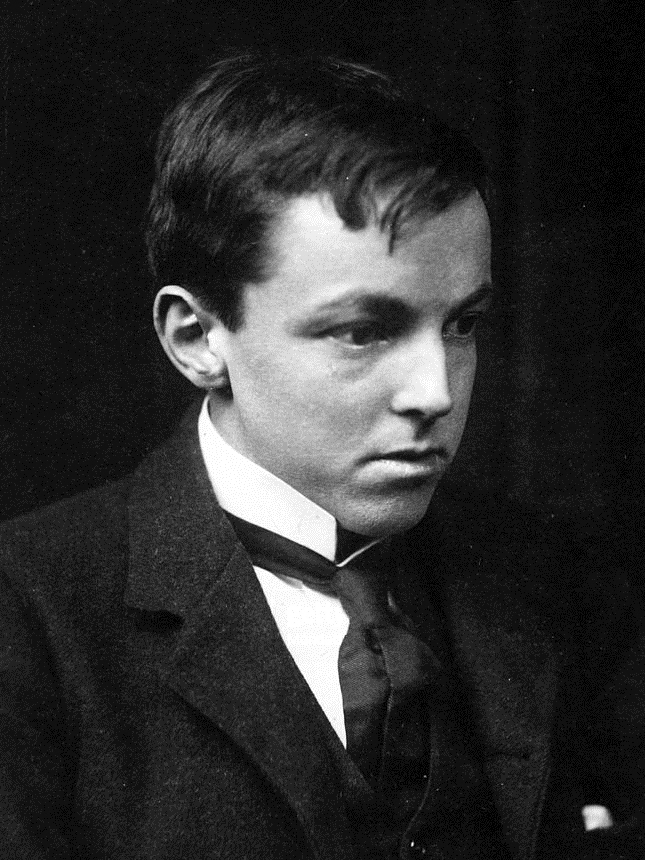
Godfrey Harold Hardy (7 February 1877 – 1 December 1947) was an English mathematician who made his mark in number theory and mathematical analysis, and also gave his name to the Hardy–Weinberg principle, a cornerstone of population genetics. He is best remembered by non-mathematicians for his 1940 essay *A Mathematician's Apology*, which is widely regarded as a superb window into how a working mathematician thinks. The novelist Graham Greene placed it alongside the notebooks of Henry James as "the best account of what it was like to be a creative artist."
From 1914 onward, Hardy served as mentor to the Indian mathematician Srinivasa Ramanujan, a partnership that became legendary. Hardy quickly saw that Ramanujan’s untrained mind was extraordinary, and the two became close collaborators. When the young Paul Erdős once asked Hardy what his greatest contribution to mathematics was, Hardy answered without hesitation that it was discovering Ramanujan. He rated mathematical ability on a scale where his own was 25, his colleague Littlewood’s was 30, Hilbert’s was 80, and Ramanujan’s was 100. In a lecture, Hardy called his association with Ramanujan “the one romantic incident in my life.”
Hardy was born on 7 February 1877 in Cranleigh, Surrey, into a teaching family. His father worked as Bursar and Art Master at Cranleigh School; his mother had been a senior mistress at Lincoln Training College. Both parents had a mathematical bent, though neither had attended university. Hardy and his sister Gertrude “Gertie” Emily Hardy (1878–1963) were raised by their educationally progressive parents in a typical Victorian nursery with a nurse. As a small child, he argued with his nurse about Santa Claus and the effectiveness of prayer, and he read aloud to his sister from *Don Quixote*, *Gulliver’s Travels*, and *Robinson Crusoe*. His mathematical talent showed early: at age two he wrote numbers up to the millions, and in church he amused himself by factorising hymn numbers. After attending Cranleigh School, he won a scholarship to Winchester College for his mathematics. In 1896 he entered Trinity College, Cambridge. His first tutor, Robert Rumsey Webb, left him unsatisfied, and he briefly considered switching to history. He then studied under Augustus Love, who advised him to read Camille Jordan’s *Cours d’analyse*—a book that, Hardy later said, first showed him “what mathematics really meant.” After just two years of preparation with coach Robert Alfred Herman, he placed fourth in the Mathematics Tripos. Later in life, he tried to abolish the Tripos system, believing it had become an end in itself rather than a means to genuine learning. At Cambridge he joined the Cambridge Apostles, an elite secret society. Hardy credited his independent study of Jordan’s *Cours d’analyse* as his most important influence, introducing him to the more rigorous mathematical tradition of continental Europe. He passed part II of the Tripos in 1900 and was elected to a Prize Fellowship at Trinity College that same year. In 1903 he earned his M.A., then the highest degree at English universities. When his Prize Fellowship ended in 1906, he became a lecturer in mathematics at Trinity, teaching six hours a week and leaving time for research. On 16 January 1913, Ramanujan wrote to Hardy after reading Hardy’s book *Orders of Infinity* (1910). Hardy read the letter in the morning, initially suspecting a crank or prank, but by evening he decided it was genuine, reasoning that “great mathematicians are commoner than thieves or humbugs of such incredible skill.” He invited Ramanujan to Cambridge, beginning what he called “the one romantic incident in my life.”
After the Bertrand Russell affair during World War I, Hardy left Cambridge in 1919 to take the Savilian Chair of Geometry at Oxford, becoming a Fellow of New College. He spent the 1928–1929 academic year at Princeton University in an exchange with Oswald Veblen, who went to Oxford. Hardy gave the Josiah Willard Gibbs lecture in 1928. He returned to Cambridge in 1931, becoming a fellow of Trinity College again and holding the Sadleirian Professorship until 1942. It is thought he left Oxford to avoid mandatory retirement at age 65. He served on the governing body of Abingdon School from 1922 to 1935. In 1939, a coronary thrombosis ended his ability to play tennis and squash, and also sapped his mathematical creativity. Bored and distracted, he wrote a privately circulated memoir about the Bertrand Russell affair. In early summer 1947, he attempted suicide with a barbiturate overdose. After that, he resolved simply to wait for death. He died suddenly one early morning while his sister read aloud from a history of Cambridge University cricket. Hardy is credited with reforming British mathematics by introducing the rigor that had long been characteristic of French, Swiss, and German work. British mathematicians had largely stayed in the applied tradition, revering Isaac Newton (as seen in the Cambridge Mathematical Tripos). Hardy preferred the methods of the *cours d’analyse* dominant in France and actively promoted pure mathematics, especially against the hydrodynamics that was a major part of Cambridge mathematics. He worked only four hours a day on mathematics, spending the rest of his time talking, playing cricket, and engaging in other gentlemanly pursuits.
- born
- 7 February 1877, Cranleigh, Surrey, England
- died
- 1 December 1947
- field
- Mathematics (number theory, mathematical analysis)
- nationality
- English
- known_for
- Hardy–Weinberg principle, Hardy–Littlewood circle method, collaboration with Sri
Verified Timeline
Lore & Background
Hardy was born on 7 February 1877 in Cranleigh, Surrey, England, into a teaching family. At age two, he wrote numbers up to millions, and when taken to church he amused himself by factorising the numbers of the hymns. After schooling at Cranleigh, he was awarded a scholarship to Winchester College for his mathematical work. In 1896, he entered Trinity College, Cambridge. He was tutored by Augustus Love, who recommended that he read Camille Jordan's Cours d'analyse, which taught him for the first time "what mathematics really meant." While at university, Hardy joined the Cambridge Apostles, an elite, intellectual secret society. Years later, he sought to abolish the Tripos system, as he felt that it was becoming more an end in itself than a means to an end. Starting in 1914, Hardy was the mentor of the Indian mathematician Srinivasa Ramanujan, a relationship that has become celebrated. Hardy almost immediately recognised Ramanujan's extraordinary albeit untutored brilliance, and Hardy and Ramanujan became close collaborators. When asked by a young Paul Erdős what his greatest contribution to mathematics was, Hardy unhesitatingly replied that it was the discovery of Ramanujan. He remarked that on a scale of mathematical ability, his ability would be 25, Littlewood would be 30, Hilbert would be 80, and Ramanujan would be 100. In a lecture on Ramanujan, Hardy said that "my association with him is the one romantic incident in my life."
From 1911, he collaborated with John Edensor Littlewood in extensive work in mathematical analysis and analytic number theory, leading to the Hardy–Littlewood circle method and quantitative progress on Waring's problem. Hardy is also known for formulating the Hardy–Weinberg principle, a basic principle of population genetics, independently from Wilhelm Weinberg in 1908. He played cricket with the geneticist Reginald Punnett, who introduced the problem to him in purely mathematical terms. Hardy, who had no interest in genetics and described the mathematical argument as "very simple," may never have realised how important the result became.
Reader's Guide
Hardy is credited with reforming British mathematics by bringing rigour into it, which was previously a characteristic of French, Swiss and German mathematics. He aggressively promoted his conception of pure mathematics, in particular against the hydrodynamics that was an important part of Cambridge mathematics. Hardy's collaboration with Littlewood is among the most successful and famous collaborations in mathematical history. In a 1947 lecture, the Danish mathematician Harald Bohr reported a colleague as saying, "Nowadays, there are only three really great English mathematicians: Hardy, Littlewood, and Hardy–Littlewood." Hardy's famous work on integer partitions with Ramanujan, known as the Hardy–Ramanujan asymptotic formula, has been widely applied in physics to find quantum partition functions of atomic nuclei (first used by Niels Bohr) and to derive thermodynamic functions of non-interacting Bose–Einstein systems. His work in number theory is also important in cryptography. Hardy's 1940 essay A Mathematician's Apology is often considered one of the best insights into the mind of a working mathematician written for the layperson; novelist Graham Greene ranked it with the notebooks of Henry James as "the best account of what it was like to be a creative artist." Hardy preferred his work to be considered pure mathematics, perhaps because of his detestation of war and the military uses to which mathematics had been applied. He stated, "I have never done anything 'useful'. No discovery of mine has made, or is likely to make, directly or indirectly, for good or ill, the least difference to the amenity of the world." Despite this, much of his work has found applications in other branches of science.
Did You Know?
- At age two, Hardy wrote numbers up to millions and amused himself in church by factorising hymn numbers.
- Hardy remarked that on a scale of mathematical ability, his own ability would be 25, Littlewood 30, Hilbert 80, and Ramanujan 100.
- Hardy formulated the Hardy–Weinberg principle in 1908 after the geneticist Reginald Punnett introduced the problem to him during a game of cricket.
- In 1939, Hardy suffered a coronary thrombosis that prevented him from playing tennis and squash, and he lost his creative powers in mathematics.
- Hardy attempted suicide by barbiturate overdose in the early summer of 1947, and died suddenly while listening to his sister read from a book on the history of Cambridge University cricket.
Gallery

Frequently Asked Questions
Who is G. H. Hardy?
Godfrey Harold Hardy was an English mathematician born in Cranleigh, Surrey, in 1877. He rose to become one of the leading figures in number theory and mathematical analysis during the early twentieth century.
What are G. H. Hardy's powers/role?
Hardy's core strengths lay in number theory and analysis, where he co-developed the Hardy–Littlewood circle method and helped establish the Hardy–Weinberg principle in population genetics. He is also widely recognized for mentoring the self-taught genius Srinivasa Ramanujan at Cambridge.
How does G. H. Hardy's story end?
Hardy passed away on 1 December 1947, at the age of seventy. In his final years he produced A Mathematician's Apology (1940), a reflective essay that became his most widely read work.
Why is G. H. Hardy important?
He shaped modern number theory and analysis through original research and through his influence on younger mathematicians, especially Ramanujan. His Apology is still studied as a rare, candid window into how a working mathematician thinks about beauty and purpose in the discipline.
Who is G. H. Hardy's most famous collaborator?
Srinivasa Ramanujan, an Indian mathematician with virtually no formal training, became Hardy's most celebrated partner at Cambridge. Their joint work on highly composite numbers and continued fractions remains a landmark in the history of mathematics.
More in Mathematicians 1-24
Spotted an error? Know more?
This is a living reference — every entry is fact-audited, and reader corrections feed straight into our audit queue. Suggest an edit · See this site's audit record