
Felix Klein
German mathematician who unified geometry via symmetry groups.

via Wikipedia: Felix Klein · see source
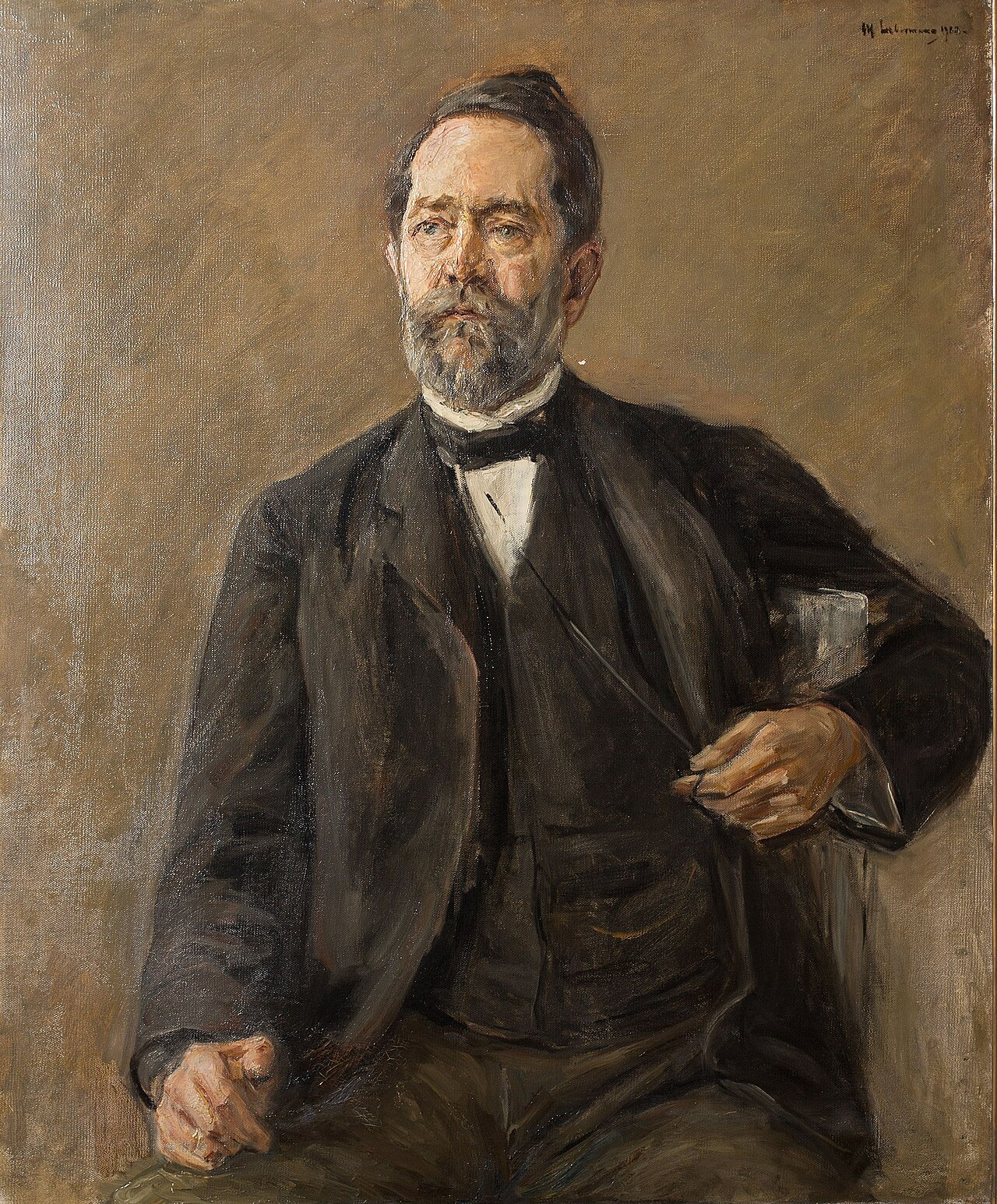
Felix Christian Klein (25 April 1849 – 22 June 1925) was a German mathematician who also worked as an educator and historian of mathematics. His research touched on group theory, complex analysis, non-Euclidean geometry, and the links between geometry and group theory. In 1872, he laid out the Erlangen program, which sorted different geometries according to their underlying symmetry groups, pulling together many mathematical ideas of the era. While at the University of Göttingen, Klein built it into a hub for mathematics and science by creating new lecture series, faculty positions, and research institutes. He pushed for better mathematics teaching at every school level and, in 1908, became the first head of the International Commission on Mathematical Instruction.
Klein was born in Düsseldorf on 25 April 1849 to Prussian parents. His father, Caspar Klein, worked as a secretary for a Prussian government official in the Rhine Province; his mother was Sophie Elise Klein (née Kayser). After attending the local Gymnasium, he studied mathematics and physics at the University of Bonn from 1865 to 1866, originally aiming to become a physicist. By the time he became an assistant to Julius Plücker in 1866, Plücker had shifted his focus to geometry. Klein earned his doctorate under Plücker at Bonn in 1868. When Plücker died that same year, his book on line geometry was unfinished. Klein was the natural choice to complete the second part of *Neue Geometrie des Raumes*, which brought him into contact with Alfred Clebsch, who had moved to Göttingen in 1868. Klein visited Clebsch the following year, as well as traveling to Berlin and Paris. In July 1870, while in Paris at the start of the Franco-Prussian War, he had to leave. He served briefly as a medical orderly in the Prussian army before becoming a Privatdozent at Göttingen in early 1871.
In 1872, at just 23 years old, Klein was made a professor at the University of Erlangen, backed by Clebsch, who thought Klein would become the leading mathematician of his generation. Klein found Erlangen too quiet with too few students, so he was glad to accept a professorship at the Technische Hochschule München in 1875. There, together with Alexander von Brill, he taught advanced courses to a talented group that included Adolf Hurwitz, Walther von Dyck, Karl Rohn, Carl Runge, Max Planck, Luigi Bianchi, and Gregorio Ricci-Curbastro. In 1875, he married Anne Hegel, a granddaughter of the philosopher Georg Wilhelm Friedrich Hegel.
After five years in Munich, Klein took a chair in geometry at Leipzig University, where his colleagues included von Dyck, Rohn, Eduard Study, and Friedrich Engel. The Leipzig years, from 1880 to 1886, marked a major turning point. His health broke down in 1882, and he struggled with depression for the next two years. Still, he kept working; his important research on hyperelliptic sigma functions, published between 1886 and 1888, came from this period.
Klein moved to a professorship at the University of Göttingen in 1886. From then until his retirement in 1913, he worked to make Göttingen the world’s top center for mathematical research. He never managed to bring his own leading role in geometry from Leipzig to Göttingen. His teaching there focused on the connections between mathematics and physics, especially mechanics and potential theory. The research facility he set up at Göttingen became a model for similar centers worldwide. He started weekly discussion meetings and established a mathematical reading room and library. In 1895, Klein recruited David Hilbert from Königsberg, a move that proved crucial; Hilbert kept Göttingen at the forefront of mathematics until his own retirement in 1932. Together, Klein and Hilbert invited Emmy Noether to Göttingen in 1915, where she introduced Einstein to group theory and the link between symmetries and conservation laws.
As editor, Klein turned *Mathematische Annalen* into one of the world’s top mathematical journals. Founded by Clebsch, it grew under Klein’s management to rival and eventually surpass *Crelle’s Journal* in Berlin. Klein built a small team of editors who met regularly and made decisions democratically. The journal initially focused on complex analysis, algebraic geometry, and invariant theory, but also became an important outlet for real analysis and the emerging field of group theory.
In 1893, Klein gave a major talk at the International Mathematical Congress in Chicago, held during the World’s Columbian Exposition. Partly because of his efforts, Göttingen began admitting women in 1893. He supervised the first mathematics Ph.D. by a woman at Göttingen, Grace Chisholm Young, an English student of Arthur Cayley’s whom Klein admired. In 1897, he was elected a foreign member of the Royal Netherlands Academy of Arts and Sciences.
Around 1900, Klein turned his attention to mathematics instruction in schools. In 1905, he helped draft a plan recommending that analytic geometry, basic calculus, and the function concept be taught in secondary schools. This proposal was gradually adopted in many countries. In 1908, at the Fourth International Congress of Mathematicians in Rome, he was elected the first president of the International Commission on Mathematical Instruction.
- born
- 25 April 1849, Düsseldorf, Prussia
- died
- 22 June 1925, Göttingen, Germany
- field
- Mathematics
- nationality
- German
- known_for
- Erlangen program, Klein bottle, non-Euclidean geometry, group theory
Verified Timeline
Lore & Background
Felix Klein was born on 25 April 1849 in Düsseldorf, to Prussian parents. His father, Caspar Klein, was a Prussian government official's secretary; his mother was Sophie Elise Klein. He attended the Gymnasium in Düsseldorf, then studied mathematics and physics at the University of Bonn from 1865 to 1866, intending to become a physicist. He became assistant to Julius Plücker in 1866, whose interest was mainly geometry. Klein received his doctorate, supervised by Plücker, from the University of Bonn in 1868. After Plücker's death, Klein completed the second part of Plücker's Neue Geometrie des Raumes, becoming acquainted with Alfred Clebsch. In July 1870, while in Paris at the start of the Franco-Prussian War, he had to leave the country. He served briefly as a medical orderly in the Prussian army before being appointed Privatdozent at Göttingen in early 1871. Klein was appointed professor at the University of Erlangen in 1872 at age 23, endorsed by Clebsch. He moved to the Technische Hochschule München in 1875, where he and Alexander von Brill taught advanced courses to students including Adolf Hurwitz, Walther von Dyck, Karl Rohn, Carl Runge, Max Planck, Luigi Bianchi, and Gregorio Ricci-Curbastro. In 1875, he married Anne Hegel, granddaughter of the philosopher Georg Wilhelm Friedrich Hegel. He held a chair at Leipzig University from 1880 to 1886, where his health collapsed in 1882 and he battled depression for two years, but continued research on hyperelliptic sigma functions. In 1886, he accepted a professorship at the University of Göttingen, working to re-establish it as a world center for mathematics research. He recruited David Hilbert from Königsberg in 1895, and jointly with Hilbert invited Emmy Noether in 1915, where she introduced Einstein to group theory and the relationship between symmetries and conservation principles.
Reader's Guide
Felix Klein's significance lies in his synthesis of geometry and group theory through the Erlangen program (1872), which classified geometries by their symmetry groups. In 1871, he published two papers On the So-called Non-Euclidean Geometry showing that Euclidean and non-Euclidean geometries could be considered metric spaces determined by a Cayley–Klein metric, ending controversy about non-Euclidean geometry. He devised the Klein bottle, a one-sided closed surface which cannot be embedded in three-dimensional Euclidean space but may be immersed as a cylinder looped back through itself. As an educator, he promoted mathematics education reform: in 1905 he was instrumental in formulating a plan recommending analytic geometry, rudiments of differential and integral calculus, and the function concept be taught in secondary schools, gradually implemented worldwide. He became the first president of the International Commission on Mathematical Instruction in 1908 at the Fourth International Congress of Mathematicians in Rome. At Göttingen, he established a research facility that served as a model worldwide, introduced weekly discussion meetings, and created a mathematical reading room and library. Under his editorship, Mathematische Annalen became one of the best mathematical journals, rivaling and surpassing Crelle's Journal. He initiated the Encyklopädie der mathematischen Wissenschaften in 1894, a major reference work enduring until 1935. Klein was awarded the De Morgan Medal by the London Mathematical Society in 1893 and the Copley Medal by the Royal Society in 1912. He was one of ninety-three signatories of the Manifesto of the Ninety-Three supporting the German invasion of Belgium in World War I.
Did You Know?
- Klein served briefly as a medical orderly in the Prussian army during the Franco-Prussian War.
- He was only 23 years old when appointed professor at the University of Erlangen in 1872.
- Klein married Anne Hegel, granddaughter of the philosopher Georg Wilhelm Friedrich Hegel, in 1875.
- He supervised the first Ph.D. thesis in mathematics written at Göttingen by a woman, Grace Chisholm Young.
- Klein was one of ninety-three signatories of the Manifesto of the Ninety-Three supporting the German invasion of Belgium in World War I.
The Erlangen Program and the Unification of Geometry
Felix Klein's most celebrated intellectual contribution emerged in 1872, when he was just twenty-three years old. His Erlangen program proposed a radical reorganization of geometric thought: rather than treating each geometry as an isolated collection of theorems, Klein classified all geometries according to the symmetry groups that governed their transformations. This framework brought together complex analysis, non-Euclidean geometry, and group theory into a single coherent vision, synthesizing much of the mathematics known at the time. The program did not merely add a new theorem; it provided a meta-language for understanding what any geometry fundamentally was. Klein's broader research spanned hyperelliptic sigma functions, invariant theory, and the deep structural links between algebraic groups and geometric spaces. His work at the Technische Hochschule in Munich, where he taught alongside Alexander von Brill, produced a generation of brilliant students—including Max Planck, Adolf Hurwitz, and Gregorio Ricci-Curbastro—who carried these ideas into physics and differential geometry. The Erlangen program remains a touchstone for how mathematicians think about symmetry and structure to this day.
Building Göttingen into a Global Powerhouse
When Klein accepted a chair at the University of Göttingen in 1886, he set out on a mission that would define the institution for decades. Over the next twenty-seven years, until his retirement in 1913, he systematically rebuilt Göttingen into what he envisioned as the world's premier center for mathematical research. He introduced weekly discussion meetings, established a dedicated mathematical reading room and library, and created new professorships and institutes that served as a model for research facilities around the globe. His most consequential recruitment came in 1895, when he brought David Hilbert from Königsberg; Hilbert would extend Göttingen's dominance until his own retirement in 1932. Under Klein's editorship, the journal Mathematische Annalen—originally founded by his mentor Clebsch—grew to rival and eventually surpass Berlin's Crelle's Journal. Klein managed the journal through a small editorial team that met regularly and made decisions democratically, giving it a distinctive collaborative character. Together with Hilbert, he also invited Emmy Noether to Göttingen in 1915, where she would introduce Einstein to group theory and the connection between symmetries and conservation laws.
Championing Mathematical Education and Inclusion
Beyond pure research, Klein devoted enormous energy to reshaping how mathematics was taught and who was allowed to participate in it. Around 1900, he turned his attention to school-level instruction, and in 1905 he helped formulate a plan recommending that secondary schools incorporate analytic geometry, the basics of differential and integral calculus, and the function concept. This recommendation was gradually adopted in many countries worldwide. In 1908, at the Fourth International Congress of Mathematicians in Rome, he was elected the first president of the International Commission on Mathematical Instruction, under whose guidance the German section published numerous volumes on teaching mathematics at every level. Klein also broke barriers in academic access: in 1893, partly through his advocacy, Göttingen began admitting women, and he supervised the first doctoral thesis in mathematics at the university written by a woman, Grace Chisholm Young, an English student of Arthur Cayley whom Klein personally admired. His commitment to pedagogy extended across grade levels and borders, making him a foundational figure in the international movement for mathematics education reform.
Formative Years, Personal Turmoil, and Resilience
Klein was born in Düsseldorf in 1849 to Prussian parents; his father served as a secretary to a government official in the Rhine Province. He initially intended to become a physicist, studying at the University of Bonn under Julius Plücker, whose focus had shifted toward geometry by the time Klein became his assistant. When Plücker died in 1868 leaving his treatise on line geometry unfinished, the young Klein was the natural choice to complete the second volume, a task that introduced him to Alfred Clebsch in Göttingen. Clebsch regarded Klein as likely to become the finest mathematician of his generation and endorsed his appointment to Erlangen at the remarkable age of twenty-three. Klein's personal life was marked by both privilege and hardship: in 1875 he married Anne Hegel, granddaughter of the philosopher Georg Wilhelm Friedrich Hegel. Yet his Leipzig years brought a severe health collapse in 1882, followed by two years of depression. Despite this, his research persisted, and his seminal work on hyperelliptic sigma functions, published between 1886 and 1888, emerged from precisely this difficult period.
Gallery
Frequently Asked Questions
Who is Felix Klein?
Felix Christian Klein was a German mathematician, educator, and historian of mathematics who lived from 1849 to 1925. He is best remembered for reshaping how we understand geometry through the lens of symmetry and group theory.
What is the Erlangen Program?
The Erlangen Program was a 1872 lecture in which Klein proposed classifying all geometries by the symmetry groups that leave their properties invariant. It became a foundational framework that unified diverse branches of geometry under a single conceptual umbrella.
What is the Klein bottle?
The Klein bottle is a non-orientable surface with no distinguishable inside or outside, named after Felix Klein. It serves as a classic example in topology and non-Euclidean geometry, illustrating spaces that cannot be embedded in ordinary three-dimensional space without self-intersection.
What fields did Felix Klein work in?
Klein contributed to group theory, complex analysis, non-Euclidean geometry, and the history of mathematics. His work bridged algebra and geometry by showing how symmetry groups could characterize geometric structures.
Why is Felix Klein important in mathematics?
Klein is important because his Erlangen Program provided a unifying principle that connected previously separate areas of geometry through the concept of symmetry groups. He also shaped mathematics education and institutional reform, particularly during his long tenure at the University of Göttingen.
More in Mathematicians 1-24
Spotted an error? Know more?
This is a living reference — every entry is fact-audited, and reader corrections feed straight into our audit queue. Suggest an edit · See this site's audit record