
François Viète
French mathematician who pioneered algebraic notation using letters as parameters.

via Wikipedia: François Viète · see source
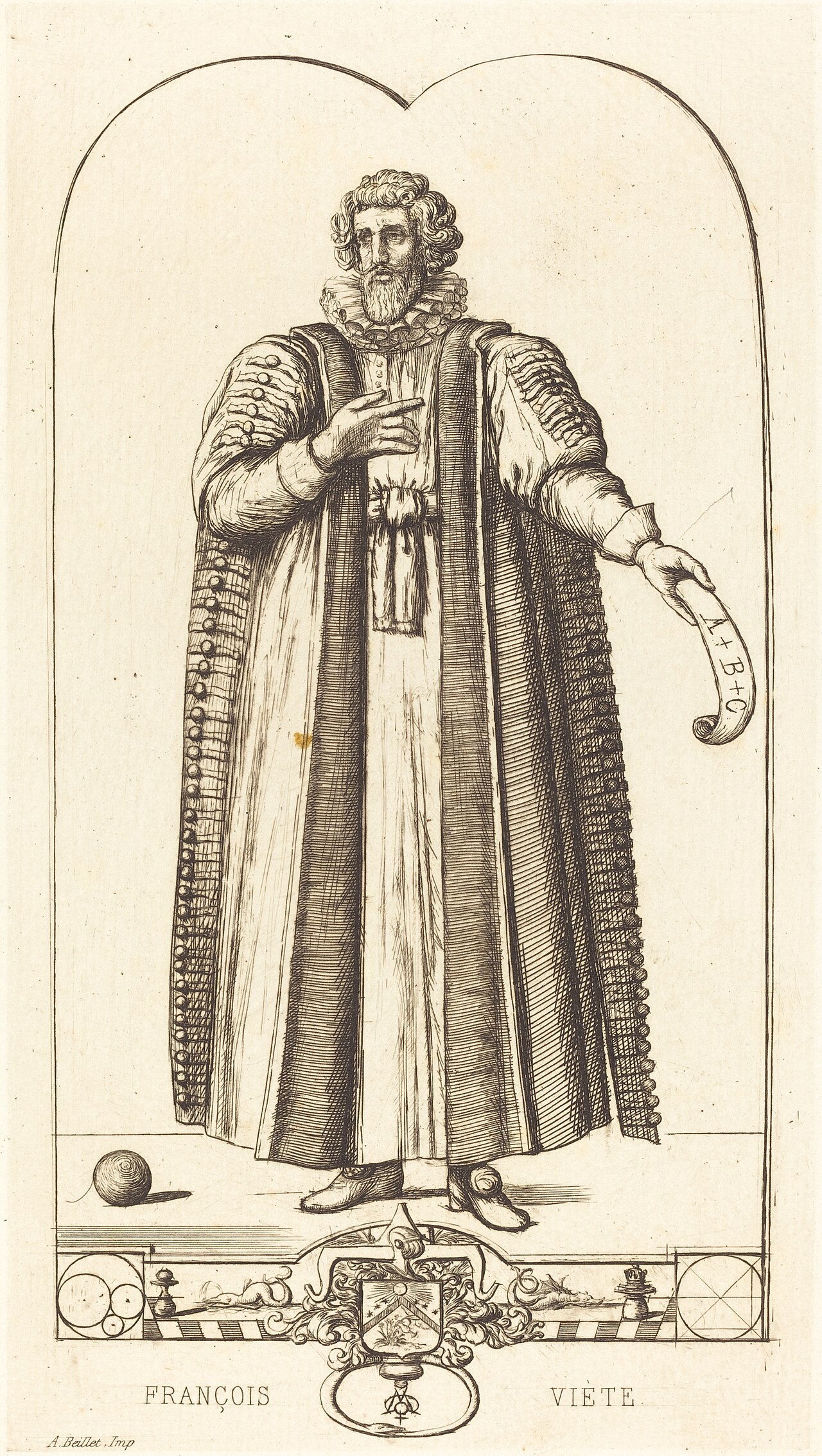
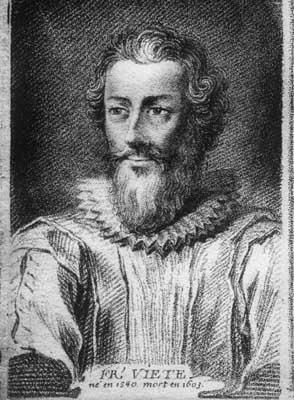
François Viète (1540 – 23 February 1603), also known by his Latin name Franciscus Vieta, was a French mathematician who pushed algebra forward by using letters to stand in for numbers in equations. This innovation is why he's often called "the father of modern algebraic notation." By profession, he was a lawyer and served as a privy councillor to both Henry III and Henry IV of France.
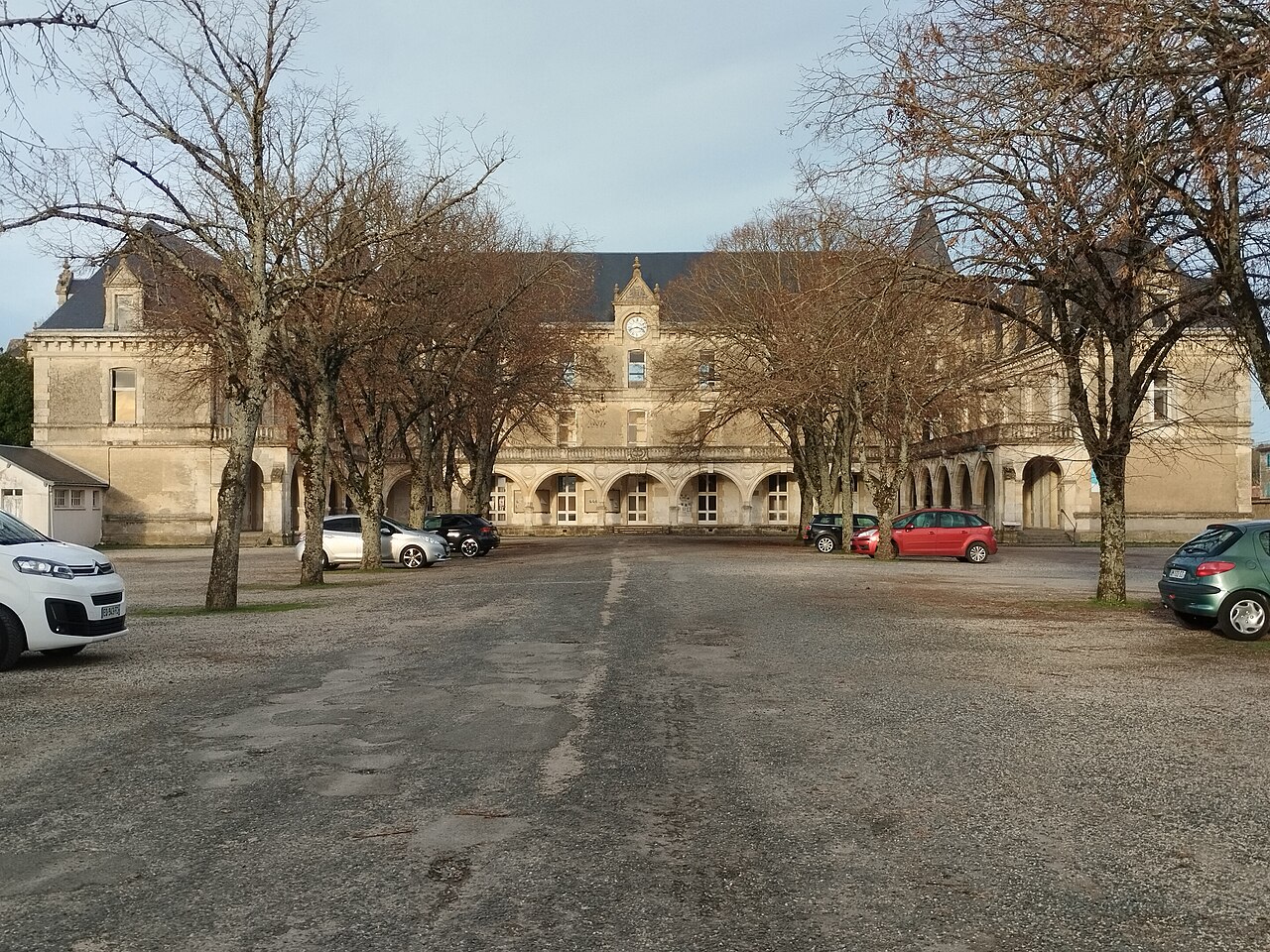
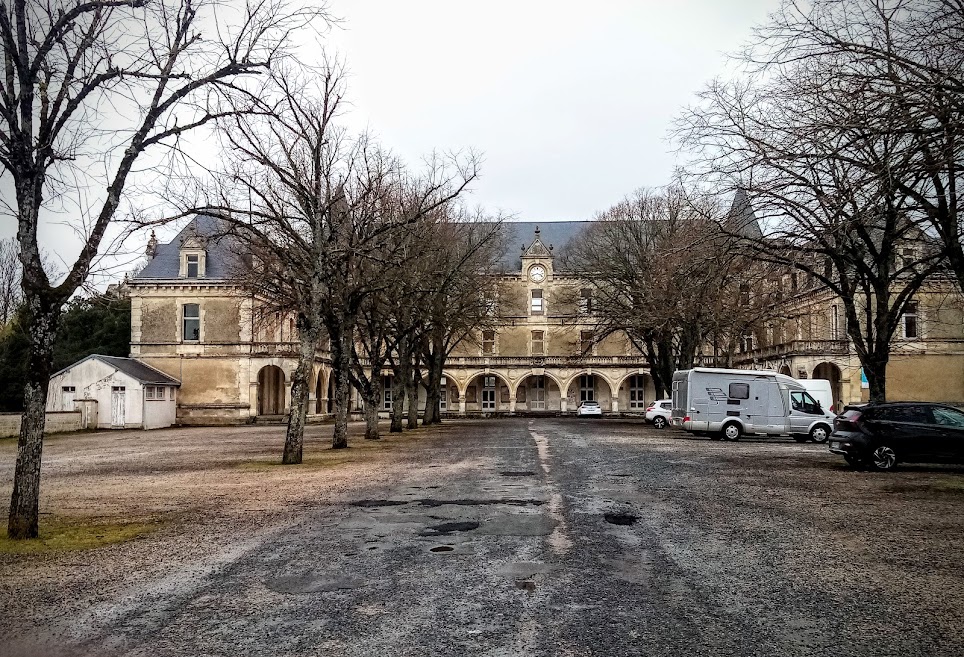
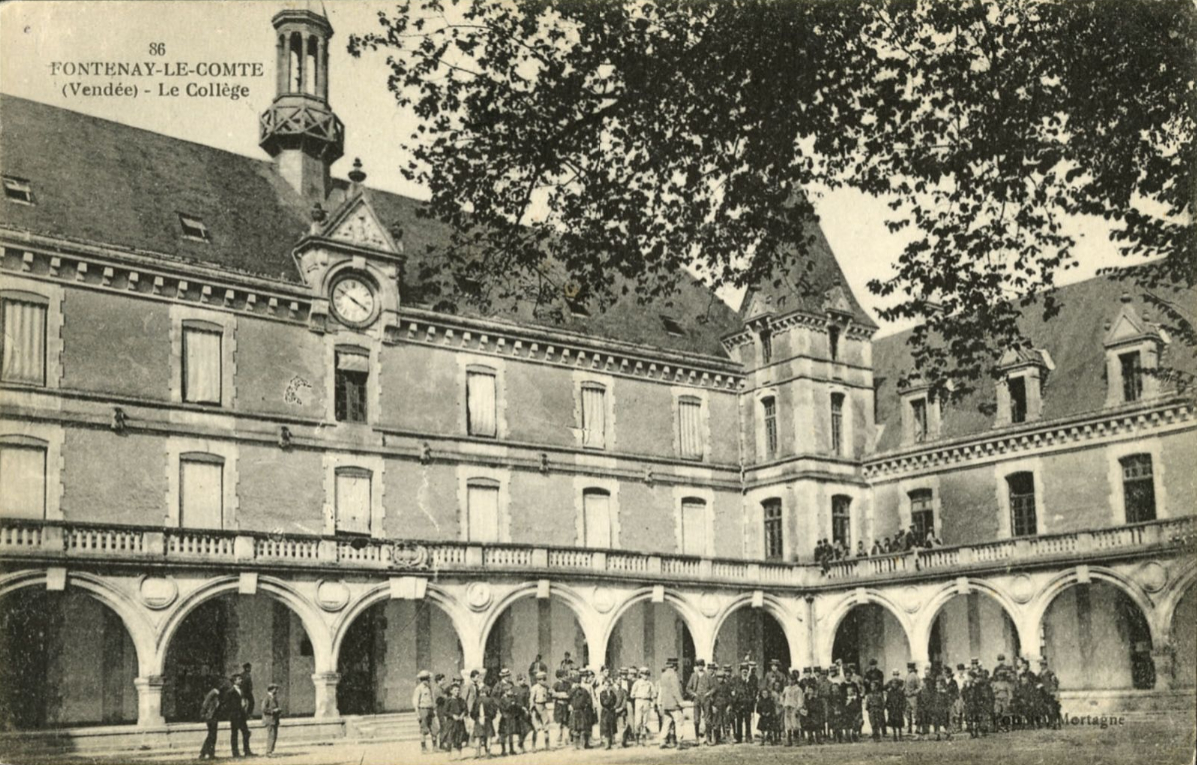
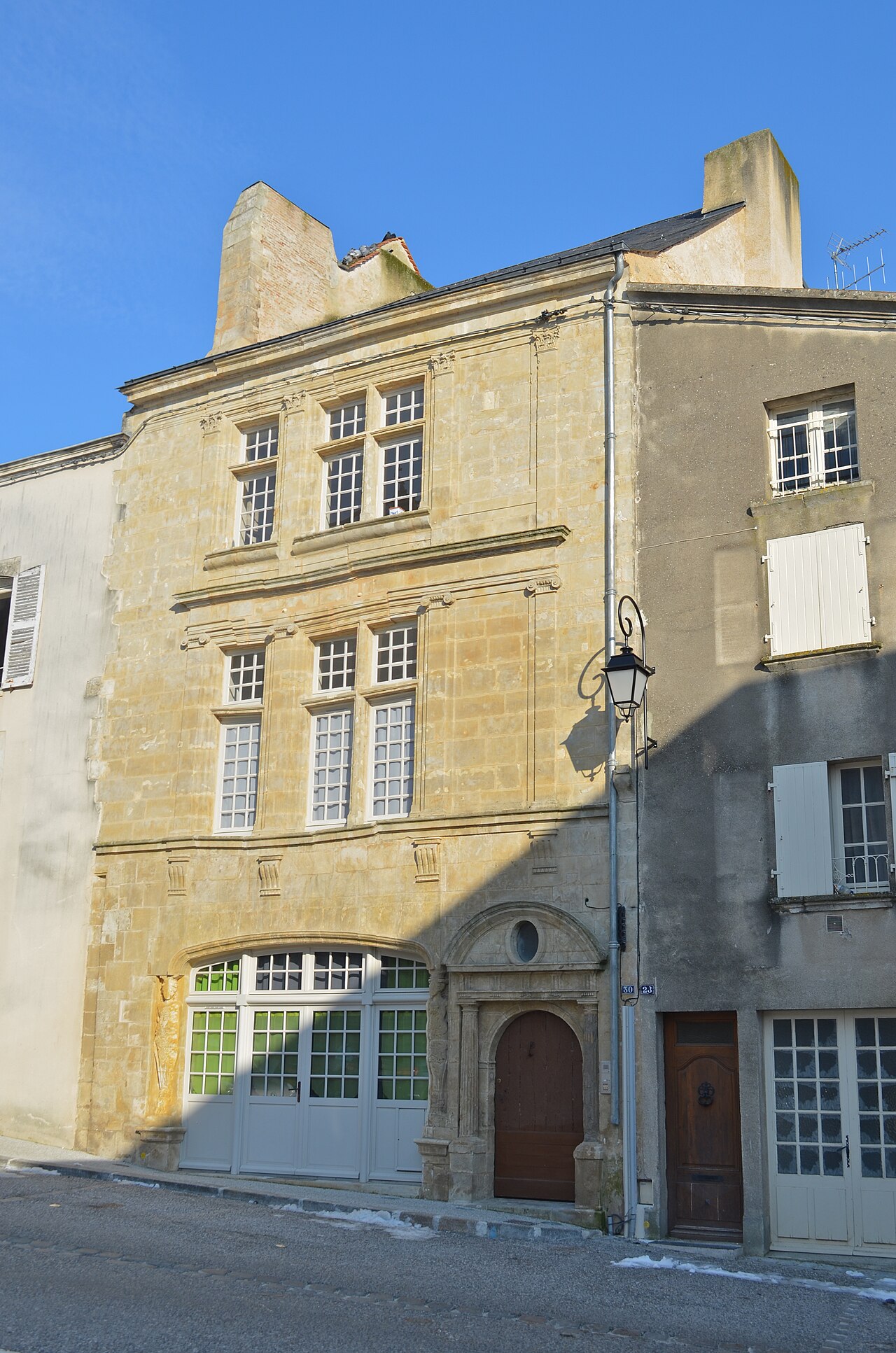
Viète was born in Fontenay-le-Comte, in what is now Vendée. His grandfather was a merchant from La Rochelle; his father, Etienne Viète, worked as an attorney and notary. His mother was the aunt of Barnabé Brisson, a magistrate and parliament president during the Catholic League's rise. Viète attended a Franciscan school and studied law at Poitiers, earning a Bachelor of Laws in 1559. He began working as an attorney in his hometown the following year, handling major cases like settling rent in Poitou for the widow of King Francis I and representing the interests of Mary, Queen of Scots.
In 1564, Viète went to work for Antoinette d'Aubeterre, Lady Soubise, wife of Huguenot military leader Jean V de Parthenay-Soubise. He accompanied her husband to Lyon to gather documents about his defense of the city against the Duke of Nemours. That same year, Viète became tutor to the Soubises' twelve-year-old daughter, Catherine de Parthenay, teaching her science and mathematics. He wrote treatises on astronomy and trigonometry for her, some of which survive. In these works, he used decimal numbers (two decades before Stevin's paper) and noted the elliptic orbit of planets—forty years before Kepler and twenty before Giordano Bruno's death. Jean V de Parthenay introduced Viète to King Charles IX. Viète also wrote a genealogy of the Parthenay family and, after Jean's death in 1566, his biography.
In 1568, Antoinette married her daughter Catherine to Baron Charles de Quellenec. Viète went with her to La Rochelle, where he mingled with top Calvinist aristocrats, including Coligny, Condé, Queen Jeanne d'Albret of Navarre, and her son Henry of Navarre (the future Henry IV). In 1570, he refused to represent the Soubise ladies in a lawsuit against the Baron, who they claimed could not produce an heir.
Viète enrolled as an attorney in Paris in 1571, while still visiting Catherine. He often lived in Fontenay-le-Comte, handling municipal duties, and published his *Universalium inspectionum ad Canonem mathematicum liber singularis*. He did mathematical research at night or in his spare time, sometimes dwelling on a single problem for three days without moving from his desk. During the St. Bartholomew's Day massacre in 1572, he was in Paris; that night, Baron de Quellenec was killed after trying to save Admiral Coligny. That year, Viète also met Françoise de Rohan, Lady of Garnache, and became her adviser against the Duke of Nemours. In 1573, he became a councillor of the Parlement of Rennes. Two years later, he arranged Catherine de Parthenay's marriage to René de Rohan, Françoise's brother. In 1576, Henri, duc de Rohan took Viète under his protection and recommended him as "maître des requêtes" in 1580. Viète finished printing his *Universalium inspectionum* in 1579, as an appendix to a book of trigonometric tables. The next year, he was appointed maître des requêtes to the Paris parliament. His success in the trial between the Duke of Nemours and Françoise de Rohan earned him the Catholic League's resentment.
Between 1583 and 1585, the League persuaded Henry III to remove Viète from office, accusing him of sympathizing with Protestants. Henry of Navarre wrote two letters to Henry III trying to restore Viète, but failed. Viète then retired to Fontenay and Beauvoir-sur-Mer with François de Rohan, spending four years on mathematics and writing his *New Algebra* (1591).
In 1589, Henry III took refuge in Blois and ordered royal officials to gather at Tours by April 15. Viète was among the first to arrive. He deciphered secret letters from the Catholic League and other enemies of the king. He also argued with scholar Joseph Juste Scaliger, triumphing over him in 1590. After Henry III's death, Viète became a privy councillor to Henry of Navarre (now Henry IV), who admired his mathematical talents. Viète was made councillor of the parlement at Tours. In 1590, he broke the key to a Spanish cipher of over 500 characters, allowing the French to read intercepted dispatches. Henry IV later published a letter from Commander Moreo to the King of Spain.
- born
- 1540
- died
- 23 February 1603
- field
- Mathematics
- nationality
- French
- known_for
- Innovative use of letters as parameters in equations; father of modern algebraic
Lore & Background
Viète was born at Fontenay-le-Comte in present-day Vendée. His father, Etienne Viète, was an attorney and notary; his mother was the aunt of magistrate Barnabé Brisson. Viète studied law at Poitiers, graduating as a Bachelor of Laws in 1559, and began his career as an attorney. In 1564, he entered the service of Antoinette d'Aubeterre, Lady Soubise, becoming tutor to her twelve-year-old daughter Catherine de Parthenay, for whom he wrote treatises on astronomy and trigonometry. In these works, he used decimal numbers and noted the elliptic orbit of the planets. He later served as a councillor of the Parlement of Rennes and as maître des requêtes to the parliament of Paris. During the Wars of Religion, Viète deciphered secret letters of the Catholic League for Henry III. After Henry III's death, he became a privy councillor to Henry IV. In 1590, he broke a Spanish cipher of more than 500 characters, allowing French forces to read intercepted dispatches. He also engaged in a public dispute with the scholar Joseph Juste Scaliger and with Christopher Clavius over the Gregorian calendar reforms. In 1596, Viète solved a polynomial equation of degree 45 posed by Adriaan van Roomen, and later set a problem for van Roomen involving Euclidean tools that van Roomen could not overcome without a trick.
Reader's Guide
François Viète's significance lies in his transformation of algebra through the systematic use of letters to represent unknown quantities and parameters, a practice that laid the groundwork for modern symbolic algebra. His work, particularly the 'New Algebra' published in 1591, moved mathematics away from purely rhetorical methods toward a more abstract and general notation. This innovation allowed equations to be manipulated more flexibly and paved the way for later developments by mathematicians such as Descartes. Beyond algebra, Viète contributed to trigonometry and astronomy, using decimal numbers before Stevin and noting the elliptic orbit of planets before Kepler. His role as a code-breaker for two French kings also demonstrated the practical application of his mathematical skills. Although his criticism of the Gregorian calendar was later shown to be incorrect, his engagement with the leading mathematical and astronomical questions of his time underscores his influence. Viète is remembered as a pivotal figure who bridged the gap between ancient and modern mathematics.
Did You Know?
- Viète used decimal numbers in his treatises twenty years before Stevin's paper on the subject.
- He noted the elliptic orbit of the planets forty years before Kepler and twenty years before Giordano Bruno's death.
- In 1590, Viète broke a Spanish cipher consisting of more than 500 characters, allowing French forces to read intercepted dispatches.
- Viète solved a polynomial equation of degree 45 posed by Adriaan van Roomen after leaning on a window for a few minutes.
- He served as a privy councillor to both Henry III and Henry IV of France.
The Architect of Modern Algebraic Notation
François Viète's most enduring contribution was his revolution in how equations were written and manipulated. By introducing letters as parameters within algebraic expressions, he transformed a discipline that had long relied on verbal or purely numerical description into something far more flexible and general. This innovation was so foundational that he is frequently credited as the father of modern algebraic notation, and his work is widely regarded as a pivotal step toward the algebra we recognize today. His treatises, composed largely for his young pupil Catherine de Parthenay, also revealed a mind reaching well beyond the classroom: he employed decimal notation roughly two decades before Stevin's famous paper, and he noted the elliptical nature of planetary orbits forty years before Kepler formalized the idea. His major algebraic work, the New Algebra, was composed during a four-year period of enforced retirement in the 1580s, when he was free from court politics and could devote himself entirely to the problems that consumed him—sometimes, as his friend Jacques de Thou recalled, he would sit motionless at his desk for three full days, feeding himself without lifting his elbow, lost in a single question.
Code-Breaker to Two Kings
Viète's career as a cryptographer for the French crown is one of the most dramatic threads in his life story. In 1589, when Henry III took refuge in Blois, Viète was among the first royal officials to report to Tours, where he set about deciphering the secret correspondence of the Catholic League and other enemies of the king. His most celebrated feat came in 1590, when he cracked a Spanish cipher built from more than five hundred distinct characters; from that point forward, any Spanish dispatch falling into French hands could be read with ease. Henry IV then published a letter from Commander Moreo to the Spanish king, its contents—read by Viète—exposing the Duke of Mayenne's scheme to seize the French throne. The publication helped bring the Wars of Religion to a close, and the Spanish monarch, in disbelief, accused Viète of employing magical powers. From 1594 onward, he was appointed exclusively to the task of breaking enemy codes, a role that made him indispensable to two successive kings.
A Life Woven Through Court and Controversy
Viète was, by profession, a lawyer, and his legal career intertwined deeply with the turbulent politics of sixteenth-century France. After graduating as a Bachelor of Laws at Poitiers in 1559, he began practicing in his native Fontenay-le-Comte, where he was quickly entrusted with high-profile cases, including settling the rent in Poitou for the widow of King Francis I and safeguarding the interests of Mary, Queen of Scots. In 1564 he entered the household of Antoinette d'Aubeterre, Lady Soubise, a leading Huguenot patron, and became the tutor of her twelve-year-old daughter Catherine, teaching her science and mathematics. Through this connection he was introduced to King Charles IX and, later, moved in the highest circles of the Calvinist aristocracy in La Rochelle, mingling with Coligny, Condé, and Queen Jeanne d'Albret. His political loyalties, however, made him a target: in 1583 the Catholic League persuaded Henry III to strip him of his office on charges of Protestant sympathy, and restoration attempts by Henry of Navarre in 1585 failed, leaving Viète in exile until the political order shifted after Henry III's death.
Exile, Triumph, and a Lasting Legacy
The four years between 1583 and 1585, when Viète was stripped of his position and forced to retire to Fontenay and Beauvoir-sur-Mer alongside François de Rohan, paradoxically became the most productive stretch of his mathematical life. Freed from the demands of court and legal practice, he devoted himself to the problems that had long occupied him and produced the New Algebra, published in 1591, which would secure his place in the history of mathematics. His restoration came through the changing of the political order: after Henry III's death, Viète entered the service of Henry of Navarre, now Henry IV, who admired his mathematical gifts and appointed him councillor of the parlement at Tours. Henry IV's trust in Viète was absolute; the king relied on him not only as a privy councillor but as the man who could read the enemy's mind through their ciphers. Viète's dual legacy—part rigorous algebraist, part indispensable spymaster—ensured that his name would echo through both the annals of pure mathematics and the political intrigues of early modern France, a figure who shaped the language of equations and the fate of a kingdom in equal measure.
Gallery
Frequently Asked Questions
Who is François Viète?
François Viète was a French mathematician and lawyer who lived from 1540 to 1603. He is best remembered for revolutionizing how algebraic equations were written by introducing letters as placeholders for unknown quantities.
What is François Viète's most famous contribution to mathematics?
His groundbreaking idea of using letters as parameters within equations laid the groundwork for the algebraic notation we still use today. This shift from purely verbal descriptions to symbolic shorthand was a major step toward modern algebra.
What did François Viète do for a living besides mathematics?
Viète worked professionally as a lawyer and also served as a privy councillor to two French kings, Henry III and Henry IV. His political career ran parallel to his mathematical work throughout his adult life.
Why is François Viète sometimes called the 'father of modern algebraic notation'?
That nickname comes from his pioneering practice of substituting letters for numerical parameters in algebraic expressions, which made equations far more flexible and general. Before his innovation, algebra was largely expressed in words rather than symbols.
When and where did François Viète live?
He was born in 1540 in France and passed away on 23 February 1603. His entire life and career were spent in France, where he worked as both a legal professional and a scholar.
More in Mathematicians 1-24
Spotted an error? Know more?
This is a living reference — every entry is fact-audited, and reader corrections feed straight into our audit queue. Suggest an edit · See this site's audit record